 Join WhatsApp Channel


By the time the doors opened at Bharat Mandapam for the India AI Impact Summit 2026, it was clear this wasn’t a conference chasing hype cycles. What unfolded instead was something more structural: a live demonstration of how India is assembling an end-to-end AI innovation stack—talent, compute, capital, chips, and governance—at population scale.
Across five days, the Summit stitched together seemingly disparate worlds: school students building AI prototypes, semiconductor startups taping out chips, policymakers debating sovereign infrastructure, and global tech CEOs committing billions of dollars. The connective tissue was impact—AI designed not just to impress, but to deploy.
Where India’s AI Story Actually Begins: The Classroom
In a hall buzzing with drones, medical imaging tools, and climate dashboards, some of the most compelling demos didn’t come from unicorn startups—but from teenagers.
The Atal Innovation Mission (AIM), housed within NITI Aayog, brought its AI Tinkerpreneur Showcase to the Summit, featuring 50 student teams from Atal Tinkering Labs (ATLs) across India. Selected from more than 12,000 teams nationwide, these students weren’t experimenting with toy models. They were solving for edge constraints—low compute, noisy data, local languages, real users.
Their projects spanned AI-assisted crop diagnostics, low-cost healthcare screening tools, accessibility tech, and civic-service automation. For a tech-savvy audience, the signal was unmistakable: India’s AI pipeline is being trained early on frugality, deployment, and relevance, not just benchmarks.
The AI Tinkerpreneur program, run with Intel, has quietly become one of the country’s most scalable AI-skilling architectures—embedding model thinking, data pipelines, and problem framing at the school level.
A particularly resonant moment came during AI by HER, where young women innovators spoke candidly about building AI solutions while navigating access gaps and social barriers. Their work—focused on food security, affordable healthcare, and local manufacturing—mirrored national priorities, not Silicon Valley abstractions.
“AI Becomes a Movement When Ecosystems Connect”
If the students showed where India’s AI journey begins, policy leaders outlined how it scales.
On panels addressing resilient futures and inclusive growth, Deepak Bagla, Mission Director of Atal Innovation Mission, framed India’s approach as ecosystem-first rather than model-first.
“India’s strength in AI won’t come from isolated breakthroughs,” he said. “It will come from connected ecosystems—startups linked to mentors, innovators to investors, policy to practice. When that happens, AI stops being a tool and becomes a national movement.”
For technologists, the subtext was important: India is betting less on single frontier models, and more on network effects between talent, capital, compute, and use cases.
Sovereign Tech Without Isolation: The Finland–India Axis
That ecosystem logic extended beyond borders. One of the Summit’s most substantive discussions focused on deep-tech sovereignty—not as techno-nationalism, but as resilient collaboration.
In a session on building sovereign deep tech, Petteri Orpo highlighted Finland’s investments in supercomputing and public–private R&D, positioning them as complementary to India’s scale and application depth.
“As demand for computing power grows, access to shared infrastructure becomes critical—for both academia and business,” Orpo noted. “Finland and India together can lead human-centric, sustainable technological progress.”
The message resonated with an audience attuned to geopolitics of compute: sovereignty built through shared standards, trusted partnerships, and open innovation, not closed stacks.
Responsibility at Scale: India Sets a Global Benchmark
Ethics wasn’t treated as a footnote. It became a metric.
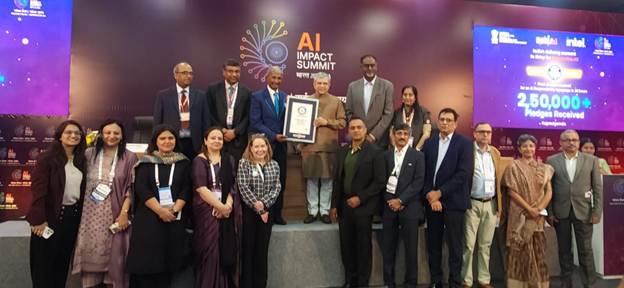
Union Minister Ashwini Vaishnaw announced that India had entered the Guinness World Records for collecting 250,946 AI Responsibility Pledges in 24 hours—the largest such campaign globally.
Launched under the IndiaAI Mission with Intel, the pledge wasn’t symbolic click-through activism. Participants engaged with scenario-based questions on bias, privacy, misinformation, and accountability—earning learning pathways alongside digital badges.
“AI must improve lives—and it must be used responsibly,” Vaishnaw said. “The response from young Indians shows we’re building awareness alongside capability.”
For a technical readership, this mattered because governance literacy is becoming part of India’s AI workforce stack, not a regulatory afterthought.
The Capital Floodgates Open
While students and policymakers set the tone, global capital followed quickly.
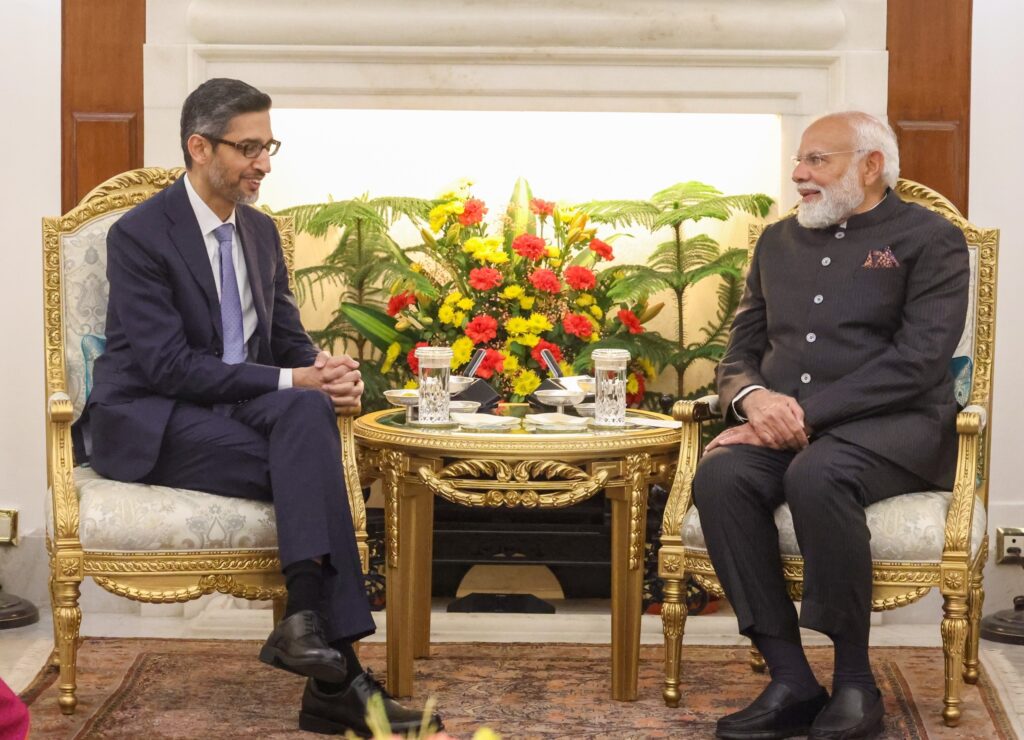
On the sidelines, Sundar Pichai, CEO of Google, met Narendra Modi to discuss deeper collaboration with India’s AI talent base. Leaders from OpenAI, Google DeepMind, Anthropic, Meta, Microsoft, Qualcomm, and NVIDIA used the Summit to signal long-term bets.
Vaishnaw announced that India is on track to attract over $200 billion in AI and deep-tech investments over the next two years, spanning:
- Sovereign AI data centers and cloud regions
- GPU-scale compute under the IndiaAI Mission
- Semiconductor design and manufacturing
- Applied AI for healthcare, agriculture, and industry
For developers and founders, this wasn’t abstract optimism—it translated into compute availability, venture capital, and enterprise demand.
Chips Make the Strategy Real
Perhaps the clearest example of policy turning into product came from semiconductors.
Under the Design Linked Incentive (DLI) Scheme, Vervesemi Microelectronics announced a $10 million Series A raise, validating India’s push into design-led chip innovation.
Vervesemi has already taped out silicon for BLDC motor controllers, energy metering, avionics data acquisition, and RISC-V–based control systems—many now in customer evaluation. For a tech audience, the takeaway was stark: India’s chip story is no longer aspirational PowerPoints; it’s silicon, IP, and tape-outs.
Manufacturing, Models, and the Road to 2047
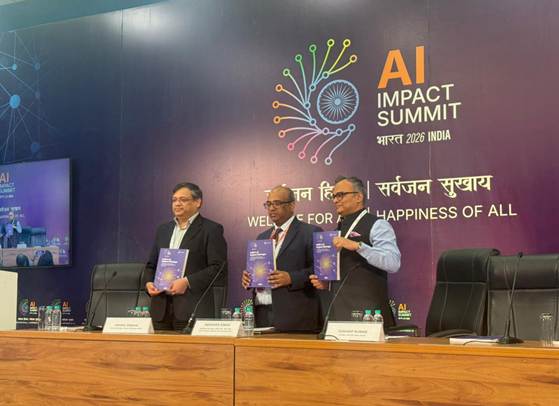
The Summit closed the loop with a forward-looking push into AI for Manufacturing Engineering Technology (AI-MET). Vaishnaw launched a White Paper Concept outlining how AI should be embedded across shop floors, supply chains, and MSMEs—backed by skilling, secure networks, and application-oriented education.
Executives from Microsoft, Cisco, Rockwell Automation, and academic leaders from MIT echoed a shared view: the next AI gains won’t come from demos, but from integration into physical systems.
More Than a Summit
What made the India AI Impact Summit 2026 compelling for tech insiders wasn’t any single announcement. It was the coherence.
Talent pipelines starting in schools. Compute scaling through sovereign infrastructure. Capital flowing into chips and cloud. Governance evolving alongside deployment. And a clear message: India wants AI that works—at scale, under constraints, for real users.
In that sense, the Summit didn’t just showcase India’s AI ecosystem. It showed how a nation is engineering one—layer by layer.
Related posts:
 In Conversation with Rajesh Mehta: Abhishek Singh, CEO, IndiaAI Mission on India’s Global AI Vision
 Indian American-led Micron Technology Invests $2.17 Billion in its Northern Virginia Expansion, Creating 340 Jobs
 The U.S. AI Action Plan and India’s Strategic Moment in Emerging Tech
 Inside India’s Big AI Moment: Power, Purpose, and a Bid to Shape the Future
