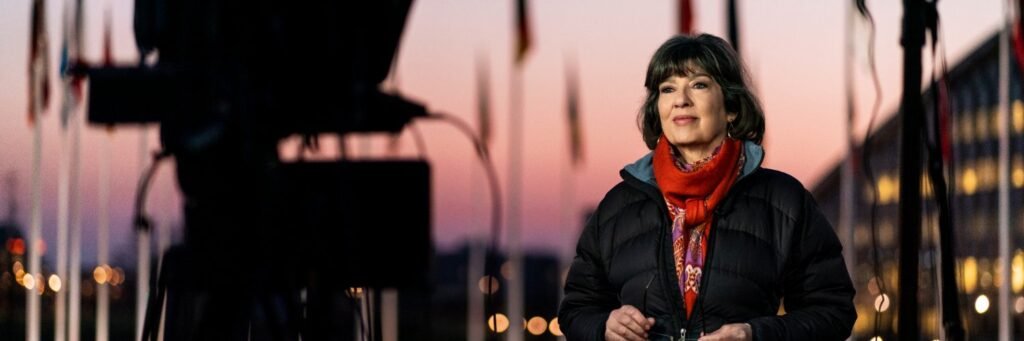
Her name invariably figures in the internet of renowned journalists worldwide. Christiane Amanpour, who has said she will quit CNN but not her plans for the future, is well known and highly respected among Indian media professionals and audiences who follow English-language news.
She is often viewed as a gold standard for international hard-news journalism, which, of late, is witnessing troubled times in India and much of the world.
From commenting on the yet-to-be-finalized India-United States trade deal to current Gen-Z protests, including an interview with the Cockroach Janata Party founder Abhijit Dipke and on press freedom in India with Ravish Kumar, she has earned numerous bouquets and brickbats from India and Indians abroad.
They include those who see her commending India-US relations, but also those who criticize her for providing a global platform to anti-government ‘disrupters’.
Like English-language television watchers across the world, the Indians were hooked on Amanpour in the early 1990s, covering the Gulf War, conflict in the Middle East and many other hot spots. War reporting is “a sense of mission, it’s a sense of purpose, it’s a sense of being able to tell a story,” she said.
She has visited India multiple times on journalistic assignments, not just to attend global summits.
Amanpour traveled to India in 2003 on a whirlwind sociological tour to film a segment for 60 Minutes focusing on social issues, specifically dowry and female feticide. During this reporting trip, she famously attended a large, traditional Indian wedding to interview women and investigate the cultural dynamics of arranged marriages.
In 2018, she visited New Delhi as part of her six-part CNN docuseries, Sex and Love Around the World. For this assignment, she conducted intimate interviews with local Indian women to explore modern shifts in romance, intimacy, and societal roles.
Over her 43-year career at CNN, she has repeatedly covered India during her international reporting rotations.
She enjoys a limited but fast-growing reach. Her name recognition is concentrated among urban, English-speaking demographics rather than the general public who are used to consuming news and current affairs on 400-plus television networks in multiple Indian languages.
In February this year, Amanpour provided prominent international analysis on a major US-India trade agreement framework involving tariff updates on energy imports, outlining the deal’s broader geopolitical significance for global markets.
Amanpour has regularly anchored segments covering critical matters in the subcontinent. In 2023, her program “Amanpour and Company” highlighted the state of journalism and media independence in India, featuring an in-depth discussion on the documentary
Her broadcasts have frequently monitored South Asian geopolitics, including panel discussions and reporting on shifting tensions between India and Pakistan, as well as major humanitarian events such as the impact of the COVID-19 crisis in the country.
For viewers based in India, her flagship show Amanpour is officially available to watch live, or through catch-up streaming via local distributors such as JioTV on the CNN International channel.
Disclaimer: The opinions and views expressed in this article/column are those of the author(s) and do not necessarily reflect the views or positions of South Asian Herald.