Join WhatsApp Channel


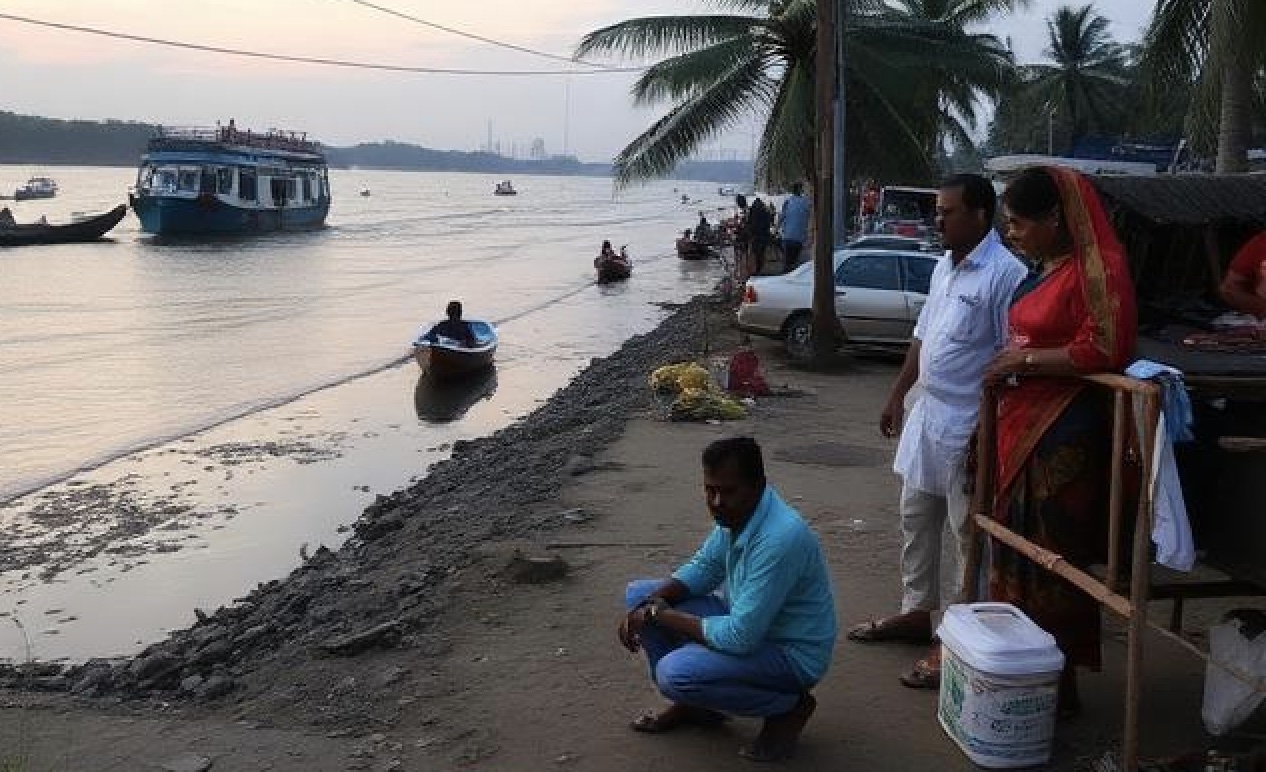
In a quiet village outside Kozhikode in India’s Kerala state, the first week of every month usually brings a small moment of relief. A notification pings on a mobile phone — a transfer from Dubai. The money, sent by a son who works long shifts at a construction site in the desert heat, arrives just in time to settle the family’s monthly ledger: groceries, electricity, school fees, and perhaps a small instalment on the home loan that built the house he hopes to return to one day.
But lately, the routine has begun to feel uncertain.
The war now spreading across West Asia — missile strikes, retaliatory attacks and mounting tension around key shipping routes — may seem distant from South Asia’s villages and crowded towns. Yet the economic shockwaves are already travelling quietly across the region, slipping through oil prices, labor markets and currency pressures until they land, unmistakably, on the kitchen tables of ordinary families.
For governments, the conflict is about energy security and geopolitics. For millions of households across South Asia, it is something far more intimate: a monthly budget suddenly under strain.
And the deeper fear — spoken in low voices in homes from Bangladesh to Nepal — is simple. What if the next transfer does not arrive?
A fragile bridge between the Gulf and home
For decades, the economies of South Asia have been bound to the Gulf through a vast human corridor of labor.
Millions of workers from India, Bangladesh, Pakistan, Nepal and Sri Lanka live in the cities and industrial zones of the Gulf Cooperation Council states — building skyscrapers in Dubai, staffing hotels in Doha, driving taxis in Riyadh, loading cargo in Kuwait.
They left home in search of opportunity, but the money they send back has become something larger: the financial lifeline of entire communities.
India alone received roughly $135–136 billion (about ₹11 lakh crore) in remittances last year, the largest inflow in the world. Bangladesh recorded $32.8 billion (₹2.7 lakh crore), while Pakistan received about $26.5 billion (₹2.2 lakh crore) in just eight months of its fiscal year.
For Nepal, the dependence is almost existential. Remittances account for roughly one-quarter of the country’s entire economy.
Behind these figures are millions of stories.
A father in Abu Dhabi working double shifts to fund his daughter’s university education in Kerala. A Bangladeshi construction worker in Saudi Arabia sending money home so his family can finally replace a tin roof with concrete. A Nepali security guard in Qatar quietly wiring his wages each month to support parents and younger siblings.
Their money travels home electronically, but its impact is deeply physical: food on the table, schoolbooks in a child’s bag, cement poured into the foundations of a new home.
Oil prices reach the market stalls
Now, as war unsettles the Gulf, the first economic tremor is arriving through oil.
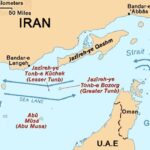
The Strait of Hormuz — the narrow waterway through which a vast share of global oil exports flows — has become a focal point of tension. Around 20% of the world’s oil and LNG supplies pass through the strait, making it one of the most critical arteries of the global energy system.
Nearly 89% of the crude shipments moving through that corridor head toward Asian markets, including India and other major energy importers in the region.
As shipping risks increase and oil prices surge, the consequences are already filtering through South Asian economies.
India imports roughly 5.5–6 million barrels of crude oil each day, meaning that every $10 rise in oil prices can add about $20 billion (₹1.6 lakh crore) to the country’s import bill.
Those numbers quickly translate into something more tangible.
Petrol prices inch upward. Transport costs rise. Vegetable sellers pass on the higher cost of trucking produce from farms to city markets. Cooking gas cylinders — already expensive for many households — become harder to afford.
Slowly, almost imperceptibly, the monthly cost of living begins to climb.
The deeper anxiety: jobs in the Gulf
Yet the true fear in many South Asian homes is not just higher prices. It is the possibility that work in the Gulf could slow.
Migrant workers from the region are heavily concentrated in sectors that tend to falter when geopolitical tensions escalate — construction, tourism, retail and transport.
Construction alone employs a large share of foreign workers across the Gulf. When uncertainty rises, infrastructure projects are often postponed, and private developers delay new investments.
The impact on migrant workers rarely arrives dramatically. Instead, it unfolds in quiet increments: overtime disappears, shifts become shorter, wages are delayed.
And when the paycheck shrinks, so does the money sent home.
For families dependent on those transfers, the difference can be devastating.
A worker who once sent home $500 every month may suddenly manage only $300. Another may skip a transfer entirely while waiting for wages to arrive.
In households where that remittance covers nearly every expense, the consequences ripple quickly.
The mathematics of survival
Across South Asia, remittance income underwrites the fragile mathematics of family survival.
In Nepal, the monthly transfer often funds everything from groceries to school uniforms. In Bangladesh, migrant income helps families manage rising food prices and education costs. In Pakistan, it frequently covers electricity bills and healthcare.
Even in India, remittance-heavy regions such as Kerala have built entire local economies around money flowing back from the Gulf.
When that income shrinks while prices rise, the adjustments can be painful.
Families delay medical visits. Children may be shifted from private schools to government ones. Repairs to homes are postponed. Loans are taken from relatives or local lenders.
Each decision is small, but together they reshape household life.
A double shock
Economists warn that South Asia now faces a rare and troubling scenario.
Traditionally, when oil prices fall, remittances from the Gulf also decline because Gulf economies slow. But the effect is partly offset by cheaper energy imports.
Today, the opposite risk looms.
Oil prices are climbing while the Gulf labor market faces uncertainty.
If the conflict drags on and economic activity in the Gulf weakens, South Asian households could face a double blow: rising living costs and shrinking remittances.
For countries such as Pakistan, Sri Lanka and Bangladesh — all of which rely heavily on imported energy — the combination could also strain national finances and currencies.
But long before those pressures appear in macroeconomic statistics, they are felt somewhere else first.
When distant wars arrive at home
In the small homes scattered across South Asia’s villages and towns, the war in West Asia is not discussed in strategic terms.
Instead, it is talked about in fragments: a rumor about layoffs in Dubai, a news report about oil prices, a delayed bank transfer.
Families check their phones more often, waiting for the message that confirms the money has arrived.
Sometimes it does.
Sometimes it arrives a little later — or a little smaller than before.
And in that moment, the distance between the Gulf and South Asia suddenly feels much shorter.
Because in this part of the world, wars abroad rarely remain distant for long. Eventually, they arrive quietly — in the form of a smaller remittance, a higher grocery bill, and a household budget stretched just a little further than before.