Join WhatsApp Channel


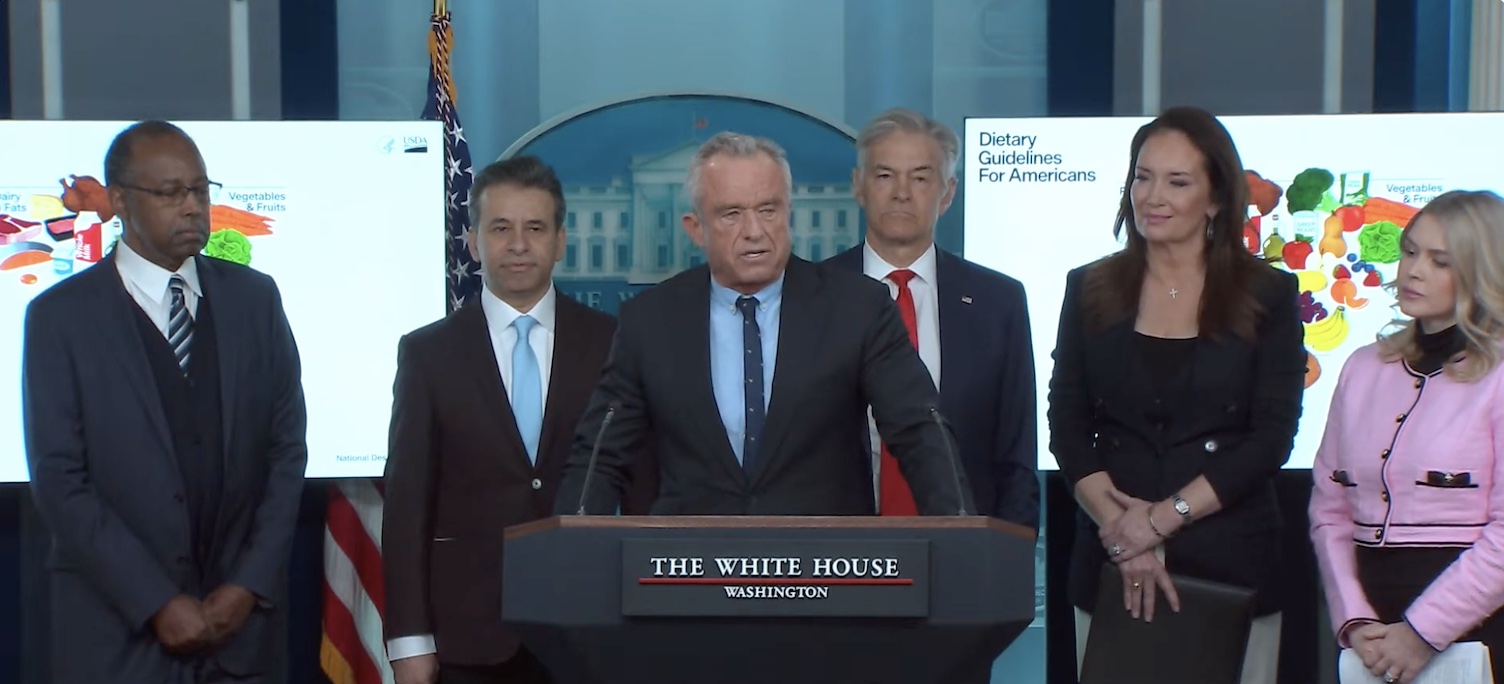
The Trump administration has formally released the 2025–2030 Dietary Guidelines for Americans, urging households and schools to prioritize whole, nutrient-dense foods, including higher intake of protein, dairy, healthy fats, whole grains, and fruits and vegetables.
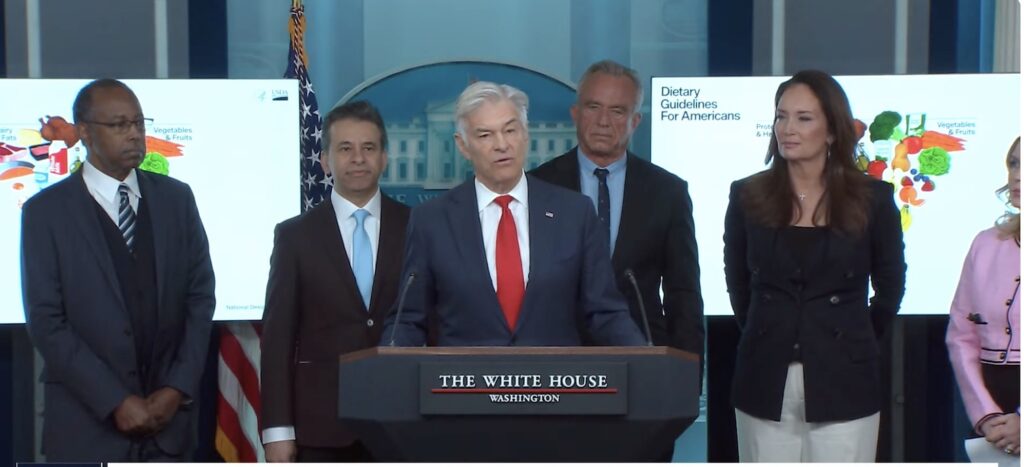
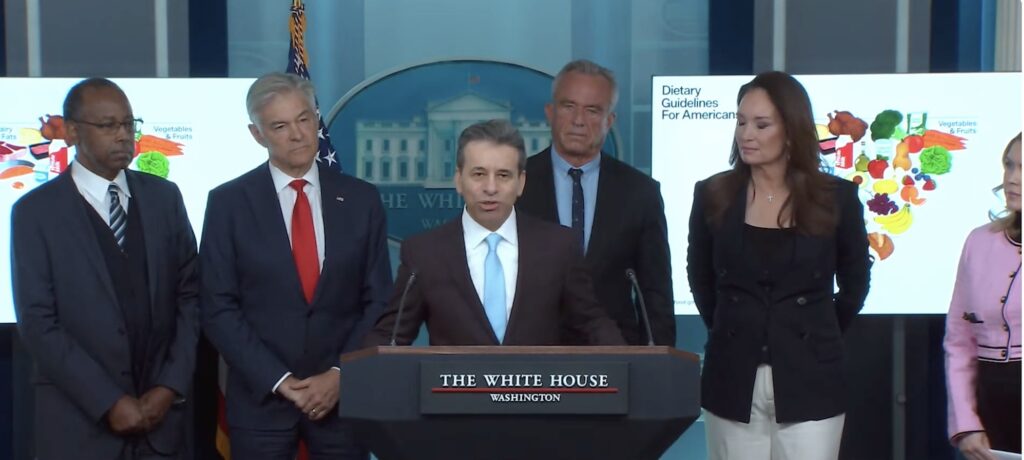
Senior health and agriculture officials announced the new guidelines during a White House press briefing on January 7, 2026. Those present included Secretary of Health and Human Services Robert F. Kennedy Jr., Secretary of Agriculture Brooke Rollins, Centers for Medicare and Medicaid Services Administrator Mehmet Oz, FDA Commissioner Marty Makary, and National Nutrition Advisor Ben Carson, and White House Press Secretary Karoline Leavitt.

“Today marks a decisive change in federal nutrition policy made possible by President Trump’s leadership and the work of MAHA moms and public health advocates who demanded reform today in accordance with President Trump’s directive,” Secretary Kennedy said, describing the Dietary Guidelines for Americans as the most “significant reset” of federal nutrition policy in history.
Secretary Kennedy said the updated framework replaces what he characterized as “corporate driven” assumptions with “common sense” goals grounded in scientific integrity. “These new guidelines will revolutionize our nation’s food culture and Make America Healthy Again,” he added.
According to Secretary Kennedy, prior federal policies promoted and subsidized highly processed foods and refined carbohydrates while overlooking their long-term health consequences. The new guidelines, he said, recognize that whole, nutrient-dense foods represent the most effective path to improved health outcomes and lower health care costs.
“Protein and healthy fats are essential, and we’re wrongly discouraged in prior dietary guidelines. We are ending the war on saturated fats. Diets rich in vegetables and fruits reduce disease risk more effectively than many drugs. Whole grains outperform refined carbohydrates, added sugars, especially sugar, sweetened beverages, drive metabolic disease,” he said.
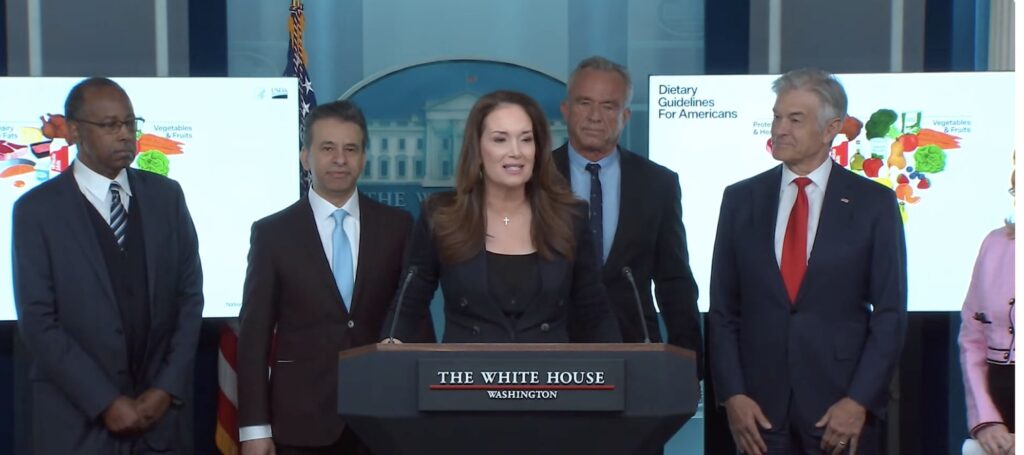
Secretary Kennedy emphasized that the administration is taking direct aim at added sugar and highly processed foods, while also cautioning that excess salt harms health and should be limited.
“As Secretary of Health and Human Services, my message is clear, eat real food. Nothing matters more for healthcare outcomes, economic productivity, military readiness and fiscal stability,” he said. “Dietary guidelines shape dozens of federal feeding programs, including Head Start. These standards affect 45 million school lunches every day, meals for 1.3 million active-duty service members and food served to 9 million veterans in VA hospitals.”
He said the next phase will focus on aligning those programs with “affordable, whole nutrient dense food,” noting that implementation will require coordination across the federal government. Secretary Kennedy added that he is working with other key officials to carry out the changes and thanked American Medical Association President Dr. Bobby Mukkamala for committing to mobilize the medical community around nutrition.
Secretary Kennedy also expressed appreciation for the American Academy of Pediatrics for its partnership and said he looks forward to working with Dr. Jay Bhattacharya Director of the National Institutes of Health, and FDA Commissioner Makary to expand rigorous nutrition research.
“The stakes are measurable and severe,” Secretary Kennedy said, citing a Johns Hopkins study estimating that 48 percent of every federal taxpayer dollar is spent on health care. He added that the Centers for Disease Control and Prevention reports that 90 percent of health care spending goes toward treating chronic disease.
“The United States has the highest obesity and type two diabetes rate in the developed world,” he said, noting that the country spends three times more per capita on health care than the European Union. He added that life expectancy in the United States is five years lower, largely due to diet-related chronic disease. “Our childhood obesity rate is five times higher than countries like France, 1/3 of US teens have prediabetes, over 35% are overweight or obese, and 20% of young adults have nonalcoholic fatty liver disease,” he said.
Secretary Kennedy also pointed to federal nutrition assistance programs, noting that 42 million Americans rely on SNAP, with common purchases including sugary drinks, candy, and chips. He said approximately 78 percent of SNAP recipients are enrolled in Medicaid, and 90 percent of Medicaid spending goes toward chronic disease. “These incentives raise health care costs and undermine health. This must change,” he said.
Secretary Rollins warned that “America is in the middle of the worst chronic health crisis in our nation’s history.” She said more than 40 percent of the nation’s roughly 73 million children have at least one chronic health condition, while nearly 90 percent of health care spending is directed toward chronic disease.
Secretary Rollins said the administration views the new guidelines as a major step toward addressing the crisis. She described the central message as straightforward and noncontroversial. Eat real food.
She said the 2025–2030 guidelines encourage households and schools to focus on whole, nutrient-dense foods, emphasizing that real food nourishes the body, restores “health, fuels energy, and builds strength.” Secretary Rollins added that the approach builds on the country’s existing food supply, pointing to farmers and ranchers who produce milk, raise cattle, and grow fruits, vegetables, and grains.
“They hold the key to solving our national health crisis,” she said. “These new dietary guidelines are a framework which is meant to be customized to meet the needs, the preferences and the financial status of all American families.”
Administrator Oz said the revised guidelines could significantly reduce reliance on costly medications. “What you’re hearing today with these dietary guideline adjustments are going to be massively effective at not just dropping the need for us to buy these weight loss drugs, but buy these expensive drugs for autoimmune problems,” he said.
He added that evidence increasingly shows food can function as medicine for conditions ranging from mental health challenges to Alzheimer’s disease and learning outcomes in children.
FDA Commissioner Makary said the guidelines mark the beginning of the end of what he described as an era of “medical dogma on nutrition.” He cited a recent study published in JAMA showing that 60 to 70 percent of children’s calories come from ultra-processed foods.

“That’s an epidemic. We now have a generation of kids addicted to refined carbohydrates, low in protein, they are literally nitrogen negative because we’ve used old, flawed studies that used urine nitrogen to estimate body protein metabolism, and they missed the mark,” Makary said. “These new protein guidelines are designed for American kids to thrive, and they’re based on science, not on dogma.”
Press Secretary Leavitt said the updated guidelines are informed by the most reliable research on health and nutrition, particularly regarding the role of diet in chronic disease.
She emphasized that the guidelines are written to be accessible to the public. “These guidelines are easy to read and understand, so every American, young and old, can access this information that literally has the power to change lives,” she said.
“But these are not just an updated guideline. These are the foundation to all federal food programs in our country,” Leavitt added. “These new guidelines are going to update the food that is served to America’s children in our public schools, to the plates that are served to our great men in uniform…”