Join WhatsApp Channel

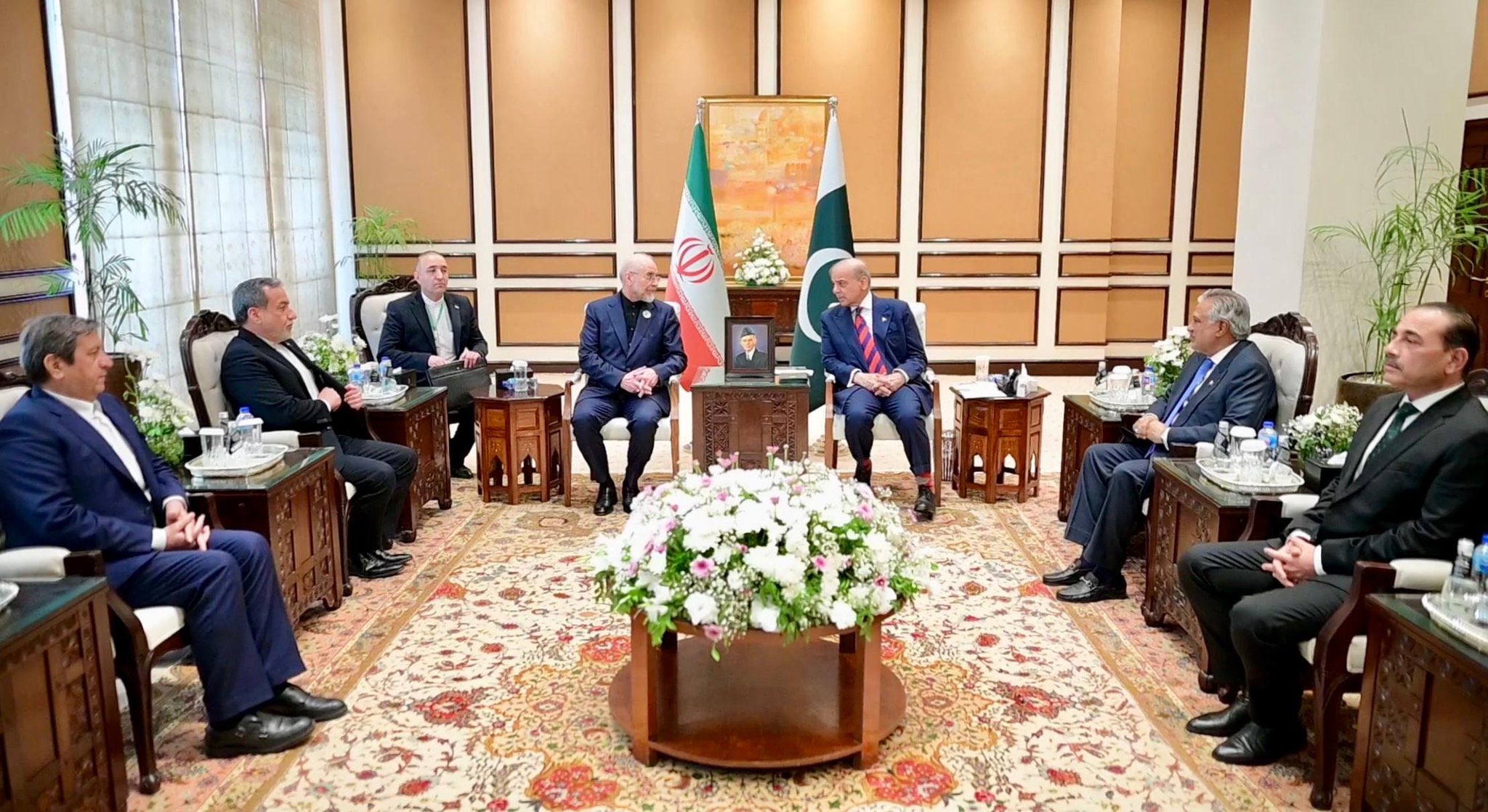
In the annals of failed diplomacy, the Islamabad talks may come to be remembered not merely as a missed opportunity, but as a turning point — the moment when the last credible off-ramp from a widening Middle East war quietly closed. The talks ended in under 24 hours. The consequences may last a generation.
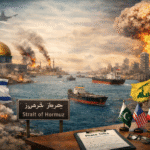
What was conceived as a fragile but genuine attempt to halt six weeks of devastating US–Israel military operations against Iran instead became a theater of maximalism, mutual contempt, and strategic miscalculation. Washington demanded full dismantlement of Iran’s nuclear program. Tehran refused to relinquish control of the Strait of Hormuz — the narrow chokepoint through which roughly a fifth of the world’s oil supply flows every day. Neither side blinked. Both sides left.
Within hours, President Donald Trump signaled what would follow: “I don’t care if they come back or not,” he said of Iran’s negotiators — a sentence that, stripped of its bluster, constituted a formal announcement that diplomacy was over and coercion had begun.
THE HORMUZ STAKES — BY THE NUMBERS
- ~140 ships transiting daily in normal conditions
- 20% of global oil supply passing through
- $104 US crude per barrel after blockade announcement
THE ANATOMY OF COLLAPSE
Diplomats who were briefed on the Pakistan proceedings describe not a negotiation but a confrontation dressed in the language of talks. The United States entered with conditions that Iran’s delegation viewed as structurally designed to fail: total cessation of uranium enrichment, surrender of significant portions of the nuclear stockpile, and no guarantees of sanctions relief in return. Iran, for its part, proposed something that instantly poisoned the atmosphere — a system of transit fees on vessels passing through the Strait of Hormuz, a waterway that international law has long treated as a global commons.
For Washington, that proposal was not a negotiating position. It was a red line crossed before serious talks could begin. For Tehran, insisting on it was a signal of something deeper: that Iran views physical control of Hormuz not merely as a bargaining chip but as a core element of its strategic deterrence — one it has no intention of relinquishing regardless of diplomatic outcomes.
The “atmosphere of mistrust,” as multiple officials described it, was not merely a mood. It was a structural reality. Both delegations arrived in Islamabad knowing the other side’s bottom line was incompatible with their own. The talks, in this reading, were not designed to succeed. They were designed to fail publicly — so that each side could point to the other’s intransigence as justification for what came next.
“Both sides entered with maximalist positions and deep mutual suspicion. The result was predictable: the talks collapsed in less than 24 hours,” officials briefed on the proceedings.
THE BLOCKADE DOCTRINE
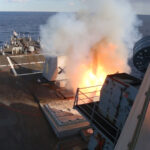
What came next, from Washington, was the weaponization of geography. Trump’s initial instinct — to shut down the Strait entirely — was refined into something more legally defensible but operationally almost as disruptive: a US naval blockade targeting all vessels entering or leaving Iranian ports, while nominally permitting transit to other destinations. Central Command announced the measure would take effect Monday.
Markets did not wait for Monday. Crude oil prices surged immediately, with US benchmarks crossing $104 per barrel and Brent above $102. Shipping intelligence firms reported that maritime traffic through the Strait had effectively halted, with vessels turning back amid uncertainty about the rules of engagement. In practice, the “limited” blockade had already achieved something close to the “total” one Trump initially floated: a paralysis of one of the world’s most critical maritime arteries.
The logic underlying the blockade is what analysts are calling an “all or none” doctrine — a posture that says, in effect: either Hormuz operates under US-enforced rules of navigation, or it does not operate at all. The implicit assumption is that economic pain severe enough, applied quickly enough, will force Iranian concessions. It is a theory that has historically underperformed its expectations in dealings with Tehran.
Iran’s response was defiant but also revealing. The Islamic Revolutionary Guard Corps warned that any approaching military vessels would be treated as ceasefire violations. Naval commanders publicly dismissed the blockade as “ridiculous.” But beneath that performance of confidence lies a serious strategic dilemma: Iran cannot allow the blockade to stand without surrendering the deterrent leverage Hormuz provides, yet any kinetic response risks triggering the full military confrontation it has spent decades trying to avoid.
THE IRGC FACTOR: WHY HORMUZ IS NON-NEGOTIABLE
To understand why peace has so little oxygen left in this conflict, one must understand what the Strait of Hormuz means to the Revolutionary Guard — and why the IRGC’s explicit declaration that “nobody can interfere” with Iranian control is not merely rhetoric but doctrine.
For the IRGC, Hormuz is the ultimate asymmetric equalizer. Iran cannot match American air power, carrier groups, or satellite-guided precision munitions. What it can do is threaten to close a waterway through which the economies of Japan, South Korea, India, and much of Europe depend for energy. The Strait is not just a geographic feature. It is Iran’s nuclear deterrent substitute — the capability that makes a direct confrontation with the United States strategically costly even for a superpower.
Any Iranian leadership that negotiates away meaningful control of Hormuz does not survive politically. This is why the transit-fee proposal — provocative as it was — should be read less as a serious revenue proposal and more as a declaration of jurisdiction: Iran asserting, in the language of commerce, what it has always claimed in the language of military power. The IRGC does not merely patrol Hormuz. In its own strategic doctrine, it owns it.
This makes the current standoff structurally different from past crises. Previous confrontations — even serious ones — left room for face-saving compromises. Both sides could claim partial victories. Today, with the US blockade in place and the IRGC publicly declaring that interference will be met with force, the space for such compromises has narrowed to near-nothing.
ESCALATION WITHOUT A CEILING
Reports from Washington indicate that the administration is now actively considering strikes on Iranian energy infrastructure. Trump himself has floated the possibility of taking out Iran’s power grid “in a matter of hours” — a threat that, if executed, would constitute one of the most consequential acts of deliberate infrastructure warfare in modern history, with humanitarian effects that could far outlast any military objective.
The debate in Washington has hardened along partisan lines, but that framing obscures the more important divide: between those who believe escalatory pressure will produce Iranian concessions and those who believe it will produce Iranian retaliation. History strongly supports the latter. Iran has never responded to coercion by capitulating. It has responded by expanding its capabilities, deepening its regional alliances, and waiting for the political winds to shift in Washington.
Iran’s declared posture — that Hormuz is under IRGC control and that no external party has the right to interfere — leaves almost no room for a graduated de-escalation. If the blockade tightens and the IRGC does not respond, Iran loses the deterrent that defines its strategic position. If it does respond, the two sides are in direct military contact inside one of the world’s most volatile corridors, with all the miscalculation risks that entails.
“The Strait of Hormuz is not a bargaining chip for Tehran. It is the deterrent. Asking Iran to negotiate it away is asking the IRGC to disarm,” senior regional security analyst noted.
THE GLOBAL ECONOMY IN THE CROSSFIRE
While the strategic calculus plays out between capitals, the human and economic consequences are already being felt across the globe. The war had already removed millions of barrels per day of oil from global markets. The blockade compounds that loss. Energy analysts warn of prices well above current levels if the disruption continues into the summer months, when demand in the Northern Hemisphere peaks.
The United Nations Development Programme has warned that more than 32 million people could be pushed into poverty by a “triple shock” of rising energy costs, food insecurity driven by fertilizer shortages, and slowing economic growth. These are not abstract projections. In developing nations across South Asia, sub-Saharan Africa, and Latin America, the pass-through from oil prices to food prices is near-immediate, affecting populations that have no buffer against the shock.
Aviation has become a parallel casualty. With Iranian and Israeli airspace effectively closed and Gulf carriers operating at 40 to 70 percent of normal capacity, the region’s skies have become as contested as its seas. British Airways, Lufthansa, Singapore Airlines, and KLM have suspended key routes for months. Travelers face not just inconvenience but a tangible sign of how completely the conflict has penetrated the normal functioning of global commerce.
THE MARGIN FOR ERROR IS GONE
Diplomacy requires one thing above all: a shared interest in avoiding the worst outcome. In the hours and days following the Islamabad collapse, the evidence that such a shared interest still exists has become difficult to find. Trump has signaled contempt for the negotiating process. Iran’s IRGC has staked its institutional credibility on not yielding Hormuz. The ceasefire that briefly paused hostilities now looks less like a foundation for peace and more like an intermission before a larger confrontation.
What the failed talks revealed, most starkly, is that the two sides are not merely divided on specific issues. They are operating from fundamentally incompatible strategic frameworks. Washington believes coercion can produce compliance. Tehran believes resilience under coercion is the only guarantee of sovereign survival. Both sides have history — selectively read — to support their view.
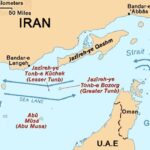
In the narrow maritime corridor between Iran and Oman, where US naval assets and IRGC fast boats now operate in uncomfortably close proximity, the margin for miscalculation has effectively vanished. A single incident — a warning shot misread, a vessel’s transponder malfunctioning, a commander who believes an attack is imminent — could trigger the escalation that both sides publicly claim they want to avoid but neither has structured their posture to prevent.
The Islamabad talks were supposed to be the moment when the world stepped back from that edge. Instead, they became the moment the last guardrail was removed. For now, the ships turn back, the planes reroute, oil prices climb, and the rhetoric hardens on both sides. Peace has not merely been deferred. In any meaningful near-term sense, it has been foreclosed.
(This analysis draws on reporting from diplomatic briefings, shipping intelligence firms, energy market data, and statements from US Central Command, the IRGC, and international aviation authorities.)
Disclaimer: The opinions and views expressed in this article/column are those of the author(s) and do not necessarily reflect the views or positions of South Asian Herald.