Join WhatsApp Channel


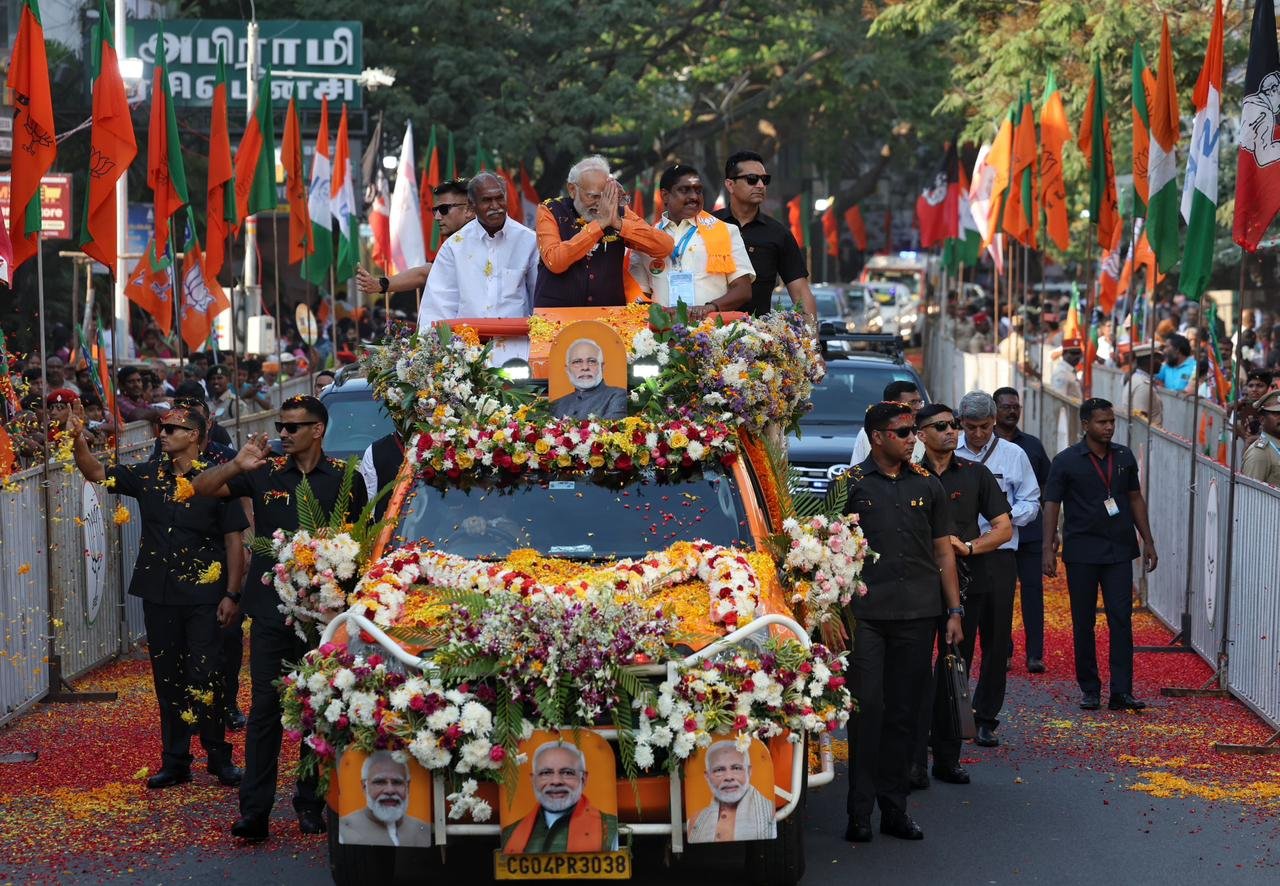
India is heading into its most consequential sub-national electoral cycle in a decade — and the campaign trail smells, unexpectedly, of kerosene. A war in West Asia, now entering its second month, has driven commercial LPG prices sharply higher, and Priyanka Gandhi Vadra, addressing a charged rally in Assam, has already weaponized that fact: the economic pain arriving in Indian kitchens is not merely global misfortune, she argues — it is a domestic policy failure compounded by New Delhi’s choices.
That framing, precise and politically portable, has inserted a distant conflict into the center of five state elections spread across 17.4 crore voters, 824 constituencies, and a country still calibrating its relationship with an increasingly volatile world.
The structural question these elections pose is deceptively simple: when a national government presides over a decade of measurable welfare delivery and macroeconomic stability, can an external shock — one beyond any prime minister’s control — still erode that record in the minds of voters?
Prime Minister Narendra Modi’s answer, delivered at rally after rally, is a confident no. The opposition’s bet is an equally confident yes. Between those two positions lies a voter who is simultaneously a beneficiary of state welfare, a payer of fuel bills, and a citizen deeply attached to the particular political culture of the state in which they live.
“The war abroad has entered the Indian kitchen. That is not a metaphor. It is a price tag.”
FIVE STATES — THE ELECTORAL SCALE
- Total eligible voters: 17.4 crore
- Constituencies: 824
- Polling stations: 2.19 lakh
- Election officials deployed: 25 lakh
- LPG price surge (since West Asia conflict): Est. +18–22%
- India crude import bill increase (annualized): Est. +$28–34 bn
THE MODI RECORD: REAL, BUT NOT INVULNERABLE
It would be a political error to underestimate what the BJP carries into these elections as an incumbent national force. Over the past decade, 22 lakh pucca houses in Assam alone. Direct benefit transfers.
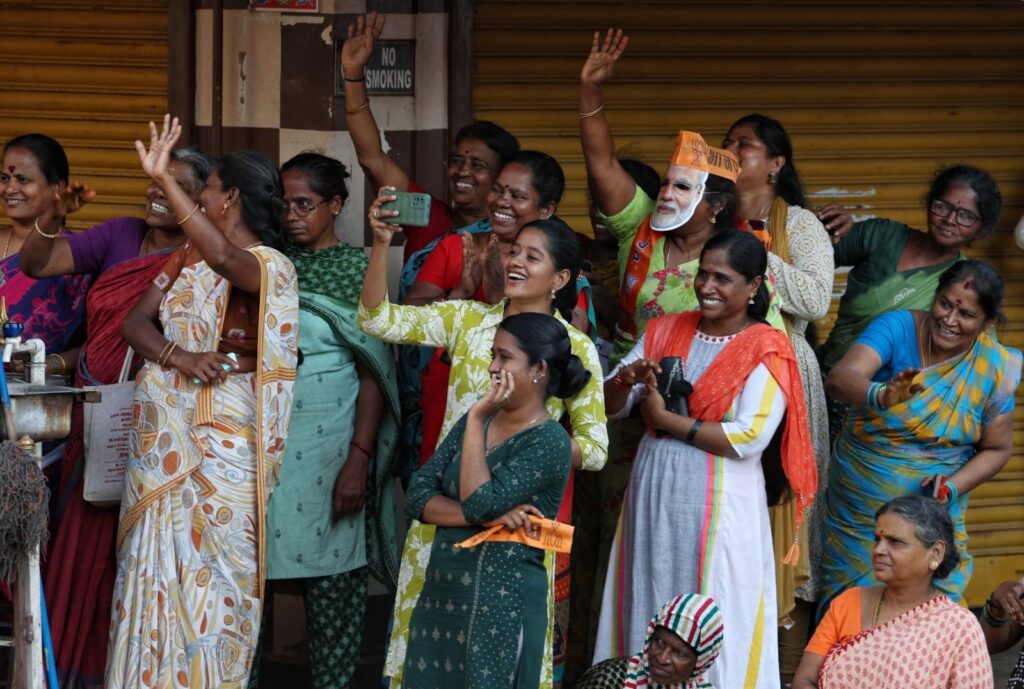
Food security coverage that reaches the bottom quartile of the electorate. An infrastructure build-out — roads, toilets, piped water — that is visible and attributable. The BJP’s campaign in every state anchors itself to this record of delivery, presenting governance as a cumulative asset rather than a single cycle’s promise.
Yet welfare delivery, as any seasoned psephologist will tell you, creates a political paradox: once delivered, a house is no longer a promise — it is a baseline. Voters do not perpetually reward past benefits; they assess present conditions. And present conditions, as the West Asia shock bites, are beginning to pinch. India imports roughly 85 percent of its oil. Every ten-dollar rise in Brent crude adds approximately $12–15 billion to the national import bill annually. That arithmetic does not stay in spreadsheets. It surfaces in auto-rickshaw fares, cooking gas refills, and trucking costs that eventually reach every vegetable market in every constituency.
STATE BY STATE: THE REGIONAL SATRAPS HOLD THE KEY
The BJP’s strategic miscalculation, if one exists, may be its persistent faith that a national narrative can override state-specific political cultures. Five elections are not one election. They are five distinct contests, each governed by local leadership credibility, linguistic identity, historical allegiances, and candidate-level trust that no amount of prime ministerial airtime can substitute for.
Assam: Leans BJP
BJP’S STRENGTH: Himanta Biswa Sarma’s incumbency; welfare delivery; identity consolidation; third-term momentum
OPPOSITION OPENING: LPG-linked inflation; Congress linking Gulf crisis to domestic mismanagement; tea garden belt vulnerability
Tamil Nadu: Leans DMK
DMK’S STRENGTH: Stalin’s governance continuity; Dravidian model welfare; superior Tamil-language campaigning; no credible challenger
UNCERTAINTY FACTOR: TVK’s Vijay — fan base vs political base; AIADMK welfare promises; BJP remains a structural outsider
West Bengal: Most volatile
TMC’S STRENGTH: Mamata’s Bengali identity narrative; anti-outsider sentiment; grassroots organizational depth
BJP’S CHALLENGE: Full Modi-Shah machinery deployed; anti-corruption framing; voter roll controversy adds volatility
Kerala: Edge to UDF
LDF PRESSURE: Pinarayi Vijayan’s governance narrative; ideological continuity; strong institutional machinery
UDF ARGUMENT: Left fatigue; centre-state fiscal hostility; Rahul Gandhi’s Kerala profile; BJP expanding as third force
Puducherry: NDA advantage
NDA EDGE: Rangaswamy incumbency; alliance arithmetic; smaller electorate amplifies organizational strength
RISK: Congress-DMK coordination; incumbency fatigue; LPG-linked inflation hits disproportionately
THE TAMIL NADU PARADOX: FAN BASE IS NOT POLITICAL BASE
Tamil Nadu deserves separate examination because it illustrates, with particular clarity, the distinction between national ambition and state-level reality. The BJP remains a structural outsider in a political culture governed by the Dravidian idiom — a language, an aesthetic, a way of claiming the voter’s trust that neither Hindi-medium messaging nor English-language advertising can replicate. The alliance with AIADMK provides an organizational scaffold, but Edappadi K. Palaniswami’s AIADMK is itself a diminished force, still rebuilding after its 2021 rout.
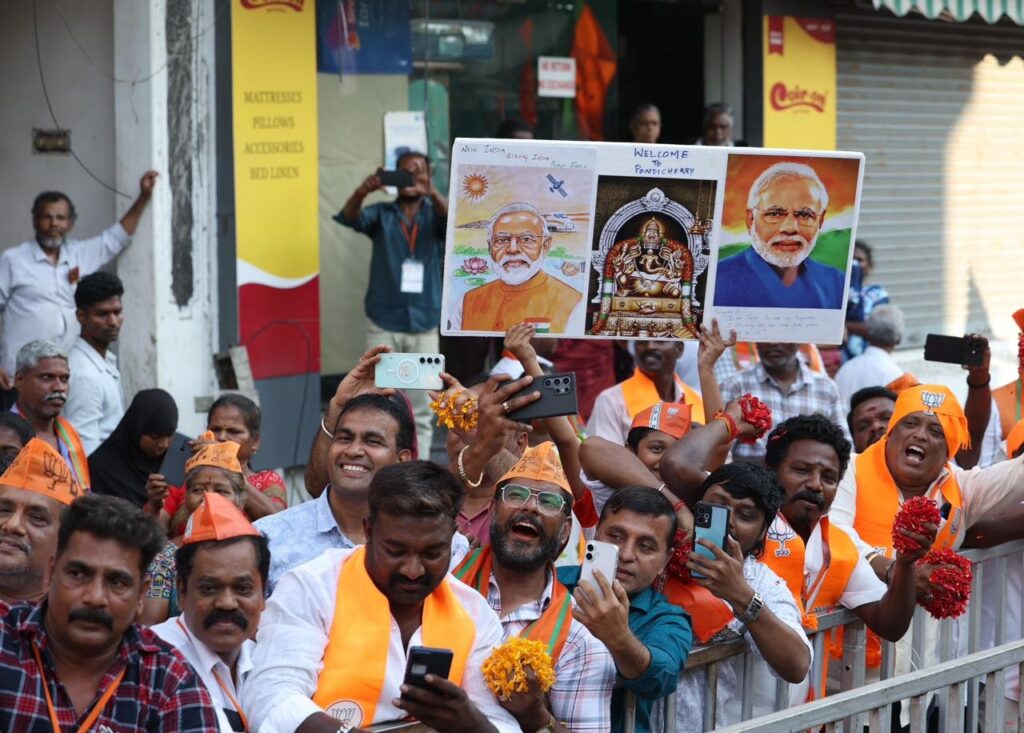
Into this vacuum has arrived actor Vijay and his TVK, drawing enormous crowds and media attention. The psephological verdict, however, is cautionary: crowd size at a rally and vote share on polling day are different instruments. Fan allegiance built over decades in cinema does not transfer automatically to political loyalty. TVK, already buffeted by the tragic stampede at Karur and the controversies surrounding it, risks becoming a vote-splitting instrument that benefits neither itself nor the BJP-AIADMK combine — and may paradoxically consolidate DMK’s position by dividing the opposition vote.
M. K. Stalin is no MGR, no Jayalalithaa — he lacks that generational charisma. But in Tamil Nadu’s current landscape, he is, crucially, the most credible administrator in the field. In a five-way fractured contest, credibility of delivery outweighs magnetism of personality.
BENGAL: WHERE EVERY ELECTION IS A DIFFERENT WAR
West Bengal is its own political universe, and Mamata Banerjee understands its grammar better than any national strategist dispatched from Delhi. Her campaign is viscerally cultural: the BJP, she insists, will dictate what Bengalis eat, how they pray, which language carries dignity. That message, repeated in the cadence of Bangla political oratory, lands differently than any welfare statistic. The BJP’s counter — that corruption, lawlessness, and misgovernance under TMC have made Bengal ungovernable — is accurate in significant parts and yet struggles to break through the identity firewall Mamata has constructed.
The Left, once the dominant force in this state for three unbroken decades, is now a ghost at the electoral table. Its collapse has not redistributed cleanly to either side — creating a genuinely volatile constituency of former Left voters who swing election to election based on local candidate quality and micro-level grievances. Those voters are the true wild card of Bengal 2026.
NATIONAL NARRATIVE (BJP)
Decade of welfare delivery Infrastructure visible nationally Gulf crisis is global, not Modi’s fault
India better managed than peers “Developed India” vision.
LOCAL COUNTER-NARRATIVE
LPG prices in kitchens now regional identity vs Delhi imposition Local leaders, local languages
Opposition: pain amplified by policy Inflation erodes welfare gains
THE GULF VARIABLE: ATTRIBUTION, NOT JUST ECONOMICS
The opposition’s strategic insight is not that the Gulf war caused India’s economic pain — it is that how the government responds to the pain determines its political cost. Congress is playing an attribution game: even if the shock is external, the insulation is domestic policy. Had fuel taxes been lower, had strategic reserves been better managed, had diplomatic bandwidth been used more effectively, the kitchen-level impact would be smaller. That argument is difficult to verify or falsify in the span of a campaign. But it does not need to be verified. It needs only to be felt — and fuel prices are felt every fortnight, every cylinder refill, every auto-rickshaw negotiation.
“When voters stand in the queue, they weigh not just the promises they were made — but the prices they paid since the last election.”
THE VERDICT THE PSEPHOLOGISTS DARE NOT CALL
The most honest forecast is a fragmented one. Assam leans toward a third BJP term — Himanta Biswa Sarma has built a formidable state machine, and the opposition lacks the momentum to dislodge it. Tamil Nadu leans toward DMK consolidation, barring a dramatic late swing driven by inflation anger. West Bengal remains the most genuinely uncertain contest — a state where every election has produced a result that defeated pre-election confidence. Kerala’s edge, historically cyclical, tilts toward the UDF, with the LDF appearing to have exhausted its current political cycle. Puducherry gives the NDA a structural arithmetic advantage.
What none of these state-level projections fully captures is the wild card embedded in every ballot: the voter who has received a pucca house, held a gas connection subsidized by the Centre, and is now — right now, today — paying significantly more to refill that cylinder because a war in a country most Indian voters could not locate on a map has disrupted the oil markets of the world. That voter is not irrational. That voter is doing arithmetic. And the outcome of that arithmetic, multiplied across 17.4 crore polling decisions, is what no psephologist, no exit poll, and no prime ministerial rally can fully predict.
Disclaimer: The opinions and views expressed in this article/column are those of the author(s) and do not necessarily reflect the views or positions of South Asian Herald.