 Join WhatsApp Channel


History is fascinating to those have created or been a part of it and in a hope that future generations would glean from the past and learn relevant lessons. Perhaps the only exceptions are the times nations go to war or seek to interpret history to suit objectives on hand. But it is difficult when policy makers ignore in spite of repeated reminders of what has happened in the yester years but not too forlorn in memory.
In the aftermath of the French defeat in Indochina in 1954 after the famous battle at Dien Bien Phu, President Charles de Gaulle warned Presidents John F Kennedy and Lyndon Johnson of their “futile, costly and unwinnable” adventure in South Vietnam and in the process also drawing the distinction between nationalism and communism—that Ho Chi Minh was first a nationalist and only then a communist. The advice of Washington’s falling into the trap of a “rotten quagmire” of staying with a “misguided” policy could not have been more forcefully put forth by the French leader.
“You will find that intervention in this area will be an endless entanglement. Once a nation has been aroused, no foreign power, however strong, can impose its will upon it… The ideology which you invoke will make no difference. Indeed, in the eyes of the masses it will become identified with your will to power. That is why the more you become involved out there against Communism, the more the Communists will appear as the champions of national independence,” de Gaulle is said to have told President Kennedy as depicted in “Memoirs of Hope: Renewal and Endeavor.”
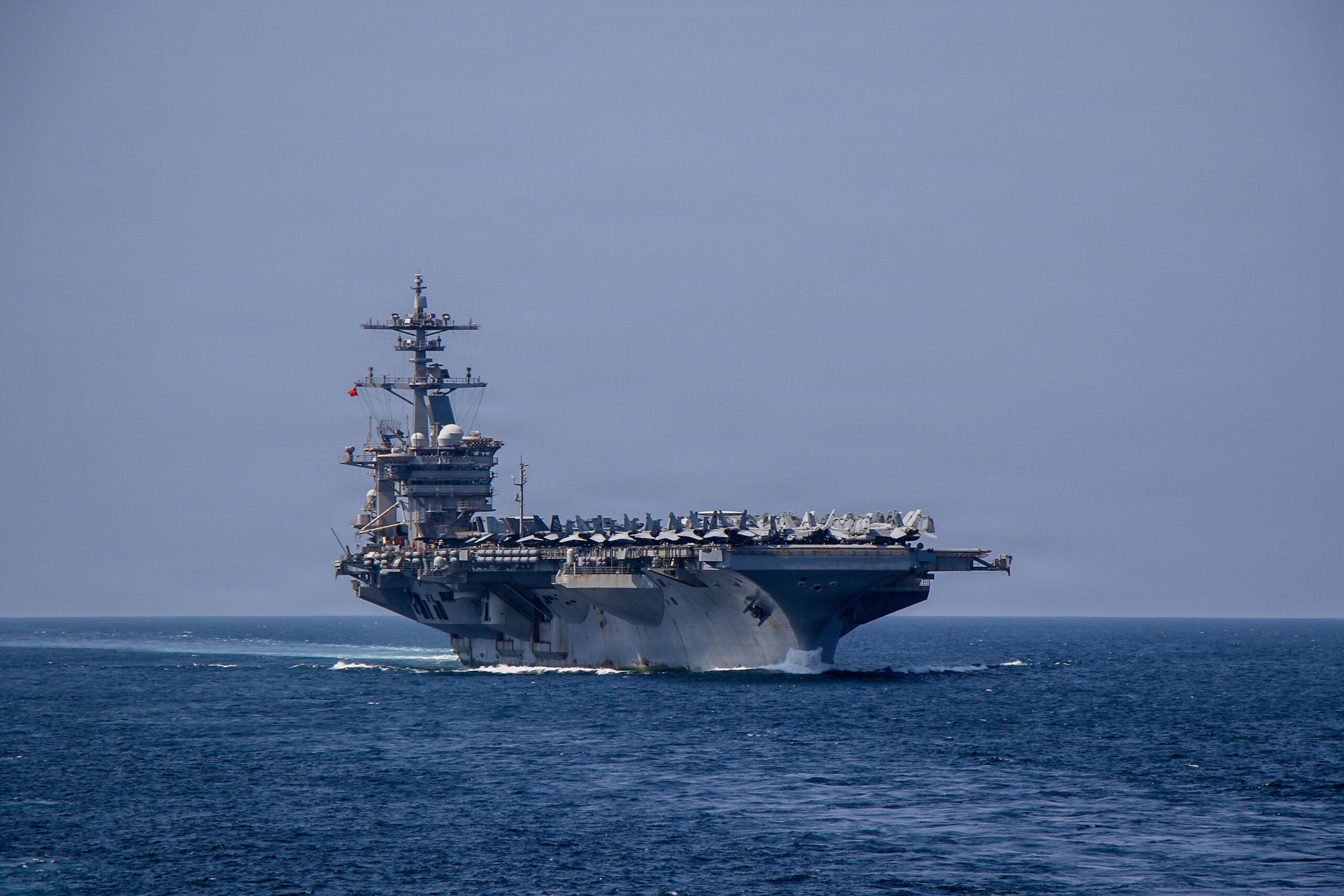
Few would be interested in remembering President De Gaulle or his wisdom of the 1950s even if the import of the message to the current goings on in Iran is still valid minus diatribes of communism, socialism or whatever. What is also of significance is a mistaken notion that “bombing the hell out of the enemy” would work as in an impression created that Operation Epic Fury has unleashed untold miseries and damages. What the Trump administration is seeing now is no different from what President Lyndon Johnson witnessed when he unleashed Operation Rolling Thunder in 1967 convinced that the North Vietnamese could be bombed into submission.
Sadly, for President Johnson, the North Vietnamese regrouped and delivered one of the strongest rebukes to the American military machine through the Tet Offensive of January 1968 forcing the Democratic President to bow out of the nomination race and also in a realization that he cannot seek the prize of the White House without “Middle America.” President Johnson is not around to share his perceptions of Operation Rolling Thunder, but President Bill Clinton can be asked to shed light on NATO’s Operation Allied Force in the 1999 bombing operations against former Yugoslavia. It was not the first bombs that brought President Slobodan Milosevic to his knees but after a sustained campaign of 78 days.
If Vietnam war should have taught American policymakers anything it is that no matter how dominant and superior fire power a combatant possesses, that alone is not enough. As Robert Pape writes in the latest edition of Foreign Affairs Why Escalation Favors Iran: America and Israel May Have Bitten Off More Than They Can Chew, “The lesson was not that bombing failed tactically. It was that Hanoi escalated horizontally, widening the conflict beyond rural battlefields into South Vietnam’s cities and political nerve canters, transforming a military contest into nationwide political upheaval, and reshaping domestic calculations in Washington. In Vietnam, the United States never lost a battle—but it still lost a war.”
The same thing has happened in the Middle East. Iran took the strategic decision to expand the war horizontally by hitting the Gulf States. The idea was going beyond striking at states that housed an American military facility; by going after Gulf infrastructure, Tehran also punctured the aura of invincibility, economic and strategic; and shutting down the Strait of Hormuz, as Pape points out, signaled the vulnerability of not just the oil that passes through the waterway, but a global message as well.
The today’s goings-on in the Middle East may not be the same as the 1973 Yom Kippur War, the Arab Oil Embargo on America and Richard Nixon’s desperate appeal to the American domestic audience to conserve oil, but the message has reached the American domestic heartland; has rattled Republican lawmakers seeking re-election in November 2026; and has provided a window of political opportunity to Democrats.
There is a feeling in some quarters that President Trump may have already jeopardized the Make America Great Again (MAGA) base by violating the “no war” pledge and in projecting himself as the candidate of peace who was against endless wars and meaningless regime change escapades. Now here is an administration unable to defend what indeed were the objectives, if there was an endgame or a coherent strategy in place. Rather what is left is a war that started with the Iranian nuclear program and quickly moved to regime change once Ayatollah Ali Khamenei was assassinated on Day One.
Then came the search for political alternatives in Tehran and in a thinking that perhaps the Kurds on the border with Iraq could be used to create instability in Iran without a realization that Iraq, Turkiye and Syria will not be too happy with such an arrangement. All this has led to a speculation that this entire Operation Epic Fury was nothing more than to take attention away from the Epstein Files that many even in the MAGA believe their President has not addressed in a straightforward fashion.
Some make the point that even now it is not too late for President Trump to declare victory and wind down a war that has created enough global problems to last a lifetime. But even this may be difficult at this point when facing a regime that seems to have been made stronger and refusing to sign on the dotted lines. The world may be in for the long haul.
Disclaimer: The opinions and views expressed in this article/column are those of the author(s) and do not necessarily reflect the views or positions of South Asian Herald.
Related posts:
 U.S. Launches Military Action in Iran as Indian American Lawmakers Question Legality of Strike
 ‘We see it in citizens across the world peacefully choosing their future — from Ghana to India to South Korea’ says President Joe Biden during his UNGA Address
 A Region at War, A World on Edge: The Expanding Iran Conflict
 Guest Column: Last Thing The World Needed Is a War In the Middle East
