Join WhatsApp Channel


It is pretty much anybody’s guess if one of the world’s oldest civilizations would have ended on Tuesday had it not been for the last-minute two-week ceasefire in the Middle East cobbled together principally by Pakistan and, according to some reports, with inputs from China. It is so painful to see the international system coming to such a pass, that too when it was time to take another look at Samuel Huntington’s Clash of Civilizations; here were folks openly talking of ending civilizations, and casually at that.
Only the extremely naïve would have thought that the leadership in Tehran would have been twiddling their thumbs to see themselves taken beyond the cave era. Even at the peak of the Cold War, the principals rarely discussed the use of nuclear weapons; for, as rational actors, they fully understood the implications of the use of nuclear weapons, thanks to Hiroshima and Nagasaki. This time, the destruction would not have been confined to Iran; it would most certainly have involved the Gulf nations and Israel.
Mercifully, a two-week truce has come into effect, even with the usual rumblings of violations, Iran saying that Israel has violated it by continuing its bombing of Lebanon, which was a part of the deal; the United States and Israel flatly refusing to accept this line and going on to make the point that if Tehran wants to make Beirut an example, it was perfectly capable of wrecking the process. Pakistan, which initially said that Lebanon was also part of the package, has preferred to stay out of the three-way back and forth. All eyes are on Islamabad, where the first face-to-face talks are to start, with no time frame.
At the heart of the peace talks will be the so-called 15-point and 10-point proposals by the United States and Iran respectively that have been floated around in the media but very little spoken of in official quarters. In fact, the American 15-point plan is seen as nothing more than a rehash of what was put forward in May 2025 that ultimately collapsed when Washington started its bombing operations in June 2025 of Iran’s nuclear installations. Last year itself, it was pointed out that Tehran had objected to a number of restrictions on the use of money linked to released sanctions. In fact, it was argued that Washington had agreed to look at only nuclear-related punitive measures and not the whole gamut, which would include human rights.
The United States had also insisted at that time in 2025, and is said to hold even now, that funds released from nuclear sanctions could not be used in any ballistic missile program; all uranium stockpiles should be shipped out of Iran; enrichment facilities and centrifuges would be made unusable; and that Washington would fund a new Iranian civilian nuclear program and a fuel farm outside Iran under the aegis of the United Nations. But in all the talk of the so-called proposals, the most debated has been what Tehran has had to say that President Donald Trump said was “workable basis on which to negotiate.” The White House, however, had a different take, that the proposals were unserious and unacceptable and “literally thrown in the garbage.”
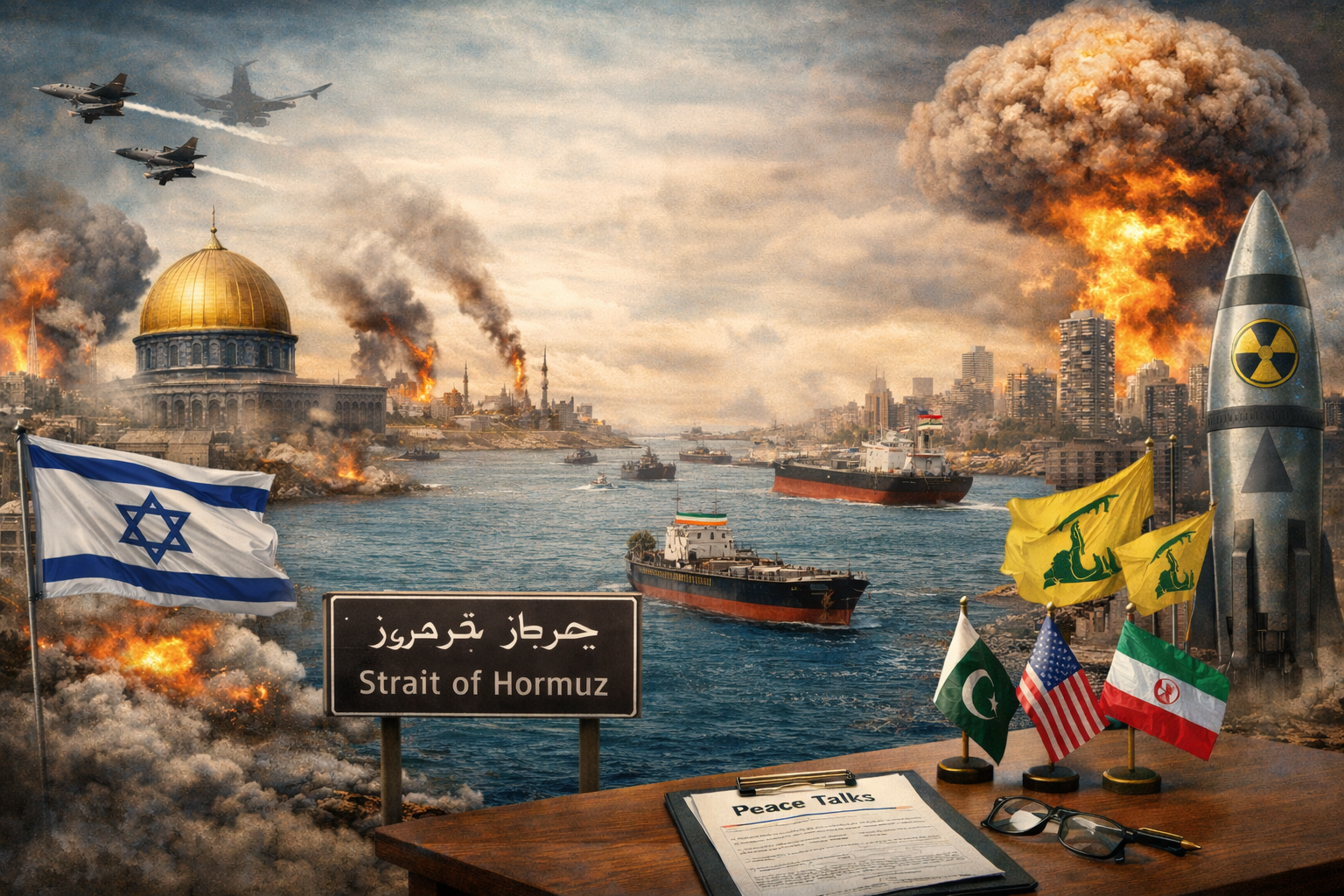
The ten-point plan submitted by Pakistan to the United States talks of Iran demanding the lifting of all primary and secondary sanctions; Iran’s complete control of the Strait of Hormuz; release of frozen assets; American military withdrawal from the Middle East; and a Security Council Resolution making the deal binding. But the most contentious part has to do with the Farsi version that included “acceptance of enrichment” of its nuclear program, that would be clearly unacceptable to Washington and, by extension, Tel Aviv. If, in the run-up to the talks in Islamabad, Lebanon took center stage, it is obvious that the nuclear program and the Strait of Hormuz will be highly contentious as well.
The phase of Iran or the United States declaring victory and getting out of the entanglement is gone; now the two countries will have to find ways to arrive at middle ground, as well as a monitoring mechanism so that they do not slip back into periodic showdowns. The Hormuz will be the focus of attention given its international importance, and not just for oil and energy transit. What is pointed out is that, despite Tehran’s word to keep the Hormuz open as a part of the ceasefire agreement, the Strait effectively remains closed, with The Financial Times reporting that Iran is imposing a US$1 per barrel toll on oil tankers that is to be paid in cryptocurrency.
Hundreds of tankers and thousands of mariners are said to be stranded in the Persian Gulf, and ships are not passing through because of Iranian intimidation. Selectivity on political considerations may not hold for too long. To all these, add the worry of mines that are said to have been planted in the waterway.
If Iran’s nuclear program and the Strait of Hormuz are two major issues standing in the way of any deal, so is Lebanon, where a way would have to be found to prevent Tehran from aiding and abetting Hezbollah to the detriment of that country and the region. What was variously, not too long ago, described as the Pearl, Paris, or Switzerland of the Middle East, Lebanon is now reduced to being a hapless spectator to various parties jockeying for power and influence in the region. Iran has been propping up Hamas and Hezbollah through financial and military assistance, the two outfits acting as Tehran’s proxies.
Hamas was decimated in the aftermath of the massacre of innocent civilians on October 7, 2023, on a Jewish holiday, killing more than 1,200 innocents and taking some 250 persons as hostages. But ordinary people in Gaza paid the price in the savage retaliation that followed; now Lebanon is under Israeli pressure for Hezbollah’s rockets. No one in their right mind would want to see a resumption of a madness that has shown its global debilitating impact.
Disclaimer: The opinions and views expressed in this article/column are those of the author(s) and do not necessarily reflect the views or positions of South Asian Herald.