Join WhatsApp Channel


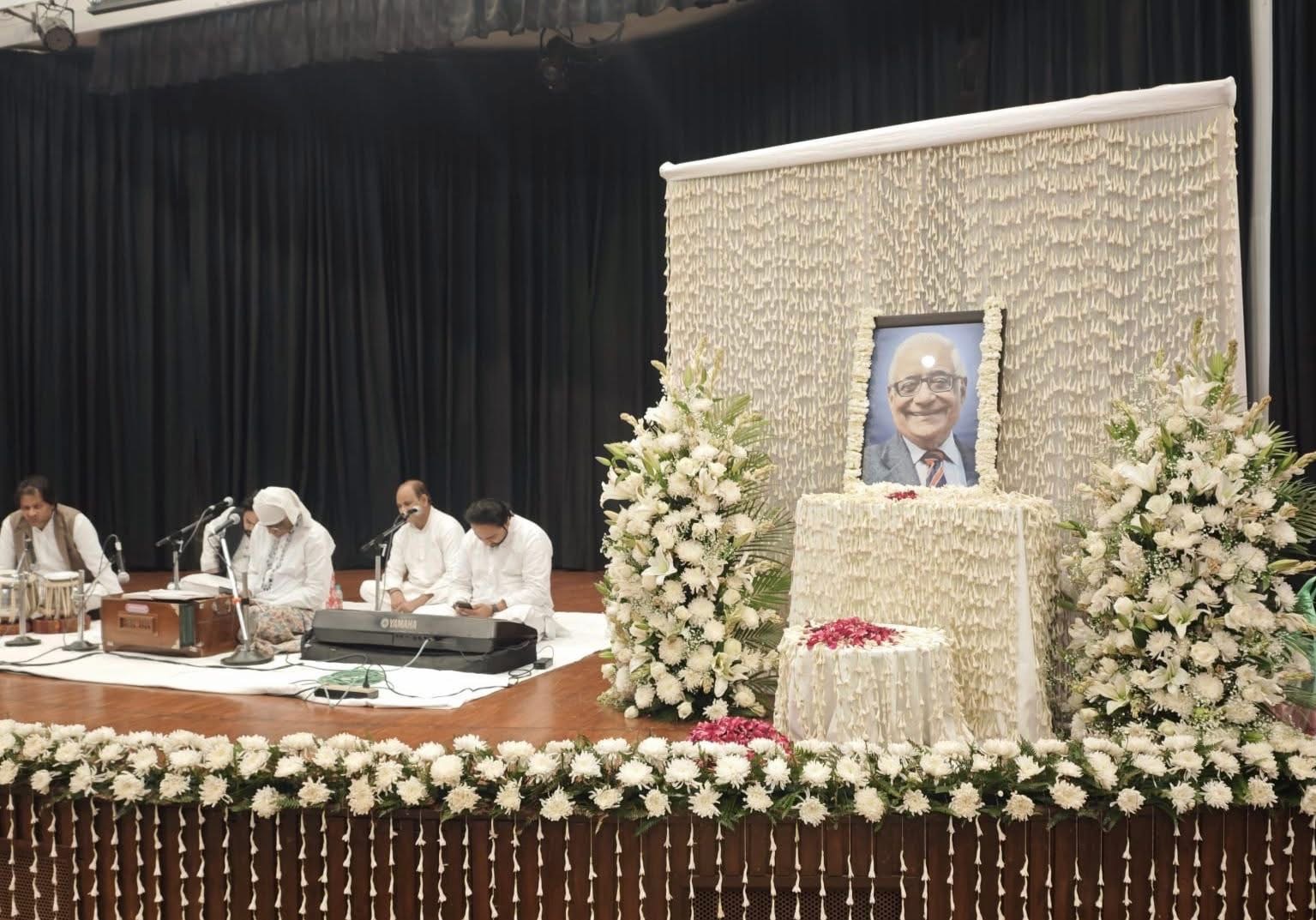
C. Gouridasan Nair is a friend I met in Thiruvananthapuram less than a year ago. I had travelled there to attend the first meeting of senior journalists that led to the formation of an organization which, over the months, has grown into a vibrant body with units in several states. Nair was well known in journalistic circles, having served as a senior journalist with The Hindu. I had read many of his dispatches and admired the clarity and depth they reflected.
Over time, our acquaintance grew into a warm friendship. Today, I know him not just as a journalist but as a perceptive and keen reader. He reminds me of what Francis Bacon once wrote about reading: “Reading maketh a full man; conference a ready man; and writing an exact man.” Nair belongs to that rare tribe of readers who read slowly, attentively, and with a memory that stores what matters.
Recently he sent me a message after reading my obituary of H.K. Dua. He had read it, as he told me on the phone, “leisurely on Sunday.” His message read: “Didn’t I read this earlier? Almost every line remains etched in my memory. But, as I must have said when I read this the first time—touching, intimate, yet very professional, a wonderful tribute.”
His message amused and puzzled me in equal measure. I immediately telephoned him to explain how the confusion had arisen.
Rightly or wrongly, I have earned a reputation as an obituary writer. I do not write obituaries about everyone who dies. I write them only about people I have personally known or encountered in some meaningful way and whose passing I genuinely feel. The positions they held or the power they wielded are rarely the reasons that move me. What matters is the human story.
After I wrote the obituary of Dua Saab, as I called him, I wrote another about a Muslim gentleman whom everyone affectionately called Bhayya. He served the diocesan office of the Mar Thoma Church in Delhi for many years until his retirement. One of his sons later succeeded him in the same job, while another became the cook for a bishop.
The story touched many readers. After reading it, my friend John Dayal remarked that Bhayya was “a better Christian than many of us.” I cannot speak for others, but in my case John was probably right. The obituary struck a chord; nearly 10,000 people accessed it within a day or two.
That was not the first time a simple obituary stirred a response. During the lockdown period, a young man who cleaned the drains in our colony died of Covid. He had lived an invisible life, like many who perform the essential but unacknowledged work that keeps our cities functioning. I wrote a short obituary and circulated it on our residents’ WhatsApp group. The piece moved people. They collected a substantial amount of money which the secretary of the housing society later handed over to the family.
Something similar happened when a security guard in our own housing society passed away. My post prompted residents to contribute generously, and his family received nearly one lakh rupees.
I have also written obituaries of well-known personalities, including former Prime Minister V.P. Singh. Yet, in my mind, there is no hierarchy in death. The man who cleaned the drains and the man who occupied the Prime Minister’s chair are equally deserving of remembrance.
If I live long and healthy enough, I might even write an obituary of Donald Trump. Not because he is one of the most controversial figures of our time, but because my only personal association with him involved his security guards snatching my camera when I tried to take a photograph. That small incident, trivial as it may seem, would qualify him for a place in my private gallery of obituary subjects.
Though I do not particularly revel in the fact that I may have written one of the largest numbers of obituaries in the country, the genre has always fascinated me. For more than thirty-five years I have been a regular reader of The Economist. Curiously, the first thing I read in the magazine is not the cover story or the editorial. I turn straight to the last page, where the obituary appears. Only after that do I read the book review column, the letters, and finally the editorial.
There is something uniquely revealing about a well-written obituary. In a few hundred words it captures a life—its triumphs, its contradictions, and sometimes its quiet ironies. Perhaps that is why at least three of my friends have asked me, half seriously and half jokingly, to write their obituaries in advance so that they could read them while they were still alive.
Once, Mr. Thomas Jacob of the Malayala Manorama narrated to me a story that illustrates the risks of such curiosity. One of the paper’s stringers, who was also a social worker, used to send reports about marriages, deaths and community events from his area. One day he conceived a brilliant idea. He wanted to see how the newspaper would report his own death.
So he wrote an obituary about himself and sent it to the paper, announcing that he had died. He expected that the newspaper would add a few paragraphs praising his social service work.
Instead, the paper published only the barest details about his death—nothing more. The disappointed stringer felt so insulted that he stopped working for the newspaper altogether.
Writing obituaries can also invite criticism. In my case, some relatives of the deceased have been upset with what I wrote. In one obituary I mentioned that the deceased had worked as a Bible seller in North Bihar. Actually, he owned a shop selling Bibles, hymn books, Christian song cassettes etc. His son considered this beneath the dignity of the family and stopped interacting with me, without perhaps realizing the effort that goes into reconstructing a life honestly.
Yet, there are also those who have thanked me for writing about their loved ones. Some have said that the obituary brought them comfort. One doctor who now manages the oldest hospital in Kayamkulam asked me how I knew certain details about his father, who had founded the hospital decades earlier. He did not know that I had once interviewed his father and remembered that conversation vividly.
My wife, however, often raises a practical question. What purpose does an obituary serve to the dead, she asks. Why not write about people while they are still alive?
Her argument has merit. In fact, it was her reasoning that prompted me to write a long profile of Dua Saab—my benefactor in journalism—a few months ago. When the article appeared, he read it and thanked me over the phone for the “kind words” I had written. I asked him whether any corrections were necessary. He said there were none.
When the news of his passing reached me recently, I simply reworked that earlier profile into an obituary and posted it on Facebook. Because much of the material was already there, I was able to publish it within minutes.
That, of course, explains why Gouridasan Nair felt he had read the piece earlier. In a sense, he had.
Meanwhile, a young journalist friend, Santhosh Joy, has been persistently urging me to collect my obituaries and publish them as an anthology. He believes the stories deserve to be preserved between the covers of a book. I have so far resisted the idea, partly because writing obituaries is not something one consciously sets out to do; they arise out of moments of loss, memory and reflection.
Yet Santhosh may have a point. Over the years, these pieces have recorded the lives of people—famous and obscure—whose paths happened to cross mine. Together they form a quiet archive of lives lived, remembered not for their titles alone but for the human stories they carried.
In writing them, I have merely tried to record, with affection and gratitude, the lives and influences of people who meant something to those around them.