 Join WhatsApp Channel


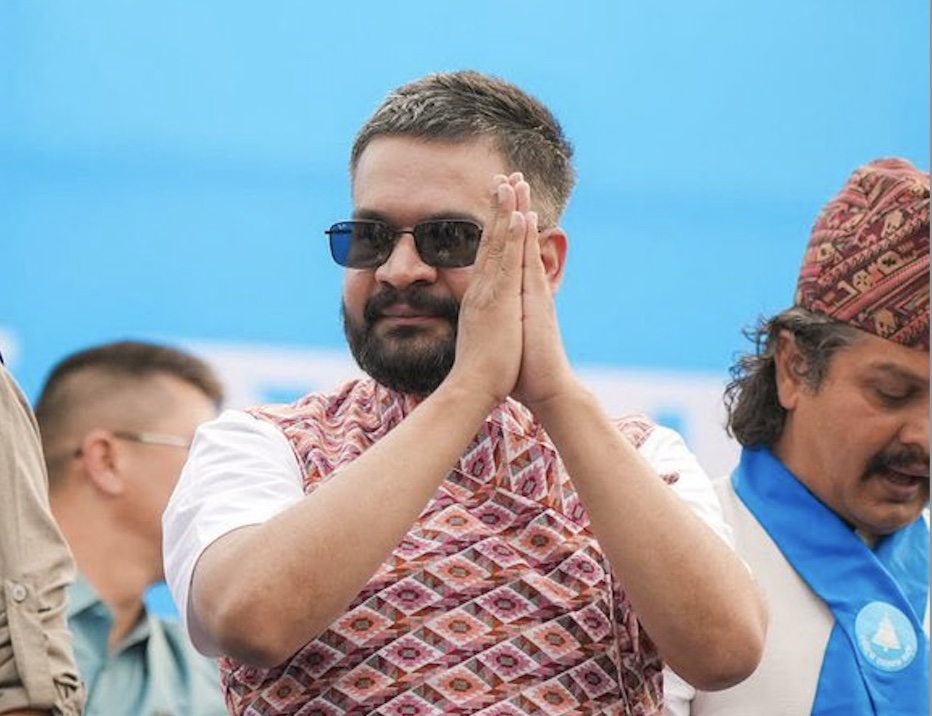
Nepal’s political landscape appears to be undergoing its most dramatic transformation in decades, as early results from the March 5 parliamentary elections point to a sweeping surge for the reformist Rastriya Swatantra Party (RSP), led by rapper-turned-politician Balendra Shah.
Vote counting from the election — triggered by the mass youth protests of 2025 — suggests the three-year-old party is emerging as the dominant force in the 275-member House of Representatives, potentially positioning it to form Nepal’s first single-party majority government in nearly three decades.
The outcome, if confirmed once all ballots are counted and proportional representation seats allocated, would represent a stunning rejection of the country’s entrenched political establishment and a generational shift driven by young voters frustrated with corruption, unemployment and years of political instability.
For Nepal, a country that has witnessed 14 governments in the past 18 years, the election may mark the beginning of a new political chapter.
A mixed electoral system
Nepal’s federal parliament is elected through a mixed voting system combining direct constituency contests and proportional representation.
Of the 275 seats in the House of Representatives,
- 165 seats are elected through first-past-the-post (FPTP) contests in single-member constituencies.
- 110 seats are allocated through proportional representation (PR) based on each party’s national vote share.
A party or coalition requires 138 seats to command a majority and form the government.
As of March 7, counting of most FPTP seats was nearing completion across the country, while proportional representation vote tabulation was expected to follow shortly after.
Early tallies indicate that the Rastriya Swatantra Party has won more than 50 constituency seats and is leading in dozens more, placing it far ahead of traditional parties.
By contrast, the long-dominant Nepali Congress and the communist Communist Party of Nepal (Unified Marxist–Leninist) have secured only a handful of confirmed victories so far.
If the trend continues through the final count and proportional seat allocation, analysts say the RSP could cross the 138-seat threshold required for a parliamentary majority — an outcome that would end decades of coalition governments.
The rise of an unlikely political leader
At the center of the political upheaval is Shah, a 35-year-old structural engineer whose rise from underground rapper to national political figure has captured the imagination of Nepal’s younger generation.
Shah first gained prominence in Nepal’s hip-hop scene, where his lyrics frequently criticized corruption and political dysfunction. His platform Raw Barz popularized rap battles across the country and turned him into a cultural figure among urban youth.
His political breakthrough came in 2022, when he contested the Kathmandu mayoral election as an independent candidate and won a surprise victory over nominees from established parties.
During his tenure as mayor, Shah earned a reputation for bold and sometimes confrontational governance — ordering the demolition of illegal structures, pushing urban redevelopment projects and directly engaging with citizens through social media.
That anti-establishment image helped propel him into national politics after the protests that shook Nepal in 2025.
From street protests to the ballot box
The election itself was a direct consequence of the nationwide demonstrations that erupted in September 2025.
Young protesters, angered by corruption scandals, nepotism and a lack of economic opportunities, organized mass rallies across major cities. The unrest escalated into violent clashes with police that left dozens dead and forced the resignation of then-prime minister K. P. Sharma Oli.
Parliament was dissolved and an interim technocratic administration headed by former chief justice Sushila Karki was tasked with stabilizing the political situation and organizing early elections.
For many voters — particularly the country’s large youth demographic — the vote became a referendum on the political establishment that had dominated Nepal’s post-civil-war politics.
The results now emerging suggest that verdict has been decisive.
A stable but fragile economy
The next government will inherit an economy that appears stable on the surface but faces significant structural challenges.
Consumer inflation currently stands at 2.4% year-on-year, reflecting relatively subdued price pressures. Nepal’s foreign exchange reserves have climbed to $22.5 billion, enough to cover more than 18 months of imports, providing a strong external buffer.
Remittances — the backbone of Nepal’s economy — remain robust, reaching Rs 192.6 billion (around $1.45 billion) in mid-January.
The country’s external accounts have strengthened considerably, with the current account surplus widening to Rs 429.9 billion (about $3.2 billion) and the balance of payments surplus reaching Rs 501.2 billion (around $3.8 billion) during the first half of the fiscal year.
However, Nepal continues to run a large trade deficit. Imports rose to Rs 172.8 billion (about $1.3 billion) in January, while exports remained limited at Rs 25.5 billion (around $190 million).
Tourism — another key pillar of the economy — has shown signs of recovery, with visitor arrivals rising 15.7% year-on-year despite monthly fluctuations.
Perhaps the most pressing issue remains employment. Hundreds of thousands of Nepalis migrate abroad every year in search of work, sending back remittances that account for a large share of national income.
Hydropower: Nepal’s biggest economic opportunity
For Nepal, long-term economic transformation may depend on harnessing its vast hydropower resources.
The country’s mountainous river systems provide enormous energy potential. While the theoretical hydropower capacity is estimated at about 80,000 megawatts, studies indicate that around 43,000 megawatts are economically feasible for development.
Yet only a small portion of that capacity has been tapped so far.
Expanding hydropower generation could help Nepal reduce energy shortages, generate export revenues and create domestic employment. Electricity exports to India have increased in recent years, with cross-border power trade emerging as a promising sector of bilateral economic cooperation.
At the same time, China has expanded its economic presence in Nepal through infrastructure investments and hydropower projects. As a result, energy development sits at the intersection of Nepal’s economic ambitions and its geopolitical balancing act between its two powerful neighbors.
Navigating a delicate geopolitical balance
Nepal’s strategic position between India and China has long shaped its foreign policy.
India remains Nepal’s largest trading partner and primary transit route to global markets. Cultural, religious and economic ties between the two countries run deep, and cross-border electricity trade has become an important pillar of economic cooperation.
China, meanwhile, has strengthened its engagement through infrastructure investments and connectivity projects across the Himalayan region.
Previous governments have often tilted toward one neighbor or the other depending on political alignments.
Shah, however, has promoted a “Nepal First” approach, signaling that Kathmandu may pursue a more assertive but pragmatic foreign policy focused on national economic interests.
Most analysts expect Nepal to continue balancing relations with both countries — leveraging ties with each to maximize investment and infrastructure development while preserving strategic autonomy.
A turning point in Nepal’s politics
Final election results, including the allocation of proportional representation seats, are expected in the coming days.
But even before the official declaration, the broader significance of the vote is already evident.
A youth-driven political movement that began on the streets in protest against corruption and economic stagnation has now translated into a powerful electoral surge. If the RSP consolidates its lead and forms the next government, Nepal could finally move beyond decades of coalition instability.
The challenge for Shah and his party will be transforming that political momentum into durable governance — creating jobs, expanding hydropower development and steering a careful course between India and China.
For now, the ballots suggest that Nepal’s political center of gravity has shifted — and a new generation is claiming the reins of power.
Related posts:
 Nepal Votes After Revolt: Can the Ballot Deliver What the Streets Demanded?
 Nepal’s Election as a Geopolitical Test
 Nepal’s Envoy to UN Highlights Democratic Transition, Gen Z Protests, and Global Crises at UNGA 80
 Bihar 2025: How the NDA Engineered a Near-Sweep — and Why the RJD-Congress Flame Flickered Out
