Join WhatsApp Channel

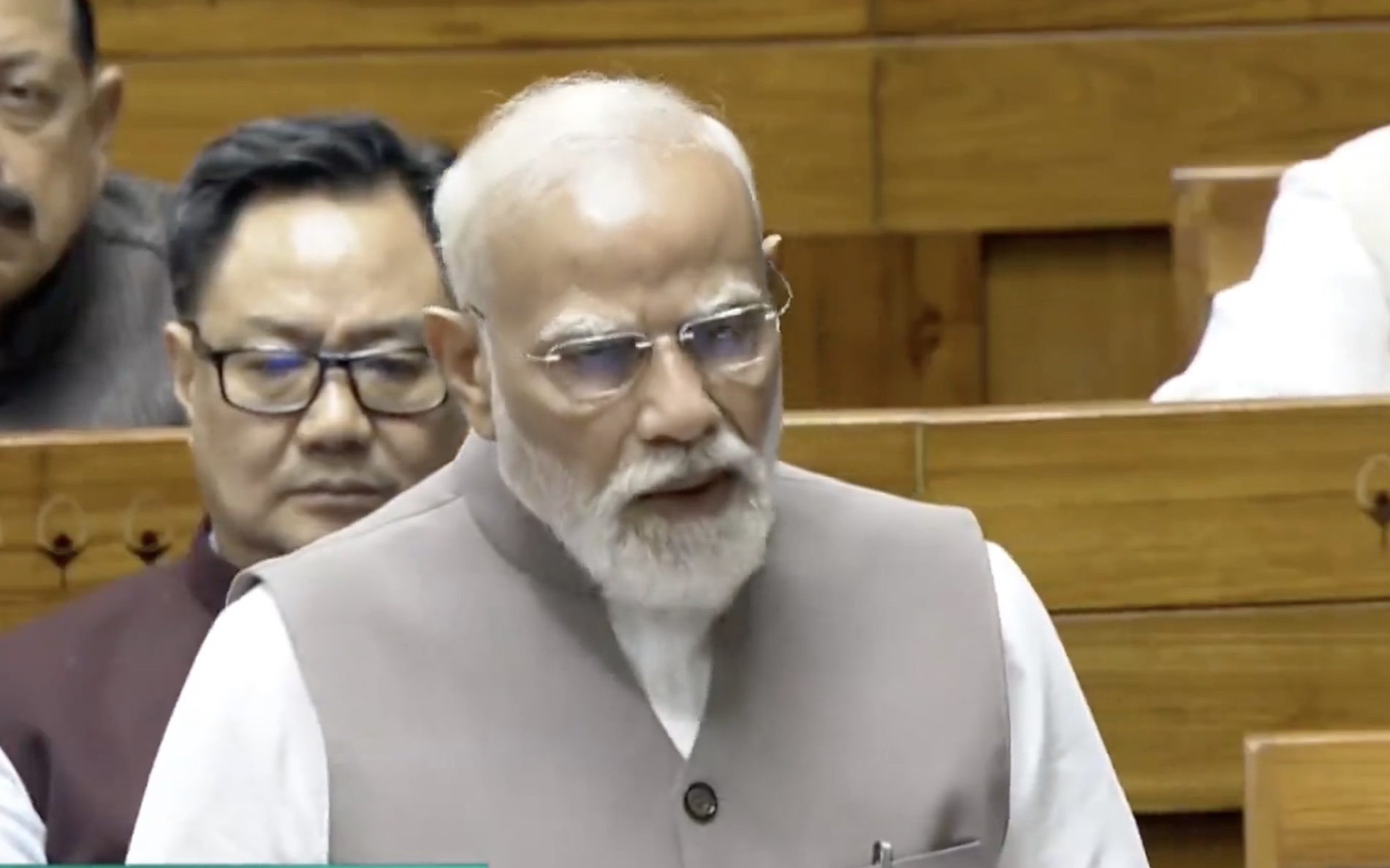
Prime Minister Narendra Modi on Monday warned that the ongoing conflict in West Asia is beginning to exert visible pressure on India’s economy, with rising oil prices, disrupted fertilizer supplies and strained shipping routes posing a multi-layered challenge to growth, inflation and external stability.
Addressing the Lok Sabha, Modi described the situation as a matter of “serious concern,” noting that the crisis—now entering its fourth week—has unsettled global commodity markets and threatens to spill over into everyday economic activity.
“The whole world is urging all parties for the earliest resolution,” he said, calling for a unified and bipartisan message from Parliament in favor of peace and de-escalation.
India’s exposure to the region remains significant. Nearly 10 million Indians live and work across Gulf countries, while a large number of Indian seafarers operate in commercial shipping lanes that have become increasingly volatile. West Asia also serves as a critical artery for India’s imports of crude oil, liquefied natural gas and fertilizers, much of which transits through the strategically vital Strait of Hormuz.
Oil shock gathers pace
The Prime Minister’s remarks come amid a sharp escalation in energy prices. Benchmark Brent crude is trading around $108 per barrel, while India’s crude basket has surged to $149.93 per barrel as of March 20, reflecting higher freight costs, insurance premia and supply disruptions linked to the conflict.
Market estimates suggest that if tensions persist for another three months, Brent could climb toward $200 per barrel—levels that would mark a severe external shock for oil-importing economies.
India imports nearly 85–90% of its crude oil needs, making it highly sensitive to global price swings. With over 40% of supplies passing through the Strait of Hormuz, even limited disruptions can significantly inflate landed costs.
At current levels, the impact is already material. Every $10 increase in crude prices typically raises India’s annual import bill by $13–15 billion. With prices now far above budget assumptions, the additional burden could exceed $40 billion on an annualized basis if sustained.
Inflationary pressures build
Higher crude prices are expected to feed into inflation across sectors, including transport, power, fertilizers and manufacturing. Even with partial controls on retail fuel prices, the broader cost structure of the economy is likely to be affected.
Economists estimate that a sustained move toward $150 oil could add more than 1–1.5 percentage points to headline inflation over the coming quarters. This could complicate the policy trajectory for the Reserve Bank of India, limiting its ability to support growth through monetary easing.
The risk, policymakers acknowledge, is a stagflationary dynamic—rising input costs alongside weakening demand.
Fiscal strain and policy trade-offs
The government’s fiscal consolidation path—targeting a deficit of 4.3% of GDP—was built on relatively moderate oil price assumptions. At current levels, that framework is already under pressure.
In past episodes, governments have absorbed part of the shock through excise duty cuts or subsidies. However, with limited fiscal headroom and high interest payment commitments, large-scale interventions could widen deficits and delay consolidation targets.
Modi’s emphasis on minimizing inconvenience to households suggests that the government may be relying on calibrated price smoothing, possibly through adjustments by state-run oil companies or indirect tax measures.
External sector vulnerabilities
Rising oil prices are also expected to widen India’s current account deficit. At elevated levels of the Indian crude basket, the deficit could approach or exceed 2.5% of GDP, depending on the duration of the shock.
Foreign exchange reserves—currently above $600 billion—provide a cushion, but sustained pressure could lead to currency depreciation. A weaker rupee would, in turn, amplify imported inflation, creating a feedback loop for domestic prices.
Fertilizer disruption adds second layer of risk
Alongside oil, fertilizer supply chains have emerged as another area of concern. West Asia plays a key role in global fertilizer production, particularly through natural gas inputs for nitrogen fertilizers and Sulphur for phosphates.
Disruptions to shipping and input supplies are already pushing up global fertilizer prices. While India has built up inventories—estimated at around 17.7 million tons, significantly higher than last year—these stocks are intended as a buffer rather than a substitute for sustained imports.
A prolonged disruption could affect replenishment cycles, potentially tightening supplies ahead of the Kharif sowing season.
Higher fertilizer and diesel costs would raise input expenses for farmers, with possible implications for crop yields and food prices. Food inflation, in turn, remains one of the most politically sensitive components of the inflation basket.
Diaspora and remittance exposure
The Prime Minister also highlighted risks to India’s diaspora, noting that over 375,000 Indians have already returned from affected regions. The Gulf accounts for a substantial share of India’s remittance inflows—over $100 billion annually.
Any slowdown in economic activity across the region could eventually affect remittance flows, although such impacts typically play out over a longer horizon.
Government response and preparedness
Modi outlined a series of steps taken to manage the crisis, including diversifying energy import sources, expanding strategic petroleum reserves and coordinating with international partners to maintain supply chains.
India’s strategic reserves currently cover about 9–10 days of imports, offering short-term relief but limited protection in a prolonged disruption.
On the humanitarian front, Indian missions in the region have activated emergency response systems, while domestically, authorities have heightened vigilance across coastal, border and cyber security frameworks.
The Prime Minister also called on state governments to act firmly against hoarding and black-marketing, warning that speculative activity could worsen supply pressures.
Structural vulnerability exposed
The unfolding crisis highlights a deeper structural challenge for India: its continued dependence on energy flows from a geopolitically sensitive region.
Despite efforts to diversify suppliers and expand renewable energy capacity, oil remains central to India’s economic framework in the near term. Strategic reserves and alternative sourcing provide buffers, but not insulation, against prolonged disruptions.
If crude prices were to climb toward $150–200 per barrel, the consequences could extend beyond short-term stress, potentially affecting inflation, fiscal balances and growth simultaneously.
In that context, the West Asia conflict represents more than a geopolitical flashpoint—it is a real-time test of India’s economic resilience.
Modi called for national unity in navigating the uncertainty ahead. “When every government and every citizen walks together, we can face any challenge,” he said, reiterating India’s commitment to peace and stability in the region.