 Join WhatsApp Channel


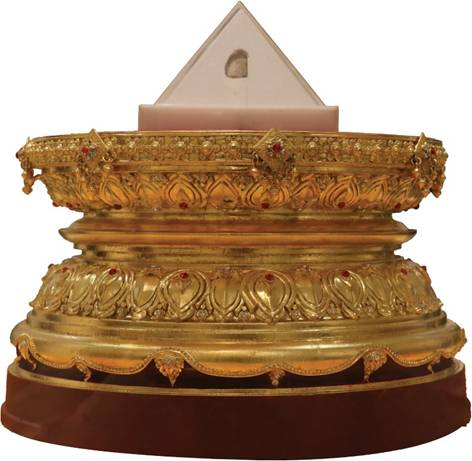
In a major cultural and spiritual event, the sacred relics of Lord Buddha from India’s National Museum in New Delhi will be taken to Bhutan for a public exposition in Thimphu from November 8-18, 2025, as part of the Global Peace Prayer Festival (GPPF).
The festival, which marks the 70th birth anniversary of Bhutan’s Fourth King Jigme Singye Wangchuk, is dedicated to prayers for world peace and the healing of humanity. The event organized jointly by the Ministry of Culture, Government of India, and the International Buddhist Confederation (IBC), is expected to draw Buddhist leaders and devotees from across Asia.
Union Minister for Social Justice and Empowerment Dr. Virendra Kumar will lead the Indian delegation, which includes senior monks and officials. The relics, enshrined at the National Museum, are considered among the most sacred symbols of the Buddha’s life and teachings.
A Deepening Spiritual Partnership
The relics will be installed for public veneration at the Kuenrey Hall of Tashichho Dzong, the historic seat of Bhutan’s government and monastic body. Bhutan’s Prime Minister Tshering Tobgay said the Global Peace Prayer Festival was envisioned by His Majesty the King as a message of compassion and peace for a troubled world.
“This festival is not just a celebration but a call for harmony,” Tobgay said, thanking Prime Minister Narendra Modi and the Indian government for sending the holy relics.
This will be the second time the relics have travelled to Bhutan, following their 2011 visit during the royal wedding of King Jigme Khesar Namgyel Wangchuck.
Showcasing India’s Buddhist Legacy
To accompany the relics, the IBC will host three exhibitions exploring India’s Buddhist heritage:
- Guru Padmasambhava: The Precious Guru’s Journey in India — tracing the life and spiritual influence of the revered master.
- Sacred Legacy of the Shakyas — chronicling the excavation and rediscovery of Buddha’s relics in India.
- Life and Teachings of the Buddha — an immersive display narrating the path to enlightenment.
The National Museum will also contribute select sculptures from its Buddhist Art and Heritage Gallery, highlighting India’s two-millennia-old artistic tradition in Buddhist imagery.
Shared Faith Across the Himalayas
Buddhism forms the spiritual core of Bhutan’s national identity, influencing both its ancient architecture — from the 7th-century Kyichu Lhakhang to the Paro Taktsang monastery — and its modern development philosophy of Gross National Happiness (GNH). Rooted in compassion and mindfulness, GNH reflects Bhutan’s effort to balance material progress with spiritual well-being.
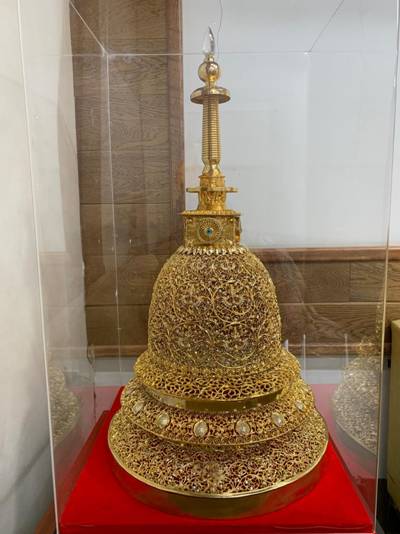
The upcoming exposition symbolizes the enduring spiritual connection between India and Bhutan — two nations bound by geography, faith, and a shared Buddhist lineage dating back over two millennia.
Following the Kalmykia Exposition
The Thimphu festival follows the successful exposition of Buddha’s sacred relics in Russia’s Kalmykia Republic last month. That exhibition, held from October 11 to 18 in the capital city Elista, marked the first-ever public display of the relics in Russia.
The event was held at the Geden Sheddup Choikorling Monastery, also known as the “Golden Abode of Shakyamuni Buddha,” and was attended by Buddhist leaders from across Russia, Mongolia, and Central Asia. The Indian delegation, led by Uttar Pradesh Deputy Chief Minister Keshav Prasad Maurya, included 11 senior monks who conducted prayers and blessings for local devotees.
Kalmykia — Europe’s only Buddhist-majority region — has long-standing historical ties with Mongolia and Tibet. The 19th Kushok Bakula Rinpoche from Ladakh played a pivotal role in reviving Buddhism there in the 20th century.
India’s Buddhist Diplomacy
The back-to-back expositions in Kalmykia and Bhutan highlight India’s renewed commitment to promoting its Buddhist cultural diplomacy. Over the past three years, sacred relics from India have travelled to Mongolia (2022), Thailand (2024), and Vietnam (2025) — each exhibition strengthening cultural bonds with Buddhist nations and reaffirming India’s status as the birthplace of the Buddha.
The government’s efforts have also included the repatriation of the Piprahwa Jewel Relics — among the most significant archaeological discoveries related to the Buddha — which were brought back to India earlier this year from Hong Kong after more than a century abroad.
A Journey of Faith and Peace
For India and Bhutan, the Thimphu exposition is more than a ceremonial event — it is a reaffirmation of shared faith and a collective prayer for a world in need of peace. As the sacred relics are enshrined in the halls of Tashichho Dzong, they will serve as a reminder of the Buddha’s timeless message: that compassion, understanding, and harmony are the true foundations of human progress.
Dr. Virendra Kumar, ahead of his departure, said the event “reflects not just India’s spiritual heritage but its living tradition of friendship and peace — a message as relevant to today’s world as it was in the time of the Buddha.”
Related posts:
 Hardeep Singh Puri Seeks Central Intervention for Safekeeping of Guru Gobind Singh’s ‘Holy Jore Sahib’
 Bhutan’s Prime Minister hails India’s ‘steadfast’ support in the Himalayan Kingdom’s development journey
 “The Sacred Sound Path” by Sesh Kumar to Launch at Avadhoota Datta Peetham in Mysore
 “The World’s Happiest Man” Premieres at NAIFF 2025; Festival Bridges Cultures Through Global Cinema
