Join WhatsApp Channel


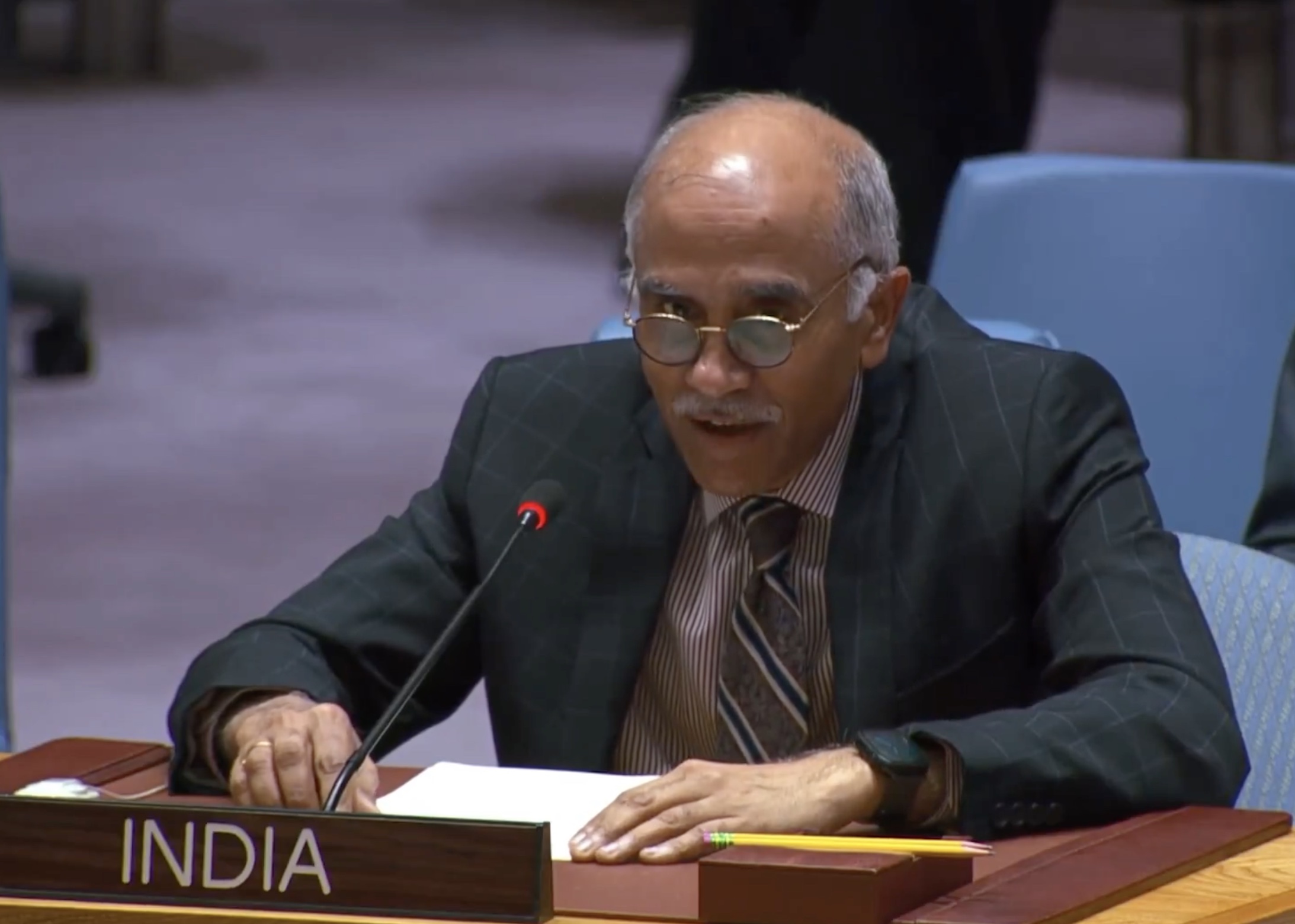
India’s Permanent Representative to the United Nations, Ambassador P. Harish, said that despite the global standing of the Security Council and the United Nations marking its 80th anniversary, its Rules of Procedure remain provisional.
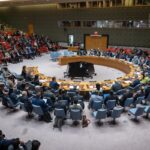
“Though these Rules remain the cornerstone guiding the day-to-day functioning of the Council, their provisional status needs to change. The status of the Rules of Procedure must be commensurate with the stature of the United Nations Security Council,” Ambassador Harish said during the UNSC Open Debate on Working Methods on November 14, 2025.
He thanked Sierra Leone for its Presidency of the Council and for organizing the Annual Open Debate on Working Methods. He also commended Japan for its role in updating Note 507 last year as chair of the Security Council Informal Working Group on Documentation and Other Procedural Questions.
“Security Council is central in the UN architecture, as the principal organ that is primarily tasked with the responsibility of maintenance of international peace and security,” he noted. “As a UN organ whose sphere of functions covers a range of areas, but membership limited to only 15 members, working methods of the Security Council are critical to its credibility, efficacy, efficiency and transparency. This gains particular salience in a world beset with multiple crises and facing numerous challenges.”
From this point onward, Ambassador Harish laid out a series of recommendations drawn from India’s experience as a former non-permanent member of the Council. He began by calling for a more transparent and objective system for selecting Chairs of subsidiary bodies and pen-holders. He stressed that these positions carry significant responsibility and should not be influenced by “vested interests” or conflicts of interest.
He further urged greater openness in the functioning of subsidiary organs, pointing to opaque practices around listing requests. While de-listing decisions are communicated clearly, he said listing rejections are handled “in a rather obscure manner,” leaving non-Council member states uninformed.
On improving coordination between the Security Council and the UN General Assembly, Ambassador Harish emphasized that the annual Security Council report should not be treated as a procedural formality. India, he said, continues to advocate for a more analytical report that goes beyond documenting meetings and proceedings.
Addressing the domain of UN peacekeeping, he reiterated India’s long-standing position that troop- and police-contributing countries must have a stronger voice in mandate formulation. He recommended avoiding “Christmas tree mandates” and returning peacekeeping missions to “plain vanilla mandates,” while ensuring that any expansion in responsibilities is matched with adequate resources.
He also cautioned against extending mandates that “have outlived their utility,” arguing that doing so strains limited UN resources and serves narrow political interests. He called for the adoption of sunset clauses and regular reviews to ensure that issues on the Council’s agenda remain relevant.
On the question of representation, Ambassador Harish underscored that correcting historical injustices to Africa requires the region’s inclusion in the permanent membership category. Expansion limited to non-permanent seats, he warned, would not constitute meaningful reform.
Noting that working methods form one of the clusters under the Intergovernmental Negotiations on Security Council reform, he emphasized any improvements, should be pursued as part of a comprehensive reform effort that reflects current geopolitical realities.
He reiterated India’s support for expansion in both permanent and non-permanent categories, with better representation for under-represented regions achieved through time-bound, text-based negotiations.
India, he affirmed, “stands fully ready to contribute to this end.”
Related posts:
 United Nations Has Lost Its “Foundational Focus,” Says India’s Envoy P Harish at UNSC Open Debate
 India Calls for Urgent UNSC Reform; Strengthens Global Ties with $1M Food Fortification Grant to Lao PDR
 India Reaffirms Commitment to Combating Illicit Small Arms Trade at United Nations Security Council
 India Calls for Consensus-Driven UN Peacekeeping Reforms at Security Council Debate