Join WhatsApp Channel


The Secretary General of the International Gas Union (IGU) has called for urgent global action to safeguard energy flows, warning that mounting disruptions around the Strait of Hormuz are exposing deep vulnerabilities in the world’s energy and commodity supply chains.
In a strongly worded intervention, Menelaos (Mel) Ydreos said the crisis unfolding around the vital shipping corridor is not a shortage of energy resources, but a breakdown in supply systems driven by geopolitical tensions.
“For decades, the security of supply was neglected due to ideological policies that hindered investment in infrastructure that could have mitigated the impact of such disruptions,” Ydreos said.
A chokepoint for global trade
The Strait of Hormuz, long a critical artery for global trade, handles far more than crude oil and liquefied natural gas (LNG). Around 30% of the world’s traded fertilizers—especially nitrogen-based products—along with petrochemical feedstocks, liquefied petroleum gas, and sulphur pass through the narrow waterway. On any given day, between 100 and 130 vessels transit the route.
The latest tensions have raised concerns of a repeat of past supply shocks, with analysts warning that disruptions could ripple across energy, agriculture and manufacturing sectors worldwide.
Fragmented gas markets emerge
The crisis has also underscored the fragmentation of global gas markets, replacing what was once seen as a more unified pricing system. Instead, distinct regional dynamics have emerged.
Europe is operating as a storage-and-refill market, Northeast Asia is focused on securing replacement cargoes, while South Asia is grappling with affordability pressures and demand curtailment. Africa is prioritizing domestic utilization of gas resources, while North America remains relatively insulated with a domestic supply balance and export capacity.
Supply crisis, not resource scarcity
Despite heightened volatility, Ydreos stressed that global reserves of natural gas and LNG remain sufficient. “This is not an availability crisis—it is a supply crisis where energy itself has become the geopolitical prize,” he said.
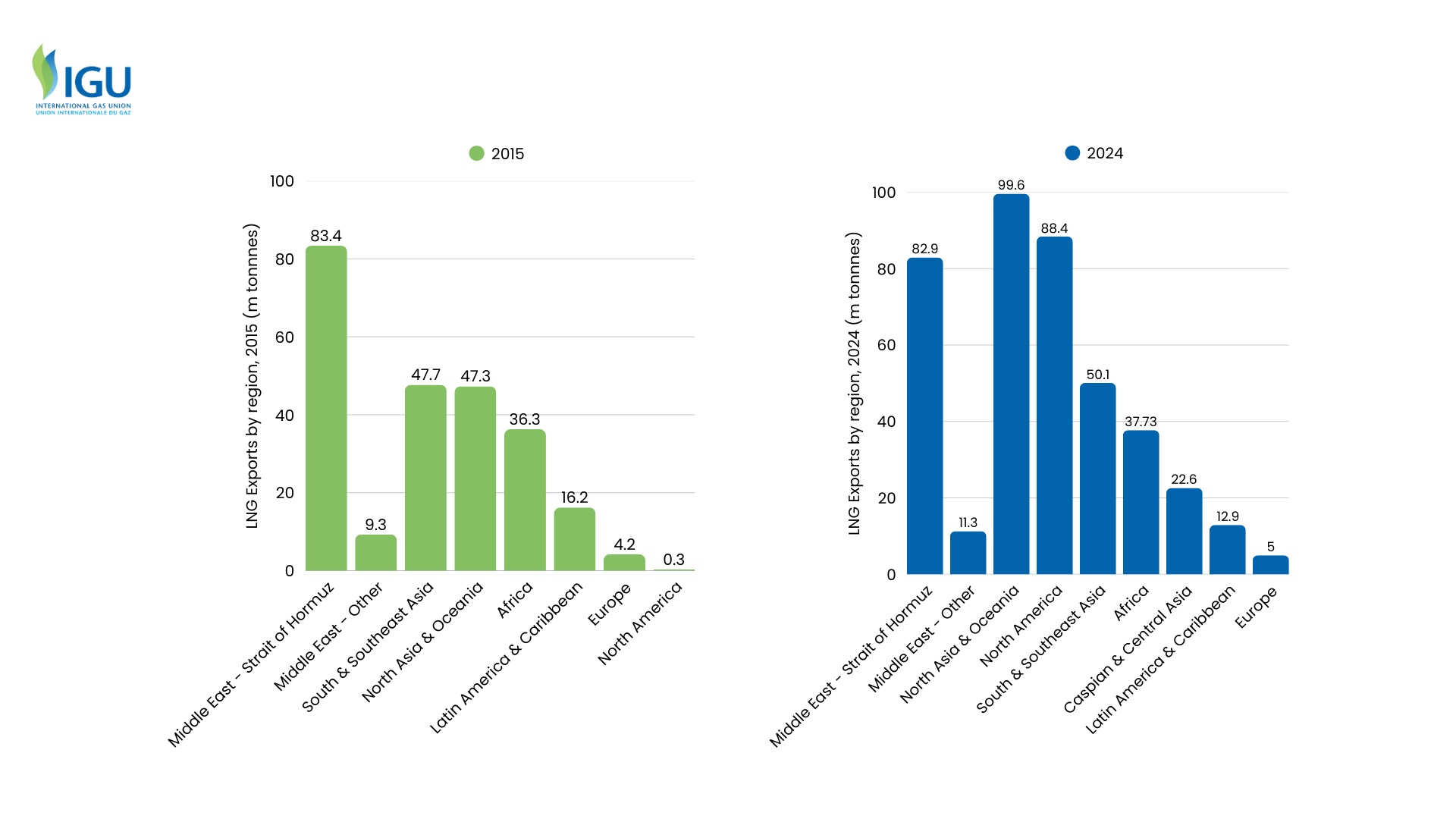
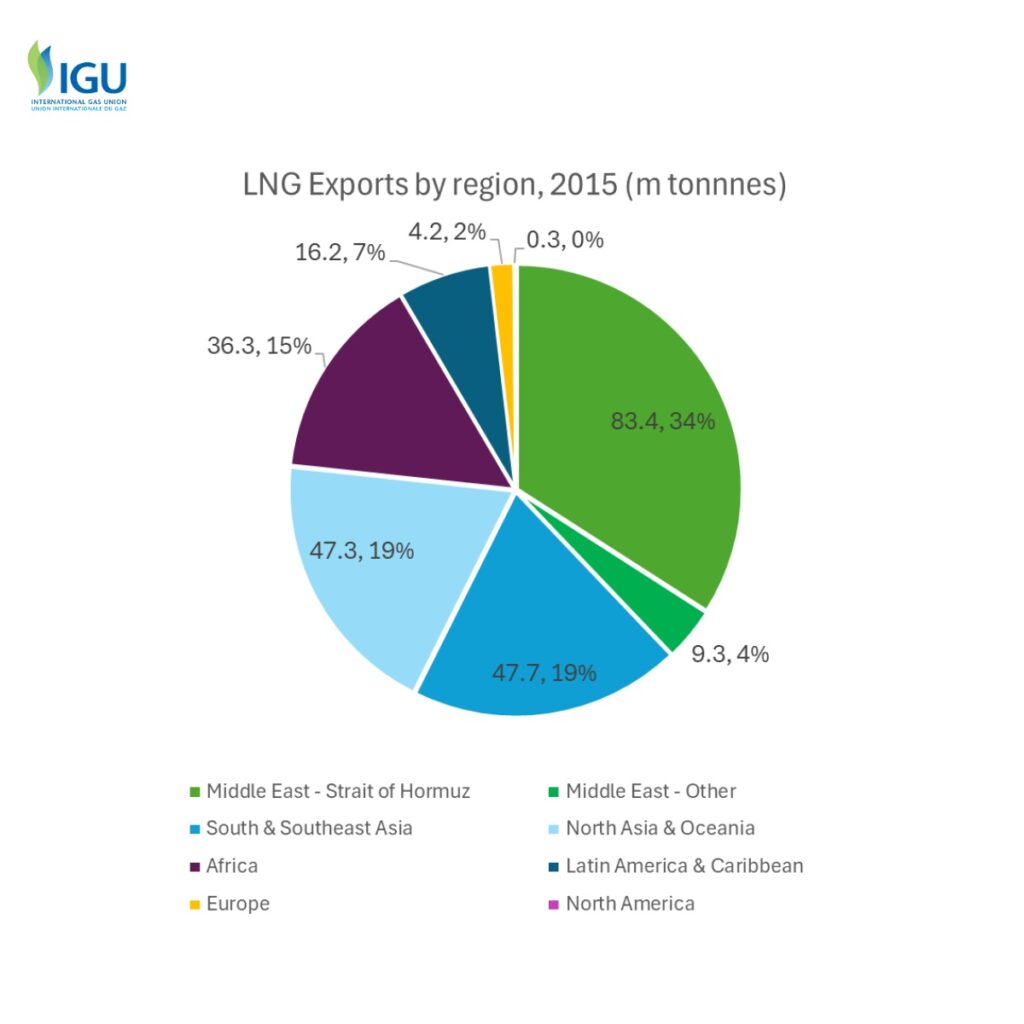
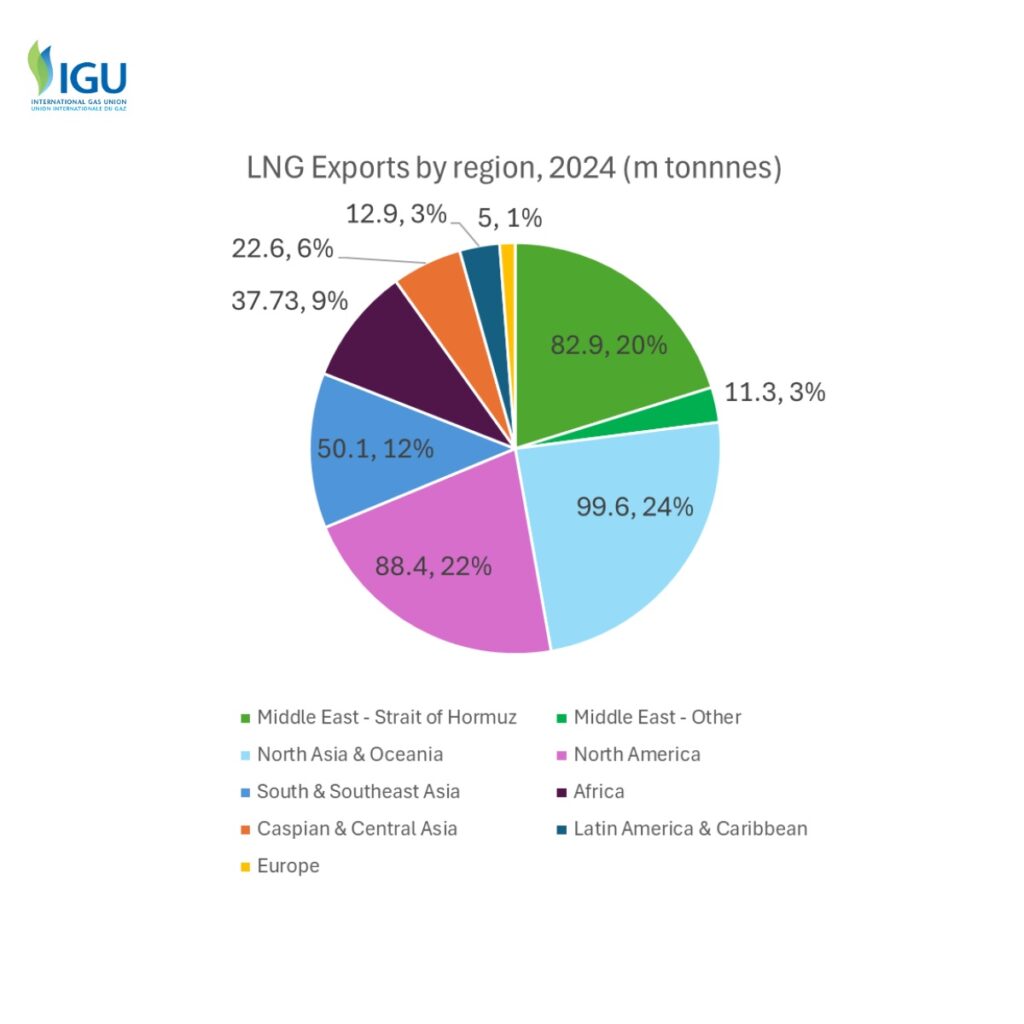
Data from the IGU highlights how global LNG supply has expanded significantly over the past decade. In 2015, just 17 countries exported LNG, with total volumes at 244 million tons. By 2024, that figure had risen to 411 million tons across 22 exporting nations, and further to nearly 440 million tons in 2025, according to the International Energy Agency.
However, LNG still accounts for only about 4% of total global gas demand, underscoring the limits of its ability to offset large-scale disruptions.
Investment gaps widen risks
A key concern flagged by the IGU is the lack of sustained investment in upstream energy and infrastructure. The International Energy Agency estimates that nearly 90% of annual oil and gas upstream investment is currently directed at offsetting production declines in existing fields, leaving limited capacity to meet new demand.
Ydreos argued that natural gas must be viewed as a complement—not a competitor—to renewable energy in ensuring stability during the energy transition.
He also warned that stagnation in underground gas storage capacity, particularly in developed markets, is weakening the ability of countries to manage seasonal demand swings and absorb supply shocks.
Policy uncertainty adds pressure
The IGU cautioned that policy and regulatory frameworks could inadvertently worsen the situation if they discourage investment. It pointed to measures such as the EU Methane Regulation, urging closer coordination between governments and industry to balance environmental goals with energy security.
Call for de-escalation
Amid rising tensions, the IGU issued an appeal for the immediate cessation of attacks on energy infrastructure and the restoration of safe cargo transit through the Strait of Hormuz.
“Fertilizers, petrochemicals, oil, grain and gas are not optional commodities—they are fundamental to global stability and human well-being,” Ydreos said.
The warning comes as energy-importing regions, particularly in South Asia, brace for potential price spikes and supply constraints that could weigh on inflation, food security and industrial output in the months ahead.