Join WhatsApp Channel

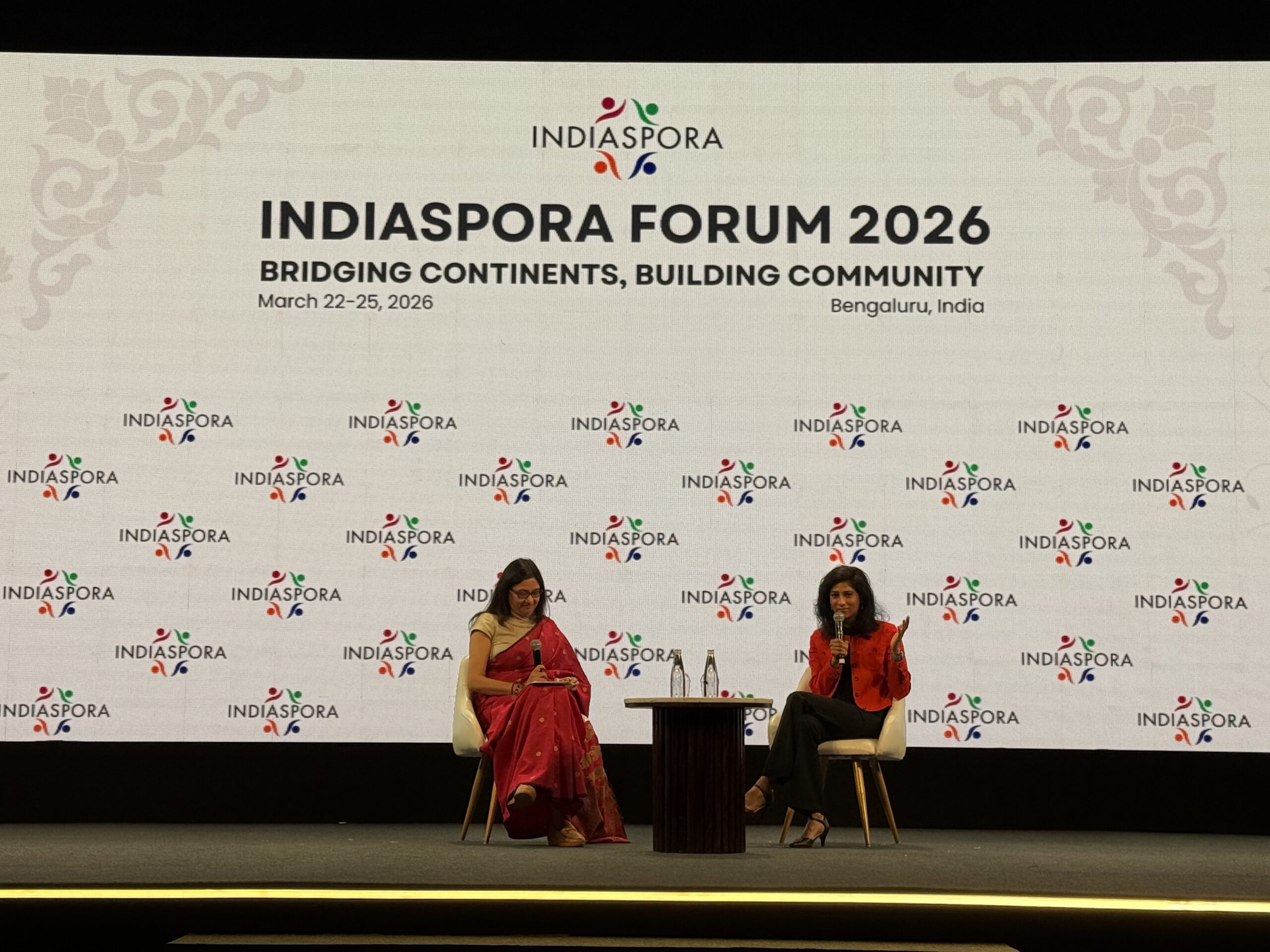
Professor of Economics at Harvard University, Gita Gopinath, who previously served as International Monetary Fund’s First Deputy Managing Director and Chief Economist, underscored the growing influence of geopolitics on the global and Indian economies, highlighting the significance of developments in the Middle East and their implications for India’s diaspora and remittance flows.
Speaking during a fireside chat with Nivruti Rai, Managing Director and CEO of Invest India, at the opening plenary of the Indiaspora Forum 2026 on March 23 at the JW Marriott Hotel and Convention Centre, Gopinath emphasized that a substantial portion of India’s economic linkages is tied to the region. She noted that nearly one-third of the Indian diaspora resides in the Middle East, which also accounts for about a third of remittances flowing into India.
Addressing the current geopolitical climate, Gopinath described the global environment as highly uncertain. “I think right now, we’re in a very complicated juncture with respect to war,” she said, referring to escalating tensions involving Iran and developments around the Strait of Hormuz.
“So at this point, I think the question is, what comes next is really difficult, and I think this is captures a bit of the world that we’re living in right now, which is the tremendous uncertainty about global landscape,” she added.
Gopinath pointed to what she described as a “profound shift” in the global economic order, noting that the United States, which had long championed a rules-based international system, has moved away from that framework. She attributed this shift to a combination of leadership preferences, domestic economic concerns, and national security considerations.
She noted that U.S. trade policy has increasingly reflected a preference for tariffs and protectionism, alongside concerns that global trade dynamics have disadvantaged American workers, particularly in relation to China. National security considerations, heightened by the pandemic and geopolitical conflicts such as the war in Ukraine, have also influenced policy decisions.

Reflecting on broader global trends, Gopinath said, “We’re not in those in that period when we had open borders and open trade. I mean, there was a time when there could be parallels made to the Cold War, when you had two blocks and you had the US block and Russia plus block, and maybe now it would be the US plus block and China plus block.”
However, she cautioned against oversimplifying the current global landscape into rigid blocs, noting that economic actions have extended beyond traditional rivalries to include allies. This, she said, makes the current environment more complex and difficult to navigate.
Despite these challenges, Gopinath highlighted a key difference from past global crises. “But we don’t have that right now. So, while it is true that China has retaliated to tariffs from the US, the rest of the world has not,” she said, noting that approximately 75 percent of global trade continues to operate under World Trade Organization rules.
Turning to India’s role in global supply chains, Gopinath acknowledged progress but emphasized persistent structural challenges. While India has expanded its export presence, it remains a relatively small player in global manufacturing supply chains.
She pointed to ongoing constraints, including land acquisition issues, labor market challenges, regulatory complexities, and bureaucratic hurdles. Addressing these, she suggested, would be critical for India to fully capitalize on emerging opportunities.
Gopinath highlighted infrastructure development as a key strength, particularly in physical and digital domains. She cited India’s advances in digital public infrastructure, including UPI, as a significant global contribution, while emphasizing the need for continued investment in logistics and port infrastructure.
On global capital flows, Gopinath noted that between 2015 and 2024, investment trends were heavily skewed toward the United States, driven by strong economic performance, technological growth, and a strengthening dollar. “So, for all those reasons, you’ve got the best money returns when you put your money in the US,” she said.
However, she observed that since 2025, there has been a gradual diversification of capital flows, with increased investments directed toward other regions, including Europe, even as the United States continues to attract significant inflows.
Reflecting on India’s trajectory, Gopinath expressed optimism while emphasizing the importance of realism. “I come numerous times. And I’m always impressed with the changes going around and potential,” she said, adding that it is equally important to confront the “hard truths” about areas that require reform. “We can be honest, and we can point out the issues that need to be addressed…”
In response, Rai highlighted the broader implications of geopolitical tensions, particularly the Iran conflict, noting its impact beyond energy markets. She said the issue extends to power dynamics, technology, and supply chains, underscoring the importance of diversifying sourcing strategies in an increasingly uncertain global environment.
The government has tasked institutions such as Invest India with supporting investors throughout their journey, from entry to returns on investment, she said.
“I honestly believe that everything else which you talked about is doing business. I think if a businessperson sees return, he or she is willing to travel the bumpy roads while India builds its infrastructure,” added Rai.
Highlighting the role of Invest India, Rai noted, “We are open to all channels of investment. And my bigger role is not just to bring investment, but return of investments and work with the investor to see. How do we help them?” She added that the government is working to address these challenges and smooth out remaining hurdles.
Rai said she had met seven global boards over the past seven months, none of which questioned India’s attractiveness as an investment destination. Instead, she noted, all were asking, “How can I invest? How can you make the execution faster? When can I see the return?”
Related posts:
 Gita Gopinath Ends Tenure as IMF FDMD, Heads Back to Harvard
 IMF’s Gita Gopinath Highlights Role of Resilient Capital Markets and AI at IMF-IOSCO Conference
 India Faces Strategic Test in a Multipolar World as Geopolitical Tensions and Economic Pressures Mount
 Finance Panel Maps Growth Path, Flags Risks from Inflation, Trade Shifts and Energy Transition