Join WhatsApp Channel


For many years, the economic story between East and West was framed in a single word: outsourcing.
Manufacturing migrated across borders, companies sought efficiency, and emerging economies became the world’s production hubs. That narrative defined globalisation for decades.
But today, a different story is emerging.
Instead of simply producing goods for Western markets, companies from countries such as India are increasingly taking on a new role: that of steward. They are acquiring historic Western brands and investing in their revival, combining heritage with new markets and new strategic ambition.
This shift says much about the maturity of global business and the evolving role of Indian multinationals within it.
Indian outbound mergers and acquisitions have grown steadily in recent years. In 2025 alone, European overseas deals by Indian firms reached roughly $5.7 billion, the highest level since 2020. While the numbers are notable, what matters more is the philosophy behind these investments.

These acquisitions are rarely about dismantling legacy brands or replacing them with something entirely new. Instead, they are about preserving what made those brands valuable in the first place: craftsmanship, engineering excellence and decades (sometimes more than a century) of accumulated trust.
In other words, they are about stewardship.
The next stage of globalisation
This model reflects how global business itself is evolving.
For much of the late twentieth century, multinational expansion often meant consolidating brands, rationalising factories and streamlining production to maximise efficiency. Heritage sometimes became a casualty of that process.
Today, companies are increasingly recognising that heritage is not a constraint. It is an asset.
Consumers, particularly in markets like the United States, value authenticity and craftsmanship. Brands with long histories carry an inherent credibility that newer entrants struggle to replicate.
The challenge is ensuring those brands remain relevant in a rapidly changing global marketplace.
This is where new ownership can make a difference.
With fresh capital, global supply chains and access to emerging markets, companies from countries such as India are often uniquely positioned to revitalise heritage brands and extend their reach far beyond their original geographic base.
The automotive sector offers some of the clearest examples.
The revival of Jaguar Land Rover under Tata Group ownership is perhaps the most widely cited case. Strategic investment, respect for British design heritage and long-term patience helped transform a struggling brand into a global success.
But this approach is visible across multiple industries, including tyres, a sector that sits at the intersection of engineering, mobility and consumer trust.
Preserving heritage while adapting for new markets
When Apollo Tyres acquired the Dutch brand Vredestein in 2009, the objective was never simply to expand production capacity.
Founded in 1909, Vredestein had built a reputation for refined European engineering and distinctive design. Like many heritage brands, it carried a legacy that could not be easily replicated.
The challenge was how to preserve that identity while ensuring the brand remained competitive in a global market that was evolving rapidly.
That meant investing in research and development, maintaining strong European design capabilities and expanding the brand’s reach into new regions.
One of the most important of those regions is the United States.
Two automotive cultures, one opportunity
The United States has always had a distinctive automotive culture. American drivers tend to favour vehicles built for scale and durability: pickup trucks, SUVs and vehicles designed to perform across varied terrain. Ruggedness is part of the appeal.
European automotive traditions, by contrast, have historically focused on refined handling, road performance and engineering precision.
For decades, tyre manufacturers largely catered to one philosophy or the other. But global markets are changing.
Today’s vehicles, particularly SUVs and crossovers, require products that combine durability with performance. Drivers want tyres that can handle rough terrain without sacrificing road comfort or control.
This convergence of automotive cultures has created an opportunity. Brands like Vredestein are increasingly designing products that bring together these two traditions: the rugged expectations of American drivers and the refined engineering associated with European design.
Products such as the Pinza AT, developed specifically with the US market in mind, reflect this hybrid approach. It is an example of how heritage brands can evolve while remaining true to their origins.
The importance of trust in the US market
For companies expanding globally, the United States remains one of the most important markets.
It is not only the world’s largest consumer economy but also a market where reputation and trust play an outsized role. American consumers are discerning. Price matters, but it rarely tells the whole story. Quality, performance and brand credibility are equally important.
For companies from emerging markets, this creates both an opportunity and a challenge.
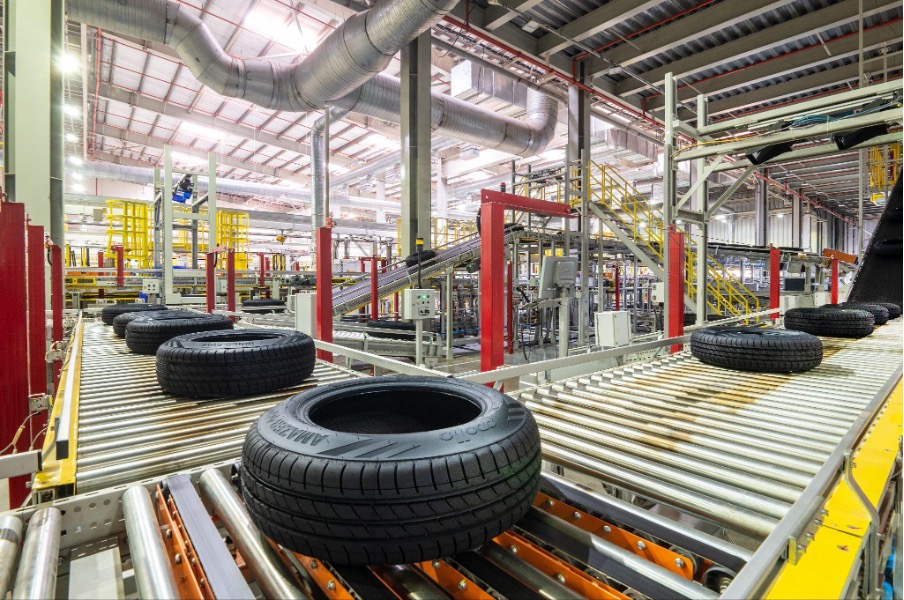
Building trust in the US requires more than competitive pricing. It requires demonstrating that products meet, and ideally exceed, the expectations associated with established global brands.
Heritage brands can provide a powerful bridge in that process.
When a company invests in preserving the design philosophy and engineering traditions of a historic brand while expanding its reach into new markets, it creates a combination that resonates strongly with consumers.
European craftsmanship, global manufacturing capability and strategic investment come together in a way that strengthens both the brand and the company behind it.
A broader shift in global business
The growing role of Indian companies as custodians of Western heritage brands reflects a broader transformation in the global economy.
For decades, companies from emerging markets were primarily seen as suppliers to the global system. Their role was to manufacture efficiently and compete on cost. That perception is changing.
Today, many of these companies operate across multiple continents, run advanced research and development centres, and manage complex global supply chains. They are no longer simply participants in globalisation; they are shaping its next chapter. For example, at Apollo Tyres, we have two Global R&D Centres, with one in the Netherlands and the other in India. Ownership, innovation and market expansion are increasingly distributed across geographies.
The concept of stewardship captures this shift well. It suggests responsibility rather than replacement, preserving the essence of a brand while ensuring it continues to evolve.
The road ahead
The success of this model ultimately depends on balance. Heritage must be respected, not diluted. At the same time, brands must continue to adapt to changing technologies, consumer expectations and global markets. When that balance is achieved, the results can be powerful.
Consumers gain access to products that combine decades of design expertise with new investment and innovation. Companies gain access to global markets while building long-term brand credibility.
And the global economy benefits from a more collaborative form of growth, one where heritage and innovation reinforce each other.
If the first era of globalisation was defined by outsourcing, the next may well be defined by stewardship. And increasingly, Indian companies are helping write that story.
Disclaimer: The opinions and views expressed in this article/column are those of the author(s) and do not necessarily reflect the views or positions of South Asian Herald.
Related posts:
 Brand USA Expands Travel Week to India, Underscoring Strategic Importance of USA’s Second-Largest Overseas Market
 India’s SUV Craze Powers Shift in Luxury Car Preferences
 The Aroma of Home: Assam’s Joha Rice Finds Its Way to Diaspora Kitchens in Europe
 Madhu S Dutta Launches Her Own Brand Consultancy: HOUSE OF MSD