Join WhatsApp Channel


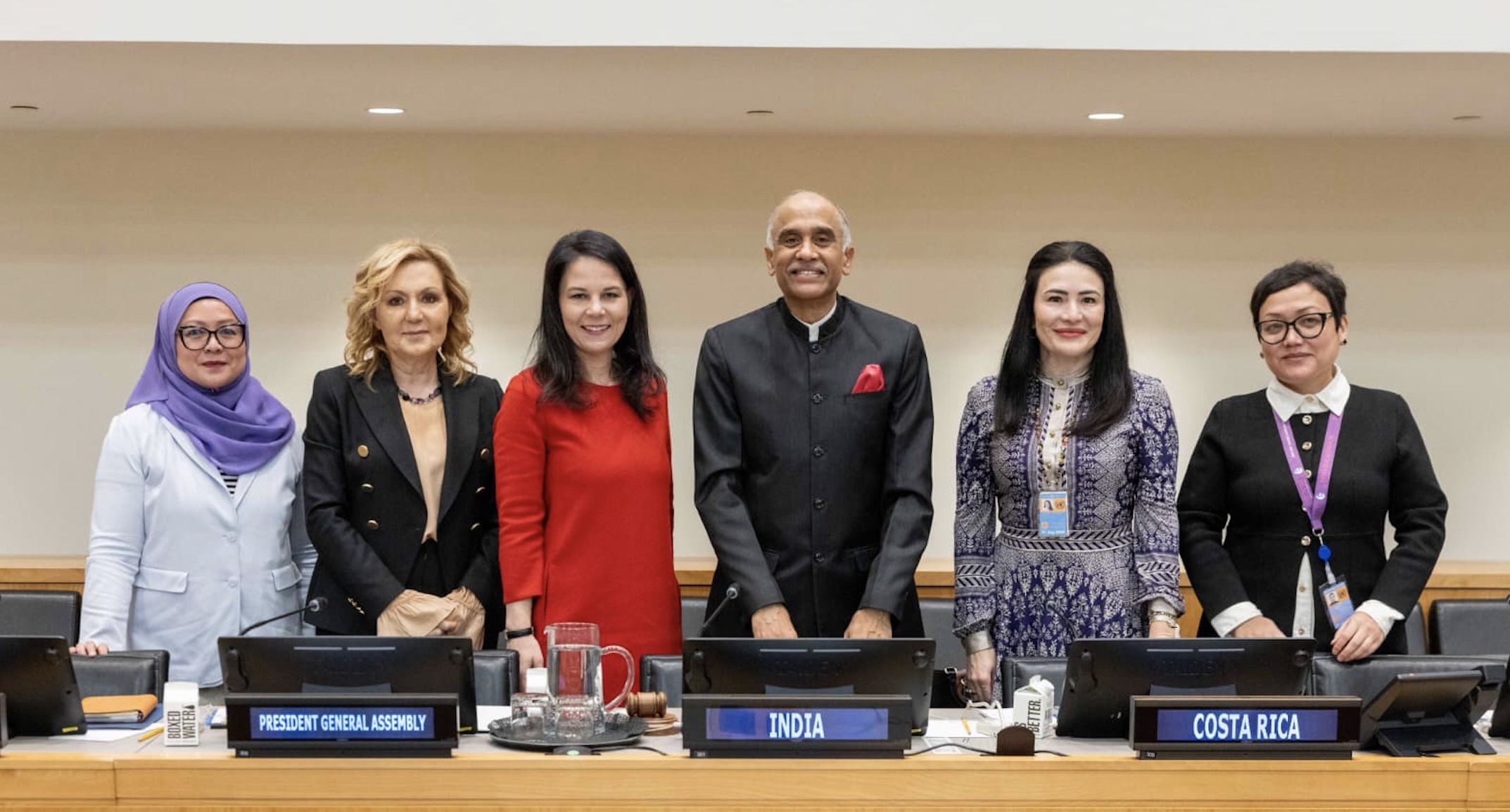
The fourth edition of the Dr. Hansa Mehta Memorial Lecture was held on March 6, 2026, at the United Nations Headquarters, in New York, focusing on the theme “Breaking Barriers for Social Transformation: Dr. Hansa Mehta’s Inspiring Life.”
This year’s lecture emphasized the importance of breaking “glass ceilings” and the lasting impact such efforts can have on future generations of women and their “dreams, hopes and ambitions.”
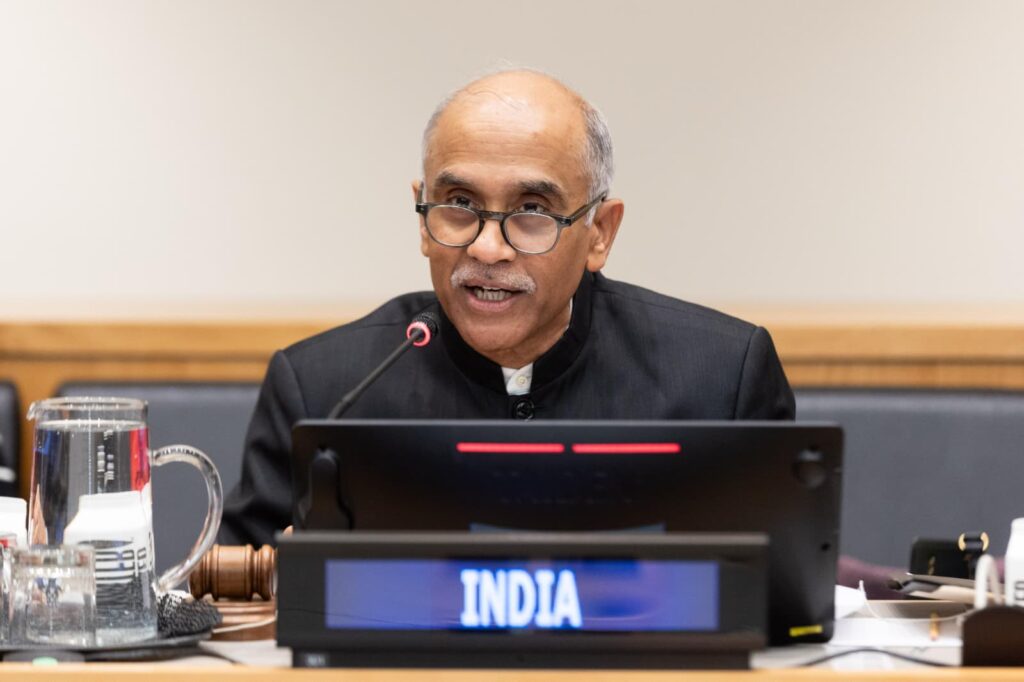
In his welcome remarks, India’s Permanent Representative to the United Nations, Ambassador Parvathaneni Harish, reflected on the legacy of Padma Bhushan Dr. Hansa Mehta as an educator and social reformer. He noted that she used the opportunities and platforms available to her to advance the cause of women’s empowerment.
Ambassador Harish highlighted Mehta’s role in promoting legislative reforms that raised the legal age of marriage for girls. He also pointed to her contributions to grassroots movements advocating equal rights for men and women in access to education, equal pay, and equal property rights, at a time when such demands were widely considered unthinkable in many parts of the world.
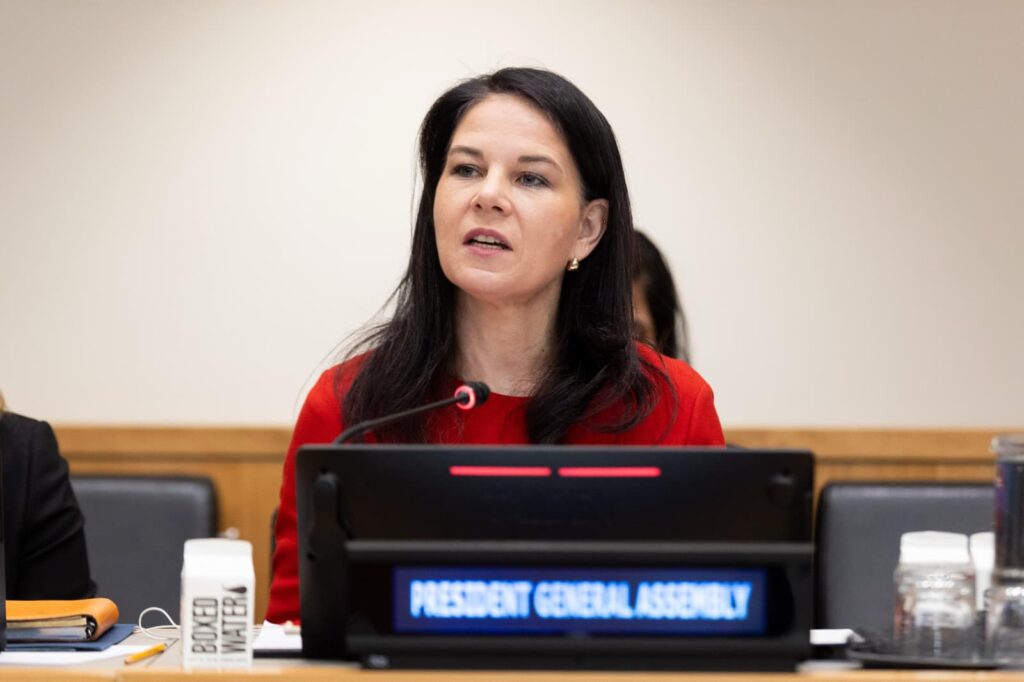
President of the United Nations General Assembly Annalena Baerbock delivered the keynote address, sharing her own “experience and insights.” Drawing from Mehta’s work and legacy, Baerbock outlined three key lessons: the importance of standing firmly by principles, the power of inclusive language, and the need for societies to extend opportunities to everyone, including women, in order to achieve meaningful social transformation.
“These are the three lessons I wish to draw from her life today in my keynote speech,” said PGA Baerbock, adding that the first lesson, in her view, is the “importance of holding firm to principle – which in these, I would say, is more important than ever.”
She noted that in 1947, shortly after India gained independence, Mehta was appointed to the United Nations Commission on Human Rights, where she helped draft the Universal Declaration of Human Rights.
Baerbock pointed out that discussions on equality and women’s rights are sometimes dismissed as “woke,” but said history provides an important reminder. “We should remind ourselves of Hansa Mehta, that she did not change that text 8 years ago but almost 80 years ago,” she said.
“Women’s rights are nothing new. They have been embedded in the DNA of our United Nations from the very beginning,” she said, adding “Yet Dr. Mehta did not regard this intervention as the culmination of the struggle for gender equality alone, or for social justice more broadly.”
The PGA emphasized that Mehta viewed progress toward equality as part of an “ongoing process,” introducing what she described as her second lesson: “That the pursuit of equality is continuous for the whole society, and not only for half of it.”
Throughout her life, Mehta remained a strong advocate for women’s empowerment, particularly in education, Baerbock noted. She cited an example from 1962, when Mehta, serving as Chair of India’s National Council for Women’s Education, rejected the idea of a supposed “female aptitude” that would justify a narrower school curriculum for girls.
During her speech, Baerbock also welcomed India’s hosting of the second AI Impact Summit last month, saying it reflected “a commitment to harnessing these technologies for inclusive and equitable development.”
She underscored that advancing responsible artificial intelligence “protects rights, promotes safety, and ensures that innovation empowers women.” Baerbock added, “And we should be reminded every day when we are working on these new AI regulations to hold our stand firmly, as Hansa Mehta once did.”
Turning to her third lesson, Baerbock said, “If just a single person can make such an immense difference, imagine how profoundly a society can transform when that opportunity is extended to all humanity.”
She noted that Mehta often had to fight her battles in relative “isolation,” not only at the United Nations but also in her own country, India. At the same time, Mehta benefited from the “rare opportunity” to receive an education from her family at a time when female literacy in India was extremely low, estimated at only one to two percent.
“So, this was also a key driver of why she was fighting, not only for girls’ and women’s rights in theory, but for education for all, knowing that when this is denied, societies restrict their own progress,” Baerbock added. “So having this connection already back in time, that empowering women also makes societies and economies stronger, should be a clear reminder to ourselves again, when we speak in these times of CSW about deleting women’s rights because we should focus more, as some call it, on the ‘hard topics’ in these times.”
The PGA argued that women’s rights are among the “hardest topics we can imagine,” recalling Ambassador Harish’s earlier remarks that “breaking barriers” is never easy.
“Because especially as a woman, if you want to propose something new, or you are really holding your ground, we all know how we are being called: sometimes naïve, sometimes difficult, sometimes even crazy,” she said. “But as we know, in all parts of society, not only in politics, not only in the economy, but especially also in sports, if I may quote another female hero, Serena Williams: ‘You call me crazy, I show you what crazy can do.’”
Baerbock added that Mehta may also have been labeled “crazy,” yet what she ultimately achieved was “astonishing.”
The memorial lecture honors Mehta, a freedom fighter, educationist, and social reformer who played a pivotal role in shaping the language of the Universal Declaration of Human Rights. She successfully advocated changing the phrase “All men are born free and equal” to “All human beings are born free and equal” in Article 1, marking a significant milestone for gender equality.
Instituted to coincide with International Women’s Day, the lecture commemorates Mehta’s legacy and contributions, according to the Permanent Mission of India to the United Nations.
Permanent Representatives from Costa Rica, Greece, Kyrgyzstan, and Brunei Darussalam also addressed the gathering, sharing perspectives from their experiences at the United Nations and in their respective countries.
Related posts:
 UNGA President Annalena Baerbock Opens 80th Session, Calls It a “Make-or-Break Moment” for the United Nations
 International Women’s Day 2025: Leading Experts on Maximizing Women’s Health and Rights
 India and UN Women Co-Host Ministerial Roundtable on Advancing Women’s Empowerment
 India Reaffirms Global Leadership in Women Peacekeeping at United Nations Security Council Debate