 Join WhatsApp Channel


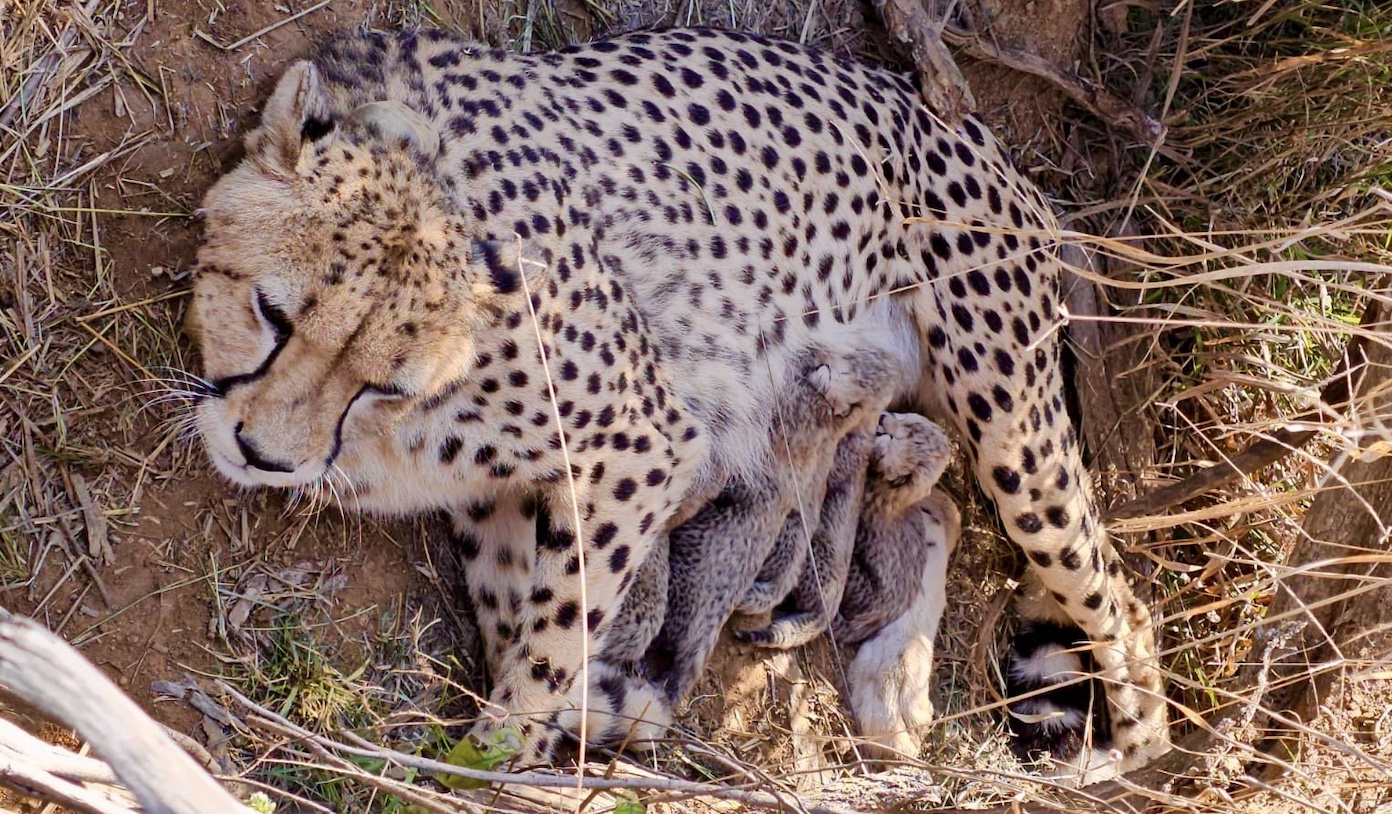
The fragile but steadily unfolding story of the cheetah’s return to India reached another milestone on Monday, as a Namibian female cheetah named Jwala gave birth to five cubs at Kuno National Park, pushing the country’s total cheetah population to 53.
Officials said the birth marks the 10th successful cheetah litter on Indian soil, a development that conservationists see as a significant indicator that the ambitious reintroduction programme is slowly finding its ecological footing after early setbacks.
India had lost its last wild cheetahs decades ago, with the species declared extinct in the country in the mid-20th century. The current effort to restore the animal to its former habitat began under Project Cheetah, which involves translocating animals from African populations and nurturing them in carefully managed reserves.
Announcing the latest births, Environment Minister Bhupender Yadav said the development had lifted the number of Indian-born cubs to 33, underscoring the progress of the conservation programme.
In a message posted on social media platform X, Yadav described the births as “a moment of great pride for Project Cheetah,” crediting veterinarians, wildlife biologists and forest field staff who have been closely monitoring the animals.
“The milestone reflects the dedicated efforts, skill and commitment of veterinarians, field staff and everyone working tirelessly on the ground,” he said.
A cautious conservation success
Jwala’s latest litter is her third since arriving in India from Namibia, making her one of the most successful mothers among the relocated cheetahs. Conservation teams have been keeping a close watch on her and the cubs within protected zones of Kuno’s sprawling grassland and forest ecosystem.
Wildlife experts note that the birth of multiple litters within India is critical to the long-term viability of the project. For a reintroduction effort to succeed, populations must eventually sustain themselves through natural breeding rather than relying solely on imported animals.
The increase in cub numbers is therefore viewed as an encouraging sign that the cheetahs are adapting to Indian conditions — from prey availability to climate variations — though the process remains delicate.
India’s cheetah reintroduction programme has faced intense scrutiny since its launch. Several imported animals died in the first phase due to health complications, infections and adaptation challenges, raising concerns among wildlife scientists about habitat readiness and management protocols.
However, conservation authorities maintain that such risks are not unusual in wildlife translocation projects of this scale.
Growing numbers at Kuno
The latest births come amid a series of developments aimed at strengthening the cheetah population in Kuno.
Only weeks ago, another African cheetah, Gamini — brought from South Africa — delivered four cubs, marking her second litter in India. The repeated births are gradually expanding the population base, offering hope that a stable breeding population could emerge in the coming years.
Authorities have also continued to supplement the genetic pool through new arrivals from Africa.
On February 28, Yadav oversaw the release of nine additional cheetahs — six females and three males — brought from Botswana into quarantine enclosures inside Kuno. The animals are currently undergoing a period of acclimatization, veterinary checks and behavioral observation before they are introduced into the wider reserve landscape.
The quarantine phase is designed to ensure the animals adjust gradually to their new environment while minimizing stress and health risks.
The landscape experiment
Kuno National Park, located in the central Indian state of Madhya Pradesh, was chosen as the primary site for the cheetah’s return because of its relatively open terrain, prey base and low human density compared with other protected areas.
Spread across hundreds of square kilometers of dry forest, scrubland and grassland, the park offers the type of habitat cheetahs historically favored across parts of India.
Yet wildlife ecologists caution that Kuno remains a landscape experiment. Unlike the vast savannah ecosystems of Africa, India’s wildlife reserves are often fragmented and surrounded by villages, farms and infrastructure.
Ensuring that the cheetahs have sufficient territory to roam — without straying into human-dominated areas — remains one of the programme’s biggest challenges.
Some conservationists have argued that India will ultimately need multiple cheetah landscapes across different states to sustain a viable long-term population.
A symbolic return
Beyond ecological debates, the cheetah’s reintroduction carries enormous symbolic weight in India’s wildlife narrative.
Once widespread across the subcontinent, the species disappeared due to overhunting, habitat loss and colonial-era bounty systems that encouraged the killing of large predators.
The return of the cheetah has therefore been framed by policymakers as both ecological restoration and historical correction.
For officials involved in the project, each successful birth reinforces the possibility that the world’s fastest land animal could once again become a permanent presence in India’s grasslands.
Describing the moment as “historic and heart-warming,” Yadav said he hoped Jwala and her cubs would grow strong and thrive in their new home.
If the cubs survive the vulnerable early months — a period when mortality rates are typically highest — they could eventually join the expanding population of free-ranging cheetahs within Kuno’s landscape.
For now, conservation teams remain focused on careful monitoring, aware that the success of India’s cheetah revival will ultimately depend not just on births, but on the survival of future generations in the wild.
Related posts:
 Abhinav Bindra Welcomes Lionel Messi’s India Visit, Urges Focus on Grassroots Systems Over Spectacle
 The United Nations projects populations in India and Pakistan will continue to rise through 2054
 India’s Vice President Inaugurates USISPF Tourism Leadership Summit 2026 in New Delhi, Highlights U.S.–India Travel Ties
 India Nears First Human Spaceflight, Eyes Space Station by 2035 and Moon Landing by 2040
