Join WhatsApp Channel



A thoroughfare linking the New Jersey towns of Edison and Iselin is the subject of “Destination Oak Tree Road.” The inspiring documentary focuses on one of the most important centers of Indian-American commerce and culture in the United States. Nominated for two New York Emmy Awards, it was directed and narrated by Rohit Vyas, a veteran Indian-American journalist, who also served as co-writer and executive producer.
His wife, Isha Vyas, was a co-writer and executive producer and originated the idea for the documentary. Their daughter, Aditi “Deetz” Vyas, executive producer and director of post production, brought a next-generation perspective to the story. The project became a family affair (and included Janice Selinger as an executive producer), bringing husband, wife, and daughter together to document a pivotal – and underappreciated – chapter of American history.
Angela Chitkara and Matthew Rees, contributing editors at South Asian Herald, recently spoke to Rohit and Aditi in an exclusive interview.
What made you want to produce this documentary?
Rohit Vyas (RV) – It was a story that needed to be told. It’s a unique story about the Indian American diaspora and the history of this particular area. Oak Tree Road is a stretch of roadway between the townships of Edison and Iselin in Woodbridge, New Jersey, which has earned an international reputation. But it didn’t happen suddenly or overnight. It’s the story of people who moved in with the intention of working hard, establishing themselves and their families, and creating success not only for themselves but for the entire area.

This once thriving area had become a run-down corridor with boarded-up stores by the 1980s. The Indian American community saw the opportunity and began transforming it into a revitalized commercial hub. As the longest-serving Indian American journalist in the United States, I witnessed the community establish itself and help turn Oak Tree Road into one of the most successful commercial districts in the country.
Aditi “Deetz” Vyas (AV) – This story is an imperative part of American history that needed to be told correctly with nuanced perspective. The population that witnessed this area’s transformation is aging rapidly and if we didn’t make this documentary now, those first-hand accounts would have been lost forever. As an actress, sports host and producer- I had the technical knowledge and enthusiasm to take on the documentary alongside Rohit and our incredible team. I’ve had people all over the world mention Oak Tree Road to me and it was an exciting experience to finally be making this film.
How long have you been coming to Oak Tree Road?
RV – I’ve covered the area in question, Oak Tree Road, since 1986 and so I know it extremely well. And I’ve seen first-hand how all the businesses moved in, how residents moved in, how they established themselves, how the community that was there at the time interacted with them. I have witnessed all of that since the 80s.
What was the first Indian-owned store to operate on Oak Tree Road?
RV: One grocery store, one restaurant and similar situation in Edison – other businesses started springing up later.
There are a lot of jewelry stores, clothing stores, grocery stores, and restaurants. There’s also a Quality Tire and Auto Center. What are some of the other stores that one might not expect to be Indian owned?
RV: Cinemas, studios, pizza shops, stores that sell homewares like luggage and kitchen utensils. It’s a common phenomenon within the pioneers featured in the documentary as well as many other business owners on Oak Tree Road that their education and background may be different from their actual retail persuasions.

You have a business owner who has a background in pharmacy running a successful Tire and Auto Center. You have a business owner who is an engineer running a successful travel agency. You have a doctor in the media space and so on.
You point out in the documentary that Edison defies trends in retail decline. Why do you think it has been successful? And continues to be successful?
AV – The retail here caters to specific niche markets and communities. Once they see success, they are able to grow their reach while also maintaining their original intended clientele.
RV – It is also unique in the entire country because of the fact that there are so many businesses and homes located throughout the roadway and around the area in both townships that it has become a huge burgeoning community in and of itself. And therefore, retail is a natural hand-in-hand with the community that is around it.
Do you have a favorite story from Oak Tree Road?
RV – The excitement of the people that this story was finally being told during the filmmaking process. You could feel the energy in the streets and as we stopped to talk to people, it was infectious to see how excited they were that this documentary was happening.
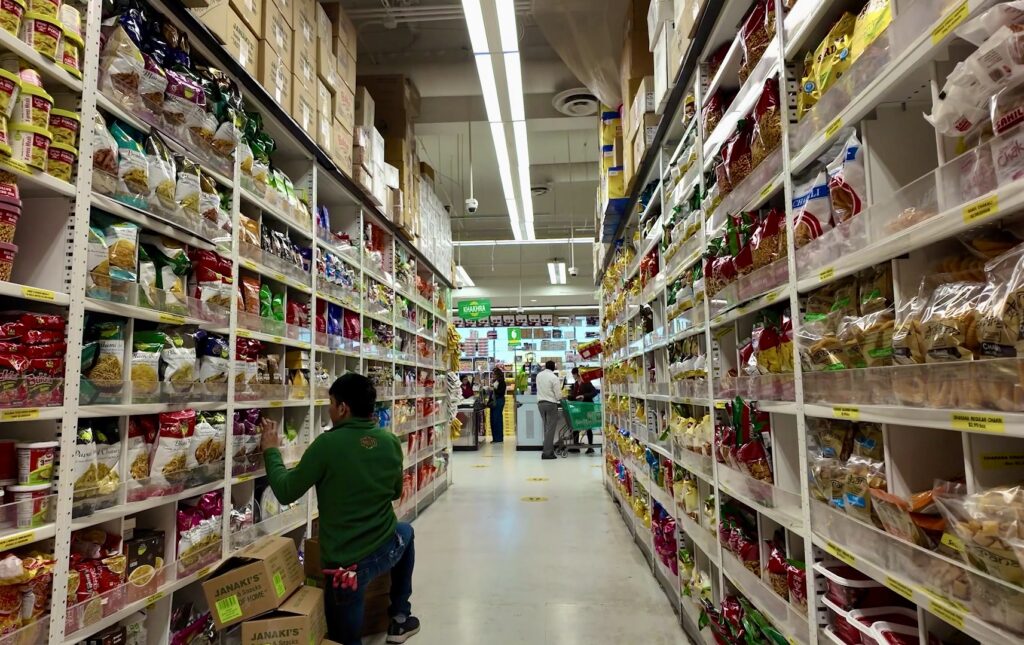
AV – Going shopping with my non-Indian friends who knew more than anyone else about where to find the paneer or the cardamom because they shop on Oak Tree Road regularly too!
Are there parades or other events held on Oak Tree Road?
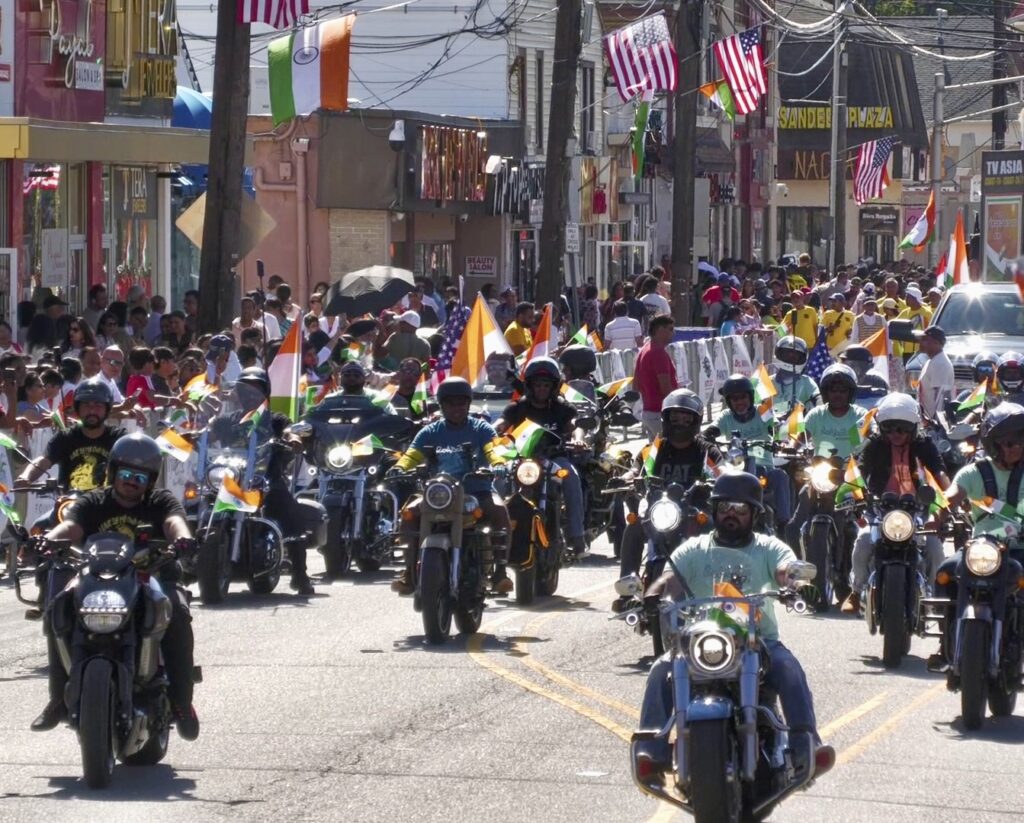
RV – Parades have become a tradition over there. In fact, parades were a tradition before the Indian American and the extended South Asian American community established themselves in the area. We covered 100 years of all kinds of parades going back to the 1920s in the film. In addition, the Oak Tree Road community also celebrates cultural events such as Navaratri, Ganesh Chaturthi, Diwali, Holi, Eid and Christmas.
Are there any common misconceptions about Oak Tree Road?
RV – People often assume the area is meant only for Indians or South Asians. But if you visit the area, you’ll be surprised by how many people from all walks of life and all cultures gather there, because it truly is a place for everyone. Take the grocery stores, for example. Nearly anyone who needs groceries of any kind will shop there, not just members of the Indian-American or South Asian American communities.
The variety is enormous, the produce is fresh, and the prices are reasonable. The range of cuisine is another major attraction. The area doesn’t cater to a single taste or mood; it offers something for everyone. You’ll find bakeries, pizzerias, Chinese and Thai restaurants, ice cream shops and, of course, a wide selection of Indian cuisine.
What surprised you during the making of the documentary?
AV – When making a documentary, you often do a series of interviews where the participant is on camera answering questions that help viewers understand the story through their experiences. During these sessions, I got to learn about this area’s history first-hand and was absolutely stunned to hear that in spite of facing vandalism and violence, the Indian-American business owners vehemently opposed prosecuting the perpetrators.
Even though the perpetrators had been caught, the Indian-American community together decided not to press charges. They instead just wanted those same people to get to know them, which in turn acted as the olive branch to make Oak Tree Road the unified community for all walks of life it is today. I quickly realized that THIS was the climax and most pivotal part of the story. To hear people who are generations older show such compassion and grace inspired me to make sure that people younger like myself take time to listen to and learn about this history.
Jewelry stores that are part of India-based multinational companies have started to locate on Oak Tree Road. Do you see this trend continuing?
RV – Based on the answers we received from a lot of the businesses and former businesses in the area, as well as from the officials, absolutely. As one of the mayors mentioned in the documentary film, this is not just a successful commercial spot, but a premium commercial spot.
And they all talked about how the big companies were showing interest in bringing their big names to the area. One of the reasons behind that is it is a place to shop for festivals and weddings. And people don’t have to go to India to shop for clothes and jewelry anymore.
Do you see the influx of those stores posing a threat to smaller, “mom and pop” stories that have been the norm on Oak Tree Road?
RV – I think big businesses serve as good anchors for an area like that, as well as bring in more customers from various other states.

They work together very well because people come to shop not just for the big names or brand names but also what suits their budget and style. So, I think it’s a perfect combination to have, especially in this area. However, it’s hard to predict the future.
Is there anything equivalent to Oak Tree Road anywhere else in the country?
RV – There are neighborhoods in various other major cities in the United States that have a sizable presence of Indian American and South Asian American retail businesses, like Pioneer boulevard in Los Angeles County, and Jackson Heights in Queens. These are comparatively smaller areas. However, what’s unique about Oak Tree Road is its one stretch of roadway, straddled between two townships, and you could literally walk along the way and find stores within walking distance, over a mile, which is unique to this area.
Moving from commerce to politics, voters in Edison strongly supported the Democratic candidate for governor, though last year they strongly supported Donald Trump. Do you have an explanation?
RV – Voters in this area are not necessarily tied to one political party. Depending on the issues during the current election cycle, voters will vote in support of either party serving those issues. They evolve like many populations do and issues that affect them or matters that are of concern to them inform their vote. If a particular leader from a particular party appeals to them in the prior election cycle but isn’t delivering on their needs, they’ll be more inclined to vote the other way. It’s a normal human reaction. But I don’t think this particular segment of the population can be generalized by aligning itself to one party. It’s just who they think at the time is good for them and for their businesses.