Join WhatsApp Channel


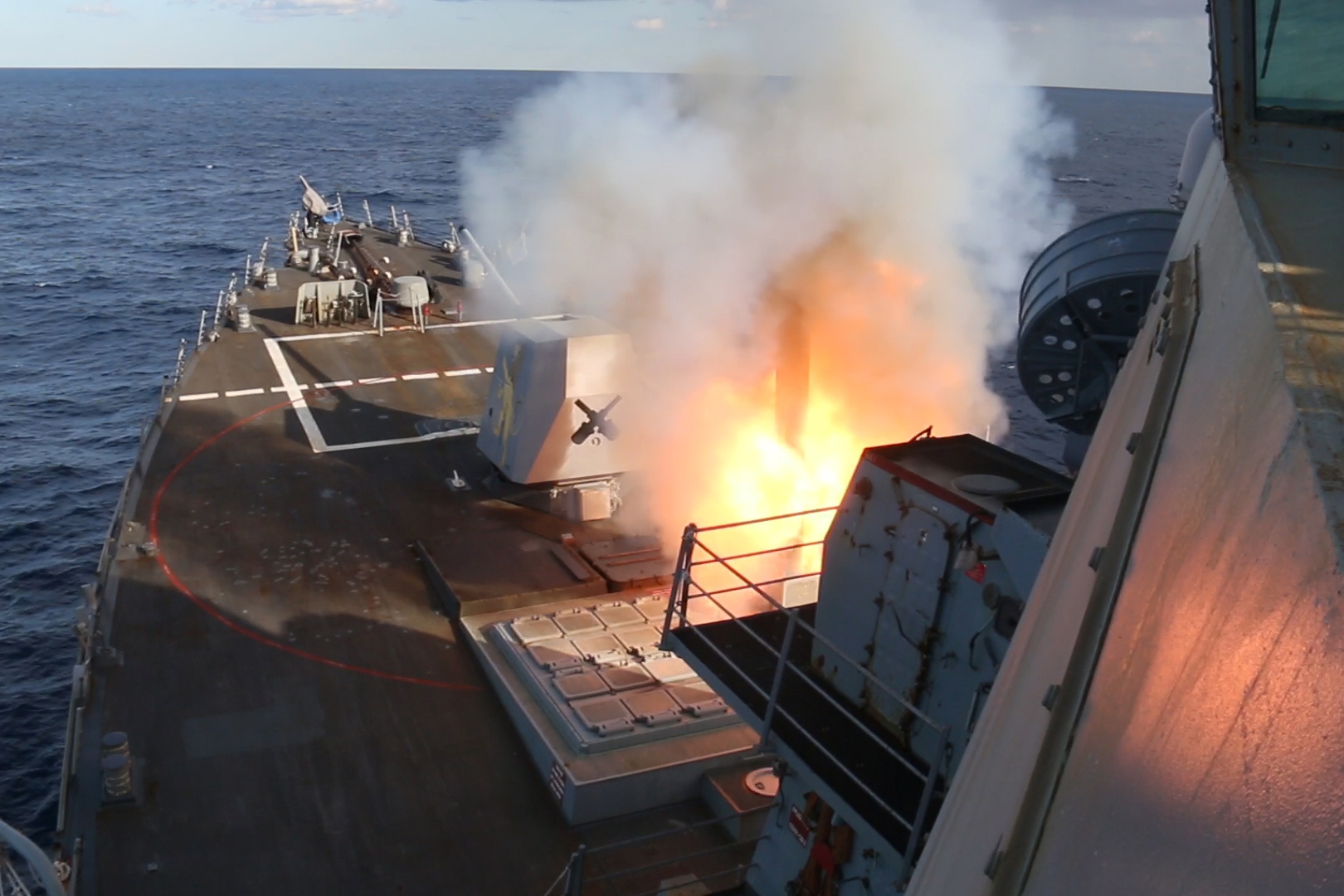
The Middle East has entered its most dangerous military confrontation in decades, after a coordinated U.S.–Israeli assault on Iran — dubbed Operation Epic Fury — killed Iran’s Supreme Leader, Ayatollah Ali Khamenei, and triggered a widening regional war whose consequences are rippling across global markets, diplomacy and domestic American politics.
What began as precision airstrikes targeting Iran’s nuclear facilities and military command centers has rapidly evolved into a multi-front conflict involving missile barrages, drone strikes, cyber disruptions and attacks on American bases and diplomatic missions. The scale and speed of escalation have shocked even seasoned observers of Middle Eastern volatility.
Shock and Awe, Revisited
The joint strikes — described by U.S. officials as nearly double the scale of the opening hours of the 2003 Iraq invasion — targeted nearly 2,000 sites across Iran. American commanders said Iran’s air defenses were “severely degraded,” and that hundreds of ballistic missiles, drones and launchers had been destroyed.
But Iran’s retaliation has been immediate and lethal.
Missiles have struck Israel, killing civilians and injuring hundreds. A ballistic missile hit Al Udeid Air Base in Qatar, the largest U.S. military installation in the region. Iranian drones targeted U.S. command facilities in Kuwait, killing six American service members in the opening hours of the war. U.S. embassies, including facilities in Dubai and Jordan, have reported direct drone threats.
The geography of the war is expanding. Israel has intensified its campaign against Hezbollah in Lebanon, where the death toll is climbing. Gulf airspace closures have stranded thousands, including over 1,500 Americans requesting evacuation assistance.
Political Whiplash in Washington
President Donald Trump has characterized the strikes as both preemptive and defensive, at times suggesting the U.S. “forced Israel’s hand,” and at others claiming Iran posed an imminent threat. Secretary of State Marco Rubio has promised escalating “intensity” in the coming days.
The shifting rationale has fueled domestic unease. Multiple polls show a majority of Americans disapprove of the strikes, with many fearing a prolonged war. Senate Democrats are pushing for a war powers resolution to limit executive authority.
The United States now faces a dual risk: military entanglement abroad and political division at home.
Tehran’s Leadership Vacuum
The death of Khamenei — if definitively confirmed — represents a historic rupture in Iran’s political architecture. Under Iran’s constitution, the Assembly of Experts is tasked with selecting a successor. In the interim, power typically consolidates within a clerical-military council, heavily influenced by the Islamic Revolutionary Guard Corps (IRGC).
Potential successors could emerge from senior clerical ranks or from hardline figures aligned with the IRGC. The danger lies in fragmentation: rival factions could compete for control, increasing instability inside a country already strained by sanctions, youth unrest and economic hardship.
Iranian clerics have issued religious decrees calling for global retaliation, heightening fears of lone-wolf or proxy attacks far beyond the battlefield.
Global Reactions: Between Support and Alarm
Allies are divided. Canada praised the strikes as decisive action against a destabilizing regime. France has called for restraint. Gulf monarchies, though wary of Iran, are bracing for spillover violence. Oil-rich states fear being drawn directly into the conflict after missile strikes targeted their territory.
Russia and China have condemned the escalation and called for emergency U.N. deliberations. Both have deepened economic ties with Tehran in recent years, particularly through energy and arms arrangements designed to bypass dollar-based sanctions.
European capitals worry about a refugee surge and energy shocks. Asian economies fear disruption to oil flows through the Strait of Hormuz, through which roughly a fifth of global petroleum passes.
Energy and Economic Shockwaves
Oil markets have reacted sharply. Even temporary shipping disruptions near Hormuz have rattled traders. Insurers are reassessing maritime risk premiums. Airlines are rerouting flights across Central Asia and Africa, increasing costs and delays.
Energy-importing countries — including India, Japan and much of Europe — face potential price spikes. Luxury markets in the Gulf, once a bright spot amid global retail slowdown, have shuttered stores amid airport closures and reduced tourism. The economic aftershocks could prove nearly as destabilizing as the military campaign itself.
The frightening scenario is not merely higher oil prices, but a sustained maritime choke point. A prolonged closure of Hormuz could trigger recessionary pressures worldwide.
The Escalation Ladder
Military strategists now outline several possible trajectories:
- Controlled De-escalation: Iran’s capabilities degrade sufficiently that it seeks mediated talks. Backchannel diplomacy through Oman or Switzerland reopens.
- Prolonged Attrition: Missile exchanges continue for weeks, with limited ground invasion but sustained air campaigns — a grinding, destabilizing standoff.
- Regional Conflagration: Hezbollah launches full-scale attacks from Lebanon; Gulf states are drawn directly in; U.S. troop deployments expand dramatically.
- Internal Upheaval in Iran: Leadership fragmentation leads either to regime hardening under military control or to civil unrest and possible collapse.
Each path carries grave risks.
America’s Precarious Position
For the United States, the war raises profound questions. Can Washington degrade Iran’s military infrastructure without triggering a generation-defining insurgency? Can it maintain coalition unity amid domestic opposition? And how will it deter proxy retaliation against American interests globally?
The Pentagon insists combat power is “building” while Iran’s is “declining.” Yet history offers sobering reminders: military superiority does not always translate into strategic stability.
The phrase “Shock and Awe,” invoked by U.S. commanders, echoes the Iraq War — a conflict that reshaped the region in unintended ways. Critics warn that decapitating a regime does not guarantee orderly succession.
How Might It End?
Wars of regime disruption rarely end cleanly. A negotiated settlement could involve:
- International monitoring of Iran’s nuclear program.
- Gradual sanctions recalibration.
- Security guarantees for Gulf states.
- A phased drawdown of air operations.
Alternatively, the conflict could end through exhaustion — a tacit cease-fire after both sides absorb enough damage.
The most alarming outcome would be miscalculation: a missile striking a major population center or a direct confrontation between U.S. and Iranian naval forces spiraling beyond control.
A Moment of Global Peril
The war arrives at a fragile moment for the international system. Great-power rivalry between the U.S., China and Russia is intensifying. Global supply chains remain vulnerable. Domestic politics in democracies are polarized.
This conflict — centered in one region — carries the potential to reorder alliances, redraw deterrence lines and reshape energy geopolitics.
For now, skies over parts of the Middle East remain intermittently closed. Missiles arc across night horizons. Diplomats scramble. Markets tremble.
And the world watches, aware that the coming days — perhaps hours — may determine whether this becomes a contained regional war or the opening chapter of a far broader upheaval.
Disclaimer: The opinions and views expressed in this article/column are those of the author(s) and do not necessarily reflect the views or positions of South Asian Herald.
Related posts:
 South Asia Braces for Economic Shock as Israel-Iran Conflict Deepens
 Iran War Raises Energy, Trade and Inflation Risks for India and South Asia
 U.S. Launches Military Action in Iran as Indian American Lawmakers Question Legality of Strike
 UN Chief António Guterres Urges De-Escalation After U.S., Israel Strikes on Iran, Warns of ‘Grave Threat’ to Global Peace