Join WhatsApp Channel

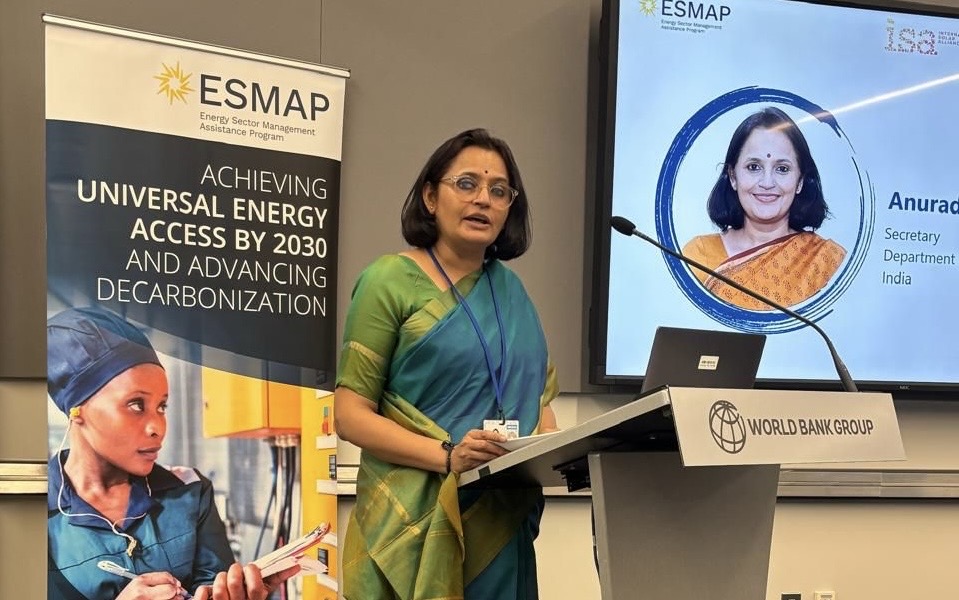
At the 2026 World Bank Group Spring Meetings in Washington, D.C., India’s Secretary of Finance for the Department of Economic Affairs, Anuradha Thakur, delivered keynote remarks at the “Smart, Connected, Customer-Centric: The Future of Energy with the India Energy Stack” on April 16.
In her speech, Secretary Thakur underscored the urgency of the global energy challenge, noting that hundreds of millions of people across the developing world still lack access to reliable electricity, while utilities operate under severe financial stress.
She highlighted India’s remarkable transformation — from over 300 million people without electricity a decade ago to approximately 275 GW of renewable capacity today, representing more than 52 percent of total installed power capacity — as proof that ambition, institutional reform, and the right digital architecture can fundamentally reshape an energy system.
The Secretary highlighted how the rapid growth of rooftop solar is transforming power sectors worldwide, but it also presents a structural challenge: utilities must now manage grids with millions of individually connected systems, altering how power flows are operated and priced.
Addressing this requires more than a technical fix, she pointed out noting it demands a policy and institutional response in which “energy data, financial transactions, and grid operations” can be managed seamlessly and at scale. This is the gap the India Energy Stack is designed to fill, providing open digital public infrastructure that connects “utilities, regulators, consumers, and service providers,” under a single interoperable platform.
In one of its most tangible demonstrations, she noted that Indian farmers can now sell surplus solar power directly to businesses in another state, settled in real time through a mobile phone — a new economic relationship made possible by the right digital architecture.
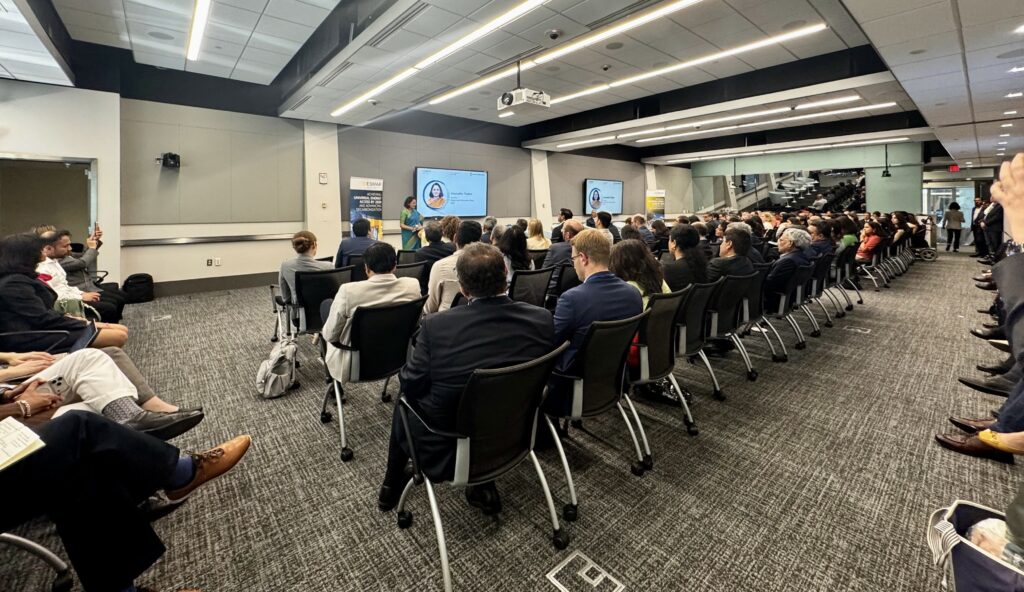
The India Energy Stack holds significant promise as a replicable framework for developing and emerging economies worldwide. Because the IES is built on open standards rather than proprietary technology, countries at different stages of energy sector development can adapt its core principles to their own institutional and regulatory contexts, according to a senior World Bank official.
The event signals that global energy challenges will be addressed not only through “hardware and infrastructure investment,” but through the “intelligent digital architecture” that governs how energy is “accessed, financed, and traded”— and that India’s experience offers the world a compelling and adaptable starting point, the official added.
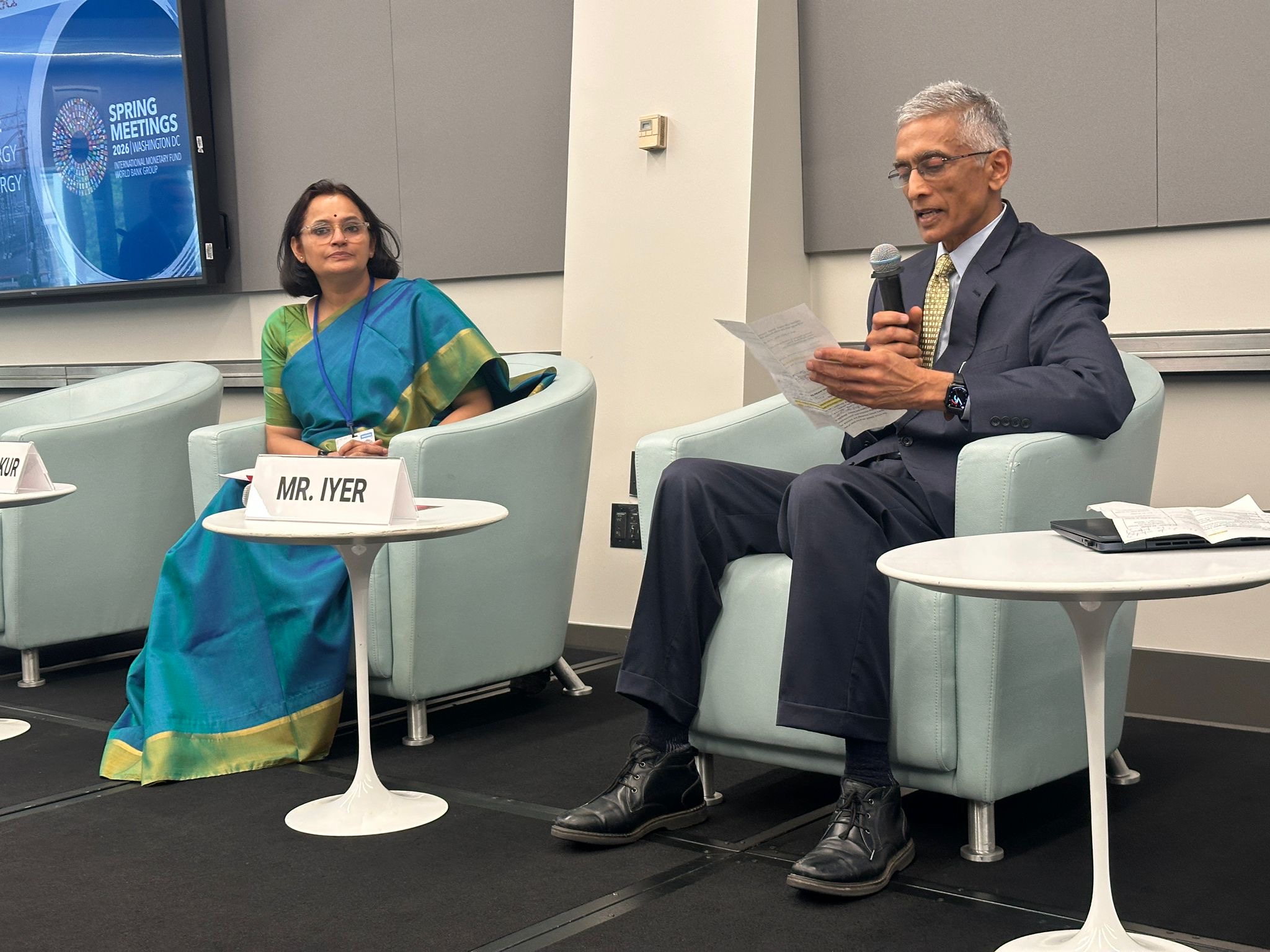
The session brought together senior leaders including Executive Director for Bangladesh, Bhutan, India, and Sri Lanka at the World Bank Group, Parameswaran Iyer; Global Director of the World Bank’s Energy Practice, Demetrios Papathanasiou; Director General of the International Solar Alliance (ISA), Ashish Khanna; Executive Director of REC, Prince Dhawan; and CEO and Co-founder of Networks for Humanity, Sujith Nair.
Related posts:
 India Stack – The Indian Approach and Experience
 Waaree Solar Americas Launches First Solar Module in Texas: A Breakthrough for US-India Clean Energy Collaboration
 World Bank President Ajay Banga Highlights “Jobs-Focused Strategy,” Ahead of 2025 Spring Meetings
 USAID and ISA Join Hands to Combat Climate Crisis and Advance Renewable Energy Adoption