Join WhatsApp Channel

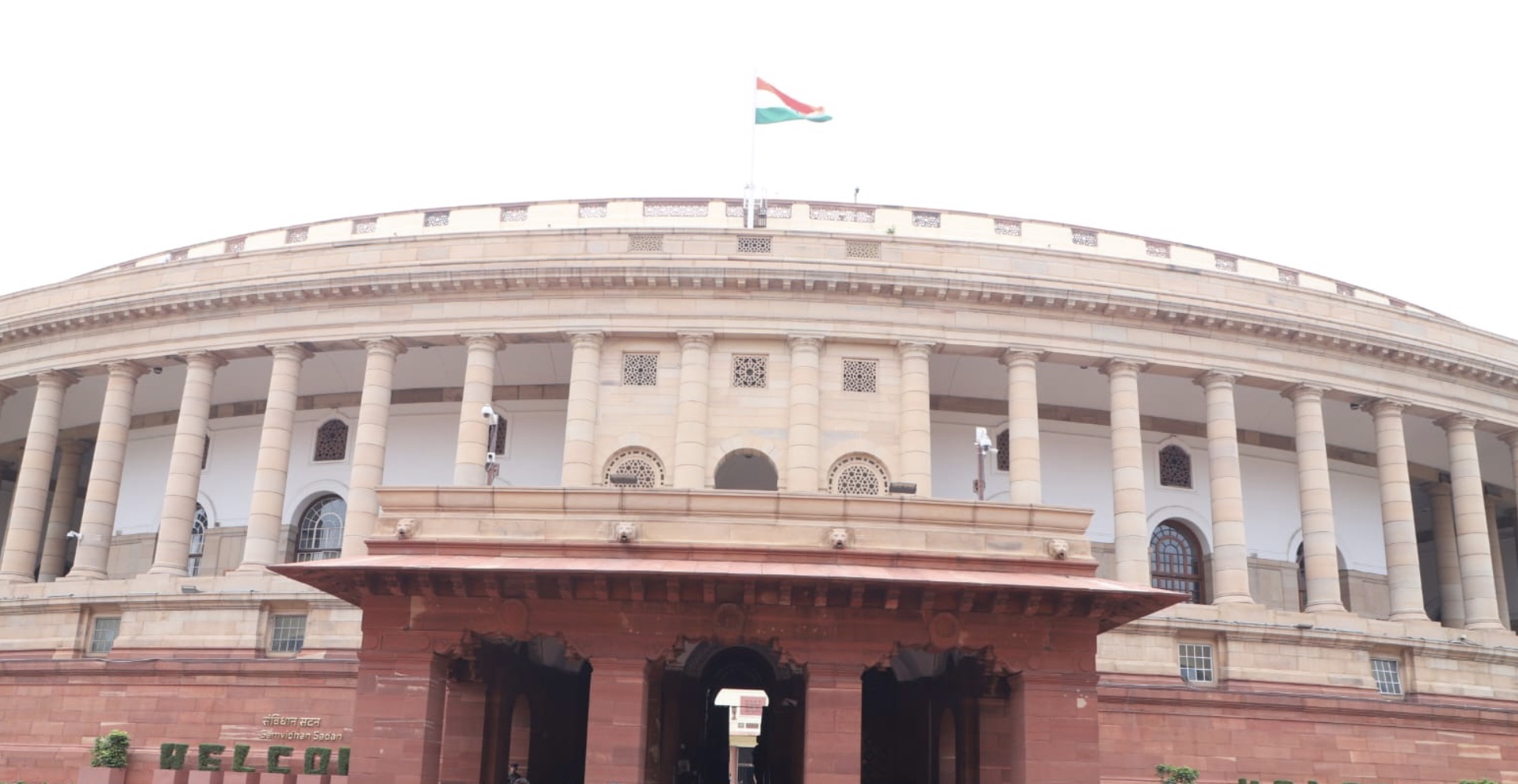
On the morning of Monday, March 16, in ten state assembly halls spread across India’s vast subcontinent, legislators will cast ballots that most people outside political circles will barely notice.
No crowds. No television spectacle. No exit polls.
Just members of state assemblies quietly handing over their ranked preference ballots for 37 seats in the Rajya Sabha — India’s Council of States, its upper house of Parliament.
Yet the consequences will reverberate for years.
The same quiet arithmetic is playing out 8,000 miles away in Washington, where Republicans hold the Senate 53-47 and cling to a knife-edge House majority of 218-213, even as history whispers a familiar warning: the president’s party almost always bleeds seats in the midterms.
The 2026 congressional elections in November could deliver that reckoning to Donald Trump’s Republicans — just as the 2026 Rajya Sabha cycle could consolidate Prime Minister Narendra Modi’s grip on India’s upper house.
Two democracies. Two very different legislative chambers. One recurring truth: controlling the upper house is the key to governing.
To understand where India’s upper house stands today, you have to rewind to 2004 — the year the Bharatiya Janata Party lost a general election it expected to win, undone by a campaign built on the slogan “India Shining” that did not resonate with rural voters.
That defeat began a decade of opposition for the BJP in the Rajya Sabha. The NDA controlled a majority in the Indian Parliament from 1998 to 2004 , but after losing the Lok Sabha, it ceded the upper house as well. The Congress-led United Progressive Alliance took power and, over two five-year terms — 2004 and 2009 — gradually built its own Rajya Sabha bloc.
Congress, with its allies, commanded a working majority through most of that decade. Legislation passed. Coalition partners were managed. The upper house, rarely dramatic, hummed along with the government of the day.
Then came 2014.
Narendra Modi swept into office with a Lok Sabha majority that no single party had achieved in 30 years. But the Rajya Sabha remained hostile territory. The BJP’s tally sat at barely 40 seats , when Modi took office — in a house of 245, that was a distant minority.
For years, landmark legislation stalled or was diluted. The Land Acquisition Amendment Bill. The Goods and Services Tax, which required a constitutional amendment, took two painful years of negotiation. Opposition parties used procedural tools to delay, amend, and obstruct.
Modi’s response was strategic: win the states, and the Senate will follow.
The BJP either governs alone or through the NDA in 19 of 28 Indian states today , compared to a handful when Modi came to power. Each assembly victory quietly converts into Rajya Sabha representation two or three years later, as retiring members from the old assembly arithmetic are replaced by new ones reflecting the changed landscape.
The results are now visible in the ledger. The BJP today holds 103 seats in the Rajya Sabha — its own party alone, before counting allies. The NDA alliance stands at 121 seats, with six nominated members who customarily support the government taking its effective working bloc to 127, thus comfortably past the halfway mark of 123 in a house of 245.
The Congress party, once the Rajya Sabha’s dominant force through the UPA years of 2004-2014, holds just 27 seats today.
The 2025 Rajya Sabha elections were held between June 19 and October 24, electing 14 members including two by-elections. It was a relatively small cycle — compared with the 72-seat churn now underway in 2026 — but even that modest rotation moved the needle.
The BJP went from 96 to 98 seats, while NDA alliance strength rose from 119 to 121. The INDIA opposition bloc, which had 77 seats before the cycle, ended with 80 — reflecting its strength in Tamil Nadu and Jammu & Kashmir. In J&K’s first Rajya Sabha election since the abrogation of Article 370, the National Conference alliance swept three of four seats, with the BJP securing one.
The 2025 cycle confirmed the pattern: each biennial rotation produces incremental NDA gains, but opposition parties hold their ground where state assemblies remain in their hands.
This year is different in scale. The 2026 Rajya Sabha elections, running from March 16 through November 2026, will fill 72 seats — nearly a third of the entire house. It is the largest cycle in years, and its outcome will shape the legislative landscape heading toward the 2029 general elections.
Monday’s first phase alone covers 37 seats across ten states: seven in Maharashtra, six in Tamil Nadu, five each in Bihar and West Bengal, four in Odisha, three in Assam, and two each in Telangana, Chhattisgarh and Haryana, plus one in Himachal Pradesh.
The projections largely track state assembly arithmetic.
In Maharashtra, the NDA holds 291 of the state’s MLAs against the INDIA bloc’s 108 — enough to win seven seats on NDA’s side with two for the opposition based on electoral quota calculations.
In Tamil Nadu, the DMK-led alliance controls the assembly decisively and is expected to sweep most of its six seats. West Bengal, firmly under Mamata Banerjee’s Trinamool Congress, will return its five seats largely to the TMC.
Bihar, where the NDA won a landslide in November 2025 securing 202 of 243 assembly seats, should deliver its five Rajya Sabha seats overwhelmingly to the alliance.
Political analysts project NDA strength rising to 145 seats in the Rajya Sabha after the full 2026 cycle concludes, while the INDIA bloc may drop to approximately 75. That would give the NDA a comfortable structural majority — not merely a working one propped up by nominated members.
A stronger NDA presence would smooth the passage of legislation ahead of the 2029 Lok Sabha elections — and potentially enable constitutional amendments, which require a two-thirds special majority.
The arc of India’s upper house finds an imperfect but instructive echo in the United States, where the Senate’s own 21-year scorecard tells a story of volatile swings that no party has managed to permanently dominate.
In 2004, Republicans held the Senate with 55 seats under George W. Bush — bolstered by the post-September 11 rally effect that had already helped them gain seats in the 2002 midterms. In 2002, Bush gained eight House seats and one Senate seat, the only midterm gain in a president’s first term since 1934. What Did It Cost? It was a political anomaly born of catastrophe.
The correction came in 2006, when Democrats rode anti-Iraq War sentiment to recapture the Senate 49-49 (with two independents caucusing with them) and take the House. Barack Obama rode that wave to the presidency in 2008, arriving with a Senate supermajority that briefly touched 60 seats — enough to pass the Affordable Care Act without a single Republican vote.
Then the midterm penalty struck. Obama lost 64 House seats in 2010 What Did It Cost? — the largest midterm drubbing since 1938. By 2014, he lost a further 13 House seats and nine Senate seats, with Republicans taking the Senate for the first time since 2006. What Did It Cost?
Trump won the White House in 2016 with a Senate majority in his pocket. In 2018, Democrats delivered a 40-seat House gain — the “blue wave” — though the GOP actually added two Senate seats due to a favorable map. What Did It Cost?
Biden entered office in January 2021 with a razor-thin 50-50 Senate that only tipped Democratic because Vice President Kamala Harris held the casting vote. In 2022, Biden lost nine House seats but gained one in the Senate What Did It Cost? — a better-than-expected result that pundits called the death of the anticipated “red wave.”
Now, in Trump’s second term, Republicans hold the House 218-213 and the Senate 53-47. History’s warning is blinking. The past five presidents — Clinton, Bush, Obama, Trump and Biden — all entered office with their party in control of both houses of Congress, and all five lost their majority in the House or Senate in their first two years.
Over 22 midterm elections from 1934 through 2018, the party controlling the White House lost an average of 28 House seats and four Senate seats.
Republicans will be defending 22 of the 35 Senate seats at stake in November 2026 — and seat exposure is the strongest predictor of Senate losses. Democrats are watching states like North Carolina, Georgia, and Maine with quiet optimism.
The structural differences between the two systems are profound. India’s Rajya Sabha is not directly elected by the public — its members are chosen by state legislators, making every assembly election a slow-motion Rajya Sabha vote with a two-to-three-year lag.
(2026 -Republican candidates running in some of the most competitive Senate races in 2026 are increasingly weighing in on a growing fight inside the GOP over whether to force Democrats into a “talking filibuster” to advance election legislation backed by President Donald Trump.)
The dispute centers on the SAVE America Act, a Republican-backed voting bill that would require ID to cast a ballot and proof-of-citizenship to register to vote. The measure cleared the House last month but faces long odds in the Senate, where Republicans lack the votes needed to overcome the chamber’s 60-vote legislative filibuster, allowing Democrats to block the bill.
America’s Senate is directly elected every six years, one-third at a time, and its swings are faster and more visceral, shaped by presidential approval ratings and national mood.
Yet the underlying logic rhymes across both democracies: the upper house is where power consolidates or fractures. Governments that control it can govern. Those that don’t must negotiate, delay, and sometimes retreat.
For two decades, India’s Rajya Sabha was a check on whoever held power in New Delhi. The Vajpayee government struggled there. The UPA years produced their own upper-house battles. And Modi’s first term was repeatedly tested by an opposition-heavy chamber.
That era appears to be ending. The 2026 cycle — beginning tomorrow morning in ten Indian state capitals — could cement the NDA’s structural majority in the upper house for the remainder of this decade.
In Washington, the cycle moves in the opposite direction. The midterm clock is ticking, and if history holds, November 2026 may begin restoring the Senate as a check on executive power.
Two democracies. Two upper chambers. Two very different trajectories — for now.
Disclaimer: The opinions and views expressed in this article/column are those of the author(s) and do not necessarily reflect the views or positions of South Asian Herald.
Related posts:
 How the Modi-Nitish Alliance Crushed Bihar: A Lesson in Coalition, Caste, and Confidence
 Will the NDA Ride the Exit-Poll Wave in Bihar?
 Bihar 2025: How the NDA Engineered a Near-Sweep — and Why the RJD-Congress Flame Flickered Out
 Indian State Elections: A Republic at the Polls, Two Very Different Battles