Join WhatsApp Channel


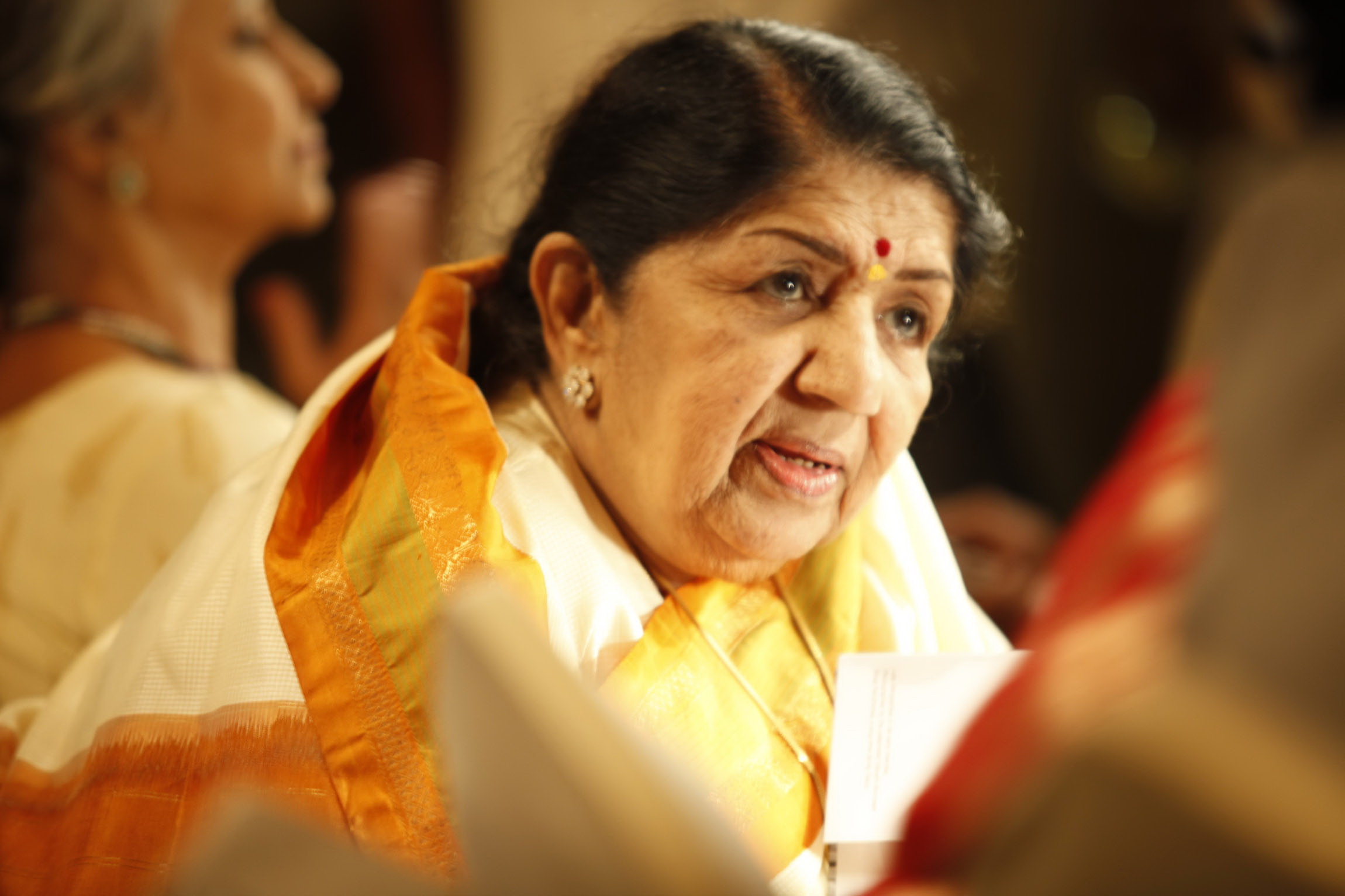
From the mid-1950s to the early 1980s, several new, young singers were successfully ushered, but the Mangeshkar sisters – Lata Mangeshkar and Asha Bhosle – had a dream run that saw no significant competition. After Geeta Dutt (the role-model for Asha and their only serious competition) opted out in the early 1960s, every singer who did come in never went anywhere near the top.
The reasons were clear – Lata’s and Asha’s extraordinary talent and their ability to sing every kind of song. If Lata was preferred for the heroines (and Asha by certain composers and banners), Asha was the choice for the ‘bad’ girls and the sizzling songs. If Lata never compromised on price or refused a certain kind of lyrics, Asha was game! And yes, composers dared think of creating challenging compositions only because both were around.
However, other singers did come in, as and when they got an opportunity. And here’s how they fared as they pitched for their place in the sun.
Shamshad Begum
Shamshad Begum was born in 1919. Trained under Ustad Hussain Bakshwale, she made her debut in Lahore in Ghulam Haider’s Khazanchi (1941) followed by Khandaan (1942). She moved to Mumbai and sang an array of songs under Naushad, S.D. Burman and other composers, including the fun-filled Aana meri jaan Sunday ke Sunday in Shehnai with (and under the baton of) C. Ramachandra.
Though she sang in prestigious films like Dard, Jugnu, Mirza Sahibaan, Aag, Anokhi Ada, Mela, Dulari and Jogan, her thick voice soon lost out in flavour to the emerging ‘thin-voiced’ forces that were Lata, Geeta Dutt and Asha. Despite major hits like Saiyyan dil mein aana re (Bahar), Kabhi aar kabhi paar (Aar Paar), Boojh mera kya naam re and Kahin pe nigahen (CID) and duets like Meri neendon mein tum (with Kishore Kumar/Naya Andaz), Mere piya gaye Rangoon(with Chitalkar/ Patanga) and others.
Soon, Shamshad Begum was relegated to secondary position in duets with Lata and Asha, besides multi-singer songs. Teri mehfil mein kismet (Mughal/E/Azam) and Reshmi salwar kurta jaali ka (Naya Daur) were among these.
In the ‘60s and ‘70s, Shamshad Begum sang without really managing a chartbuster. She was also called to sing for two heroes in drag – Shammi Kapoor in Bluffmaster, Dara Singh in Lootera and Biswajeet in her last hit song, Kajra mohabbatwala (with Asha Bhosle) in Kismet. She died in 2013.
Suman Kalyanpur
Suman Kalyanpur has had sensational hits, primarily in Hindi and Marathi films, but also in the arenas of devotionals, Marathi bhavgeet, ghazal and thumri and with songs in Gujarati, Kannada, Bengali, Punjabi, Maithili, Oriya, Rajasthani, Assamese, Bhojpuri and many other languages including Chhatisgarhi. In Hindi films, however, she could have a sizable turnover.
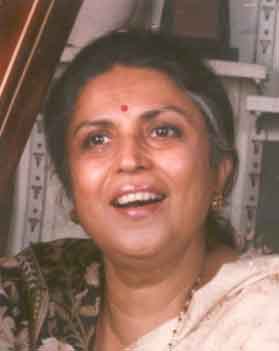
Suman Kalyanpur attributes it all to destiny (“I never had any burning ambitions and I think that I had a great career with fewer songs but a very great percentage of hits. I never even wanted to be a professional singer!” is what she said once) and the fact that she was never ambitious, never sang cabarets, mujras or any songs with lyrics or situations that were offensive.
Beginning with small-timers like Mohammed Shafi and Nashad, her greatest disadvantage was that her voice resembled Lata’s, though this proved to be a fleeting advantage when Lata had differences with S.D. Burman and Mohammed Rafi!
Suman Kalyanpur was also ideal choice for smaller films and composers who could not afford Lata’s price. She sang over 100 songs for Usha Khanna and in over a dozen films for Dattaram, Shankar-Jaikishan’s assistant who also scored music in small films. Her last song for Dattaram, Sun le bapu yeh paigham from the 1969 Balak was a major hit.
Considered especially lucky for duets, she had a terrific hit record with Mohammed Rafi and a great record also with Mukesh, Kishore Kumar and Hemant Kumar. Among her solo hits were the title-tracks of Dil Ek Mandir and Resham Ki Dori and many more.
Suman Kalyanpur’s last song was in the 1987 Rajesh Roshan film Yaadon Ki Zanjeer. However, her last hit was heard in Naseeb (1981) – Zindagi imtihan leti hai. Singing for almost every top heroine from Meena Kumari to Reena Roy, Suman had songs with every leading composer and has the distinction of being the first Indian artiste to appear on BBC (in 1971) and become the first Indian artiste to perform in USA in the late ‘Sixties.
Usha Mangeshkar
Usha Mangeshkar ruled the Marathi film scene in the ‘70s and ‘80s, and has a multitude of Gujarati and Bhojpuri hits to her credit. In Hindi, her voice packed a wallop in Kabutar kabutar (Dillagi), Apni apni biwi (Do Raaste), Sultanasultana (Tarana) and Mungda (Inkaar), not to forget her massive hits in Jai Santoshi Maa.
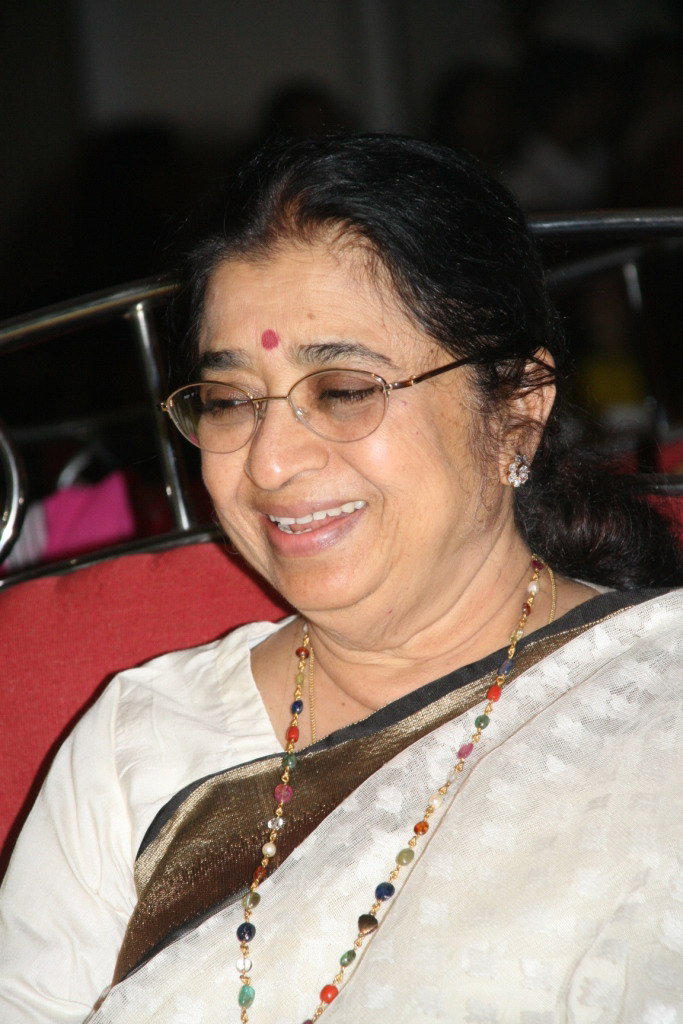
Usha, despite being the younger sister of Lata and Asha, lacked their killer instinct and also the luck to learn music under their father, the incomparable Pt. Dinanath Mangeshkar, as she was very young when he passed away. Usha’s attention was also diluted by her two other loves – painting and dancing. Her different voice made her suitable for children, for humbler films and also in regional cinema.
C. Ramachandra introduced her in Subah Ka Tara (1954) with the hit Bhabhi aayi, followed by Aplam chaplam(Azaad). Chitragupta, Ram Kadam in Marathi, Avinash Vyas in Gujarati and Dr. Bhupen Hazarika in Assamese are among composers whom she regards as teachers, besides her own sisters with whom she has sung multiple duets and multi-singer songs. Her duets with Lata include Tumko piya dil diya (Shikari) and Asha like Kaahe tarsaaye(Chitralekha) were hits.
Raamlaxman and Rajesh Roshan were among the composers who gave her special attention in the ‘70s and ‘80s, though Laxmikant-Pyarelal and R.D. Burman also utilized her voice a lot. Usha’s last song was a duet with Asha in Bal Ganesh 2 (2009).
Hemlata
Hemlata made her mark mainly under Ravindra Jain’s stewardship in the ‘70s. Jain was only repaying his debt to his guru who was also Hemlata’s father, Pt. Jaichand Bhatt, singer, musician and teacher in classical and folk music. Hemlata also learnt ghazal singing from Ustad Rais Khan.
Her first released song was the hit solo, Dus paise mein Ram le lo from Ek Phool Ek Bhool (1968) under Usha Khanna. A ghazal album with Khayyam, songs for Kalyanji-Anandji (Vishwas), S.D. Burman (Jyoti) and Vasant Desai (Aashirwad) and a lot of melodies for Laxmikant-Pyarelal were among her next lot of songs. Chanda ko dhoodhne sabhi (with Asha and Usha) in Jeene Ki Raah was a major hit.
Ravindra Jain’s hit-list with her included Jab deep jale aana (Chitchor), and the title-track of Ankhiyon Ke Jharonkhon Se. Her last song was in L-P’s Kasam Suhaag Ki in 1989.
Hemlata is credited with research work in Indian folk music and had started a musical academy in America. She has sung in 38 languages including rare Indian ones like Dogri, Multani, Saraiki, Garhwali, Bundeli and also in Nepali, Arabic, Persian, Urdu, Sanskrit, English, French, Italian, Zulu and Dutch!
Sharda
Sharda, discovered by Raj Kapoor, sang almost exclusively for Shankar-Jaikishan(including all her hits). She also had her moment of fame as a film composer (Maa Bahen Aur Biwi, Kshitij) and did many non-film albums and shows.
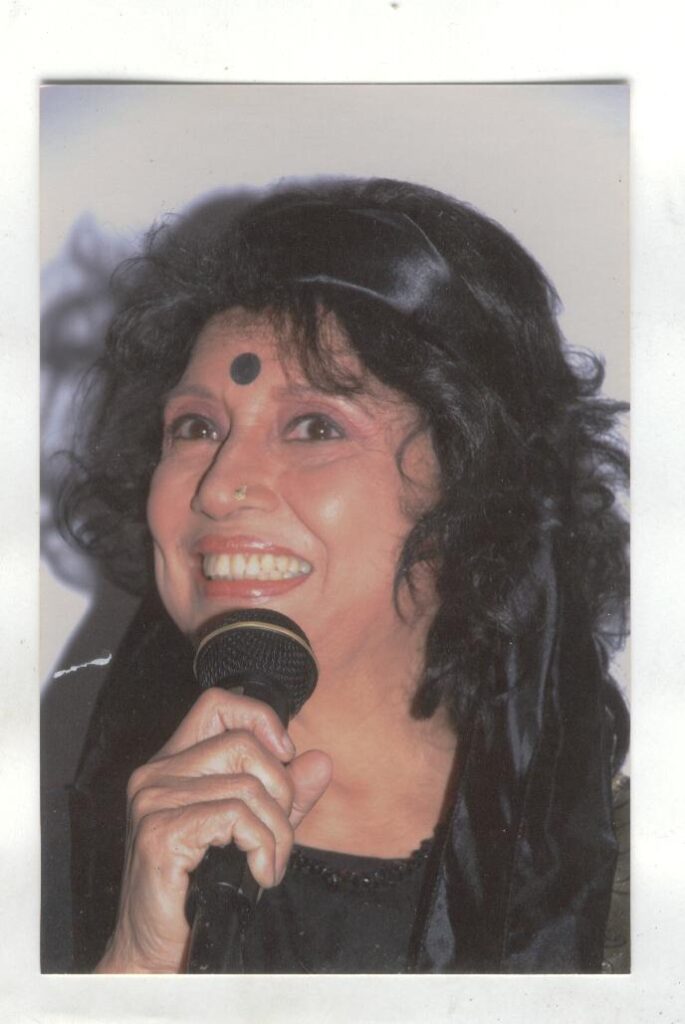
In films, Sharda began her career with Gumnaam (her solo Aayega kaun yahaan and Jaan-e-chaman shola badan with Rafi), though Titli udi from Suraj (along with Dekho mera dil machal gaya) proved her breakthrough song.
Among her many hits that came next were from Around The World, Diwana, Pehchan and Jaane Anjaane.
Ravi, Usha Khanna, N. Dutta, Dattaram and Iqbal Qureshi also used her voice and Sharda also sang in Marathi, Gujarati, Punjabi and Bengali. Her last song was heard in Shankar-Jaikishan’s Kaanch Ki Deewar in 1986, wherein she was billed as ‘Sharadrima’, while in 1980, as ‘Singhaar’, she wrote lyrics for Garam Khoon and Chorni. She passed away in 2023.