 Join WhatsApp Channel

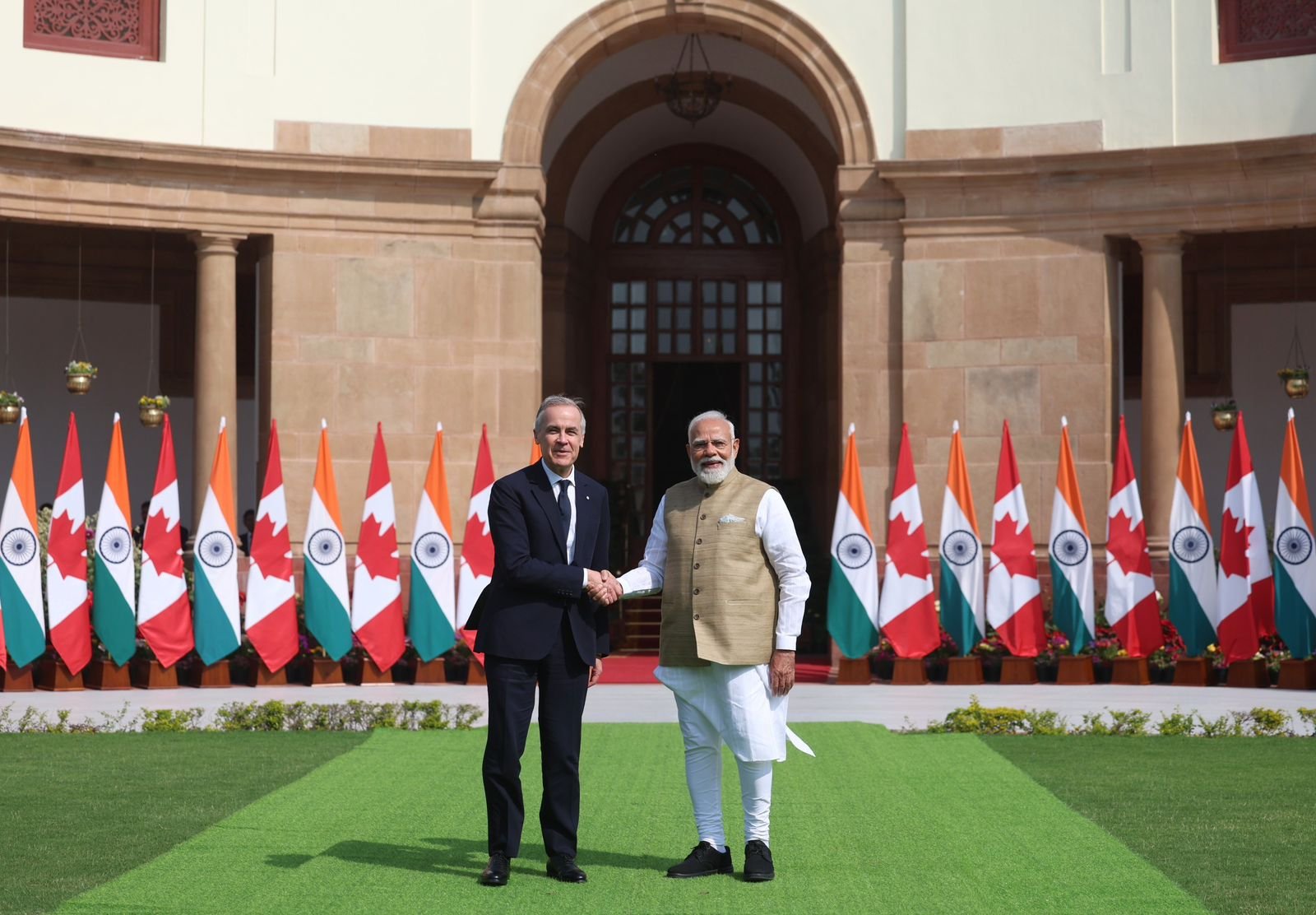
When Mark Carney landed in India on February 27, 2026, the visit was less about warmth and more about necessity. It marked the first trip by a Canadian Prime Minister since 2018—and a sharp reversal from the near-freeze that followed Ottawa’s 2023 allegation linking Indian agents to the killing of Sikh activist Hardeep Singh Nijjar.
What followed in New Delhi was not reconciliation. It was transactional diplomacy.
India and Canada made a clear choice: park the dispute, protect national interests, and move on.
Why the Reset Happened Now
For Carney, the logic was brutal and simple. Canada needs markets, capital, and strategic relevance beyond the United States. Tariff unpredictability in Washington and overexposure to a single partner have made diversification a political imperative. India—fast-growing, energy-hungry, and geopolitically central—fit the bill.
For Narendra Modi, Canada offered something equally valuable: secure access to uranium, LNG, critical minerals, and advanced research ecosystems—without the political strings that increasingly define Western engagement with India.
This was middle-power realism, not sentiment.
The Core Deal: Trade Is the Anchor, Energy Is the Glue
The headline outcome was the formal relaunch of negotiations on a Comprehensive Economic Partnership Agreement (CEPA), frozen since 2023. With Terms of Reference signed and a hard end-2026 deadline, both sides committed to pushing bilateral trade toward CAD 70 billion by 2030.
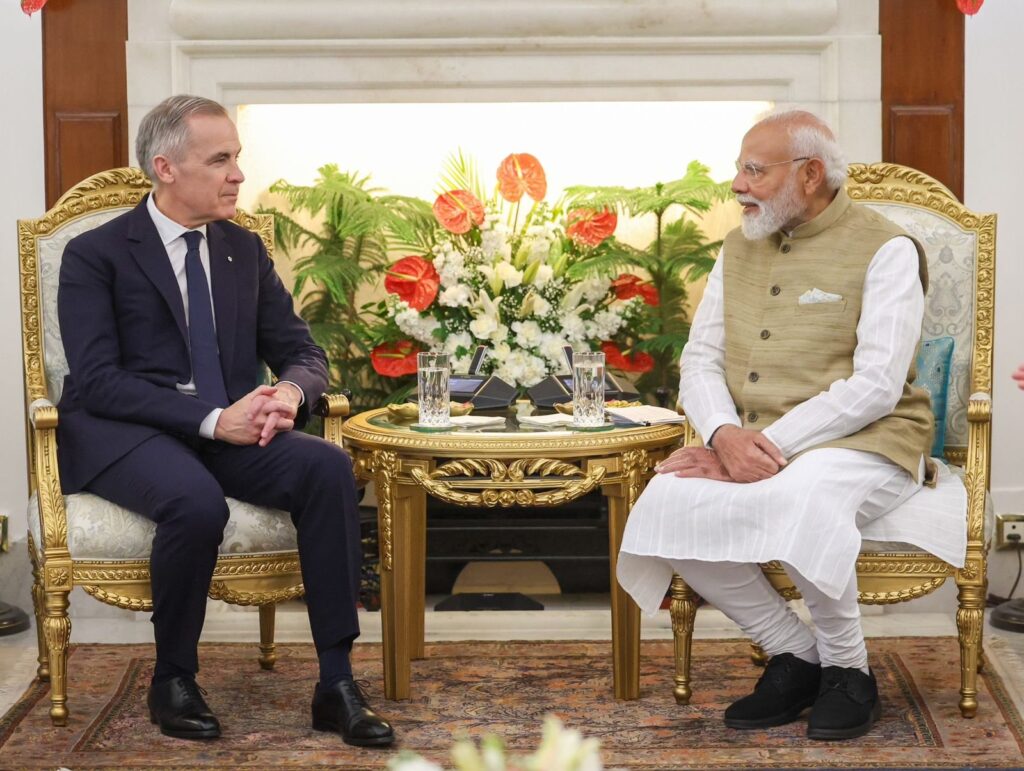
That target isn’t fantasy. India and Canada trade complementary goods, not rival ones—India exports pharmaceuticals, machinery, and textiles; Canada supplies pulses, timber, and minerals. Politically, this makes CEPA easier than most FTAs. Strategically, it locks both economies into long-term interdependence.
But trade alone wouldn’t have sealed the reset.
Energy did.
Uranium Changed the Mood
The CAD 2.6 billion, 10-year uranium supply deal between Canada’s Cameco and India’s Department of Atomic Energy was the visit’s true inflection point. Covering nearly 22 million pounds of uranium from 2027 to 2035, it directly underwrites India’s plan to scale nuclear power to 100 GW by 2047.
For India, the message is clear: nuclear expansion needs assured fuel, not diplomatic sermons.
For Canada, the payoff is just as real—a long-term market beyond the US and a seat in India’s clean-energy future.
Once uranium was locked in, everything else moved faster.
LNG, Critical Minerals, and De-Risking China
Energy cooperation now spans LNG, LPG, heavy oil, hydrogen, renewables, and carbon capture. Canada’s ambition to become a major LNG exporter aligns neatly with India’s position as the world’s fastest-growing energy consumer.
The Critical Minerals MoU is even more strategic. In a world scrambling to de-risk from China, Canada positions itself as a trusted supplier; India secures inputs essential for clean tech, electronics, and defense manufacturing. This isn’t climate idealism—it’s supply-chain geopolitics.
Technology and Talent: Quiet but Structural
Away from the headlines, the relaunch of science and technology mechanisms, AI cooperation, space collaboration between ISRO and the Canadian Space Agency, and over two dozen university MoUs may prove the most durable outcomes.
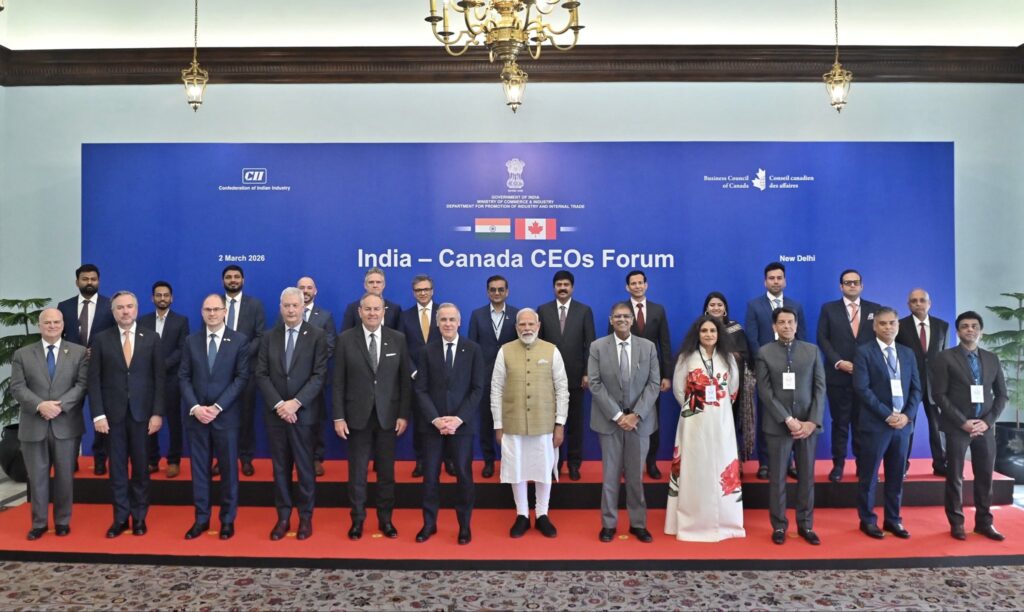
Talent mobility—via Mitacs internships, joint research programs, and a new India–Canada Talent and Innovation Strategy—creates stakeholders on both sides who benefit from stability, not confrontation.
That’s deliberate.
Security: Compartmentalized, Not Resolved
Security cooperation was addressed—but tightly ring-fenced. Counterterrorism, organized crime, cybercrime, and fentanyl trafficking made the agenda. Khalistan politics did not.
This was not forgetfulness. It was calculation.
Both sides agreed to disagree—while building law-enforcement channels to prevent future blowups. Defense cooperation, including a new Defense Dialogue and maritime security initiatives, advanced cautiously, reinforcing Canada’s Indo-Pacific strategy without provoking escalation.
Bottom Line: A Cold-Eyed Breakthrough
This visit did not heal wounds. It buried them under contracts, deadlines, and institutions.
India and Canada have chosen economics over escalation, uranium over outrage, and supply chains over speeches. If CEPA closes by 2026 and energy deals scale as planned, this reset will hold—regardless of political noise.
If not, mistrust will resurface fast.
For now, the message from New Delhi was unmistakable: Geopolitics may divide—but interests still decide.
Related posts:
 From Rupture to Reactors: Uranium Deal Anchors India–Canada Reset
 OFIC Urges Canada to Fast-Track CEPA Talks as British Columbia Trade Mission Arrives in India
 Canada Launches Trade Consultations with India, UAE, Thailand, and Mercosur as New Delhi and Ottawa Reset Economic Ties
 Canadian PM Mark Carney Announces First Official Visit to India
