Join WhatsApp Channel


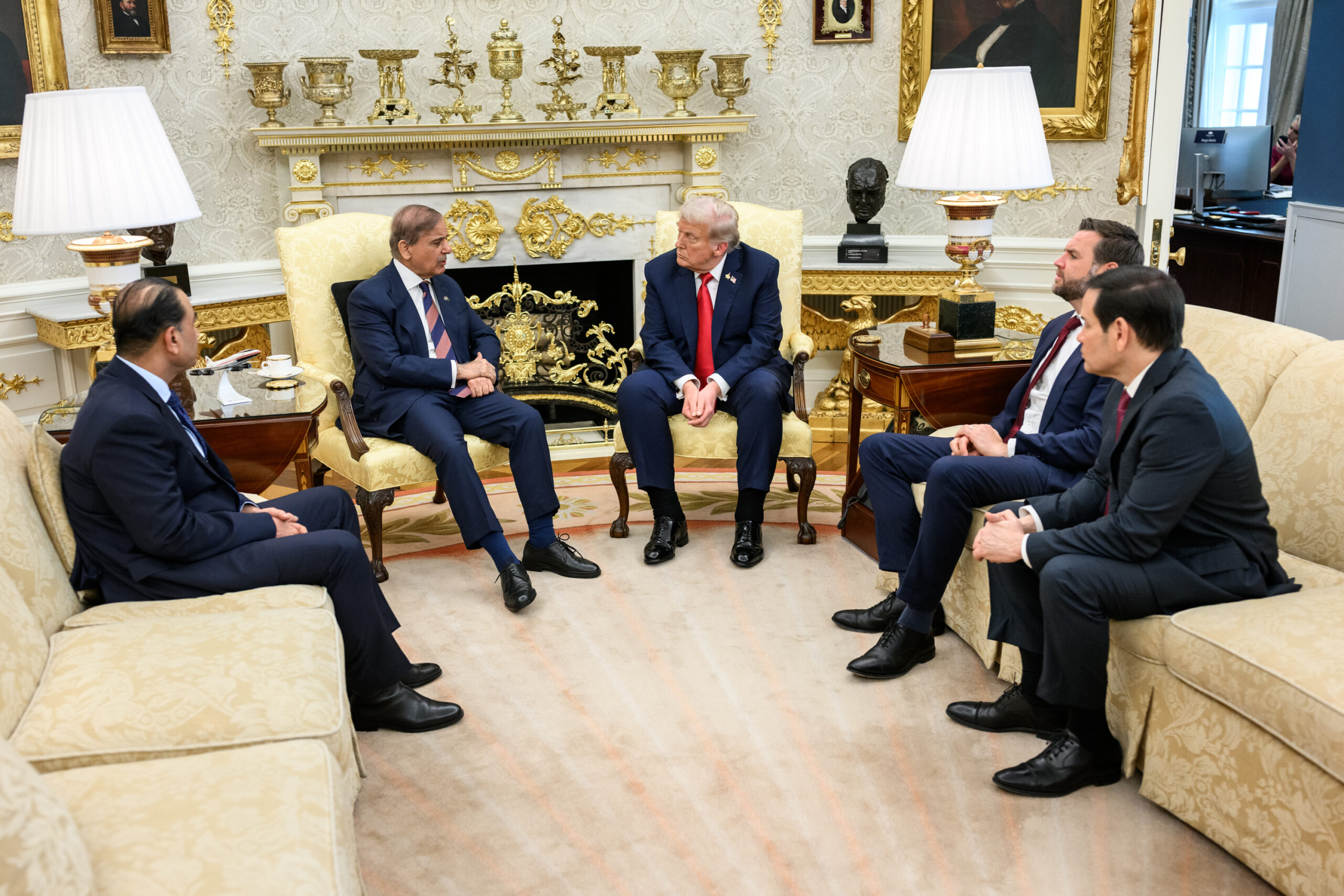
President Donald Trump and Arab leaders have breathed new life into Pakistan’s military by breaking its economic and geopolitical quarantine. History reveals that when governments and militaries are seen as beneficial allies, then the US authorities often overlook their crimes against own citizens.
The resurgence on the international scene helps the Pakistani military choke the autonomy of country’s democratic institutions and command civilians with an iron fist. It is anticipated that the looming scenario not only restricts minorities’ liberties and political participation, but also exacerbates genocides in occupied territories such as Balochistan and Pashtunistan.
For decades, the Pakistani military has persecuted innocent Baloch civilians with impunity in the name of upholding law and order and protecting national interests. Many of these Baloch are peacefully protesting Pakistan’s cruel occupation and demanding freedom. Prominent female activists such as Dr. Mahrang Baloch, Bebarg Zehri, Mahal Baloch, Beebow Baloch, and Gulzadi Baloch, who were detained for opposing state-led enforced disappearances, are still in jail. Amnesty International decries their arbitrary detention and calls for immediate release, accusing the state of torture and denial of healthcare. Given military policy, the Baloch activists have no judicial recourse against unconstitutional offenses, and face a complete media blackout.
Human rights organizations believe that the military may intensify attacks in Baloch districts where its control has eroded in recent years. As happened in the past, the military operations will result in widespread displacement and economic impoverishment. Women and children forced to stay in makeshift camps are particularly vulnerable to weather challenges, health problems and absence of educational opportunities. Without enterprises and employment, household incomes will plummet, leading to widespread poverty.
According to an April 2025 UN report, atrocities against the Baloch have grown significantly from the previous years, including arbitrary kidnappings, detentions and killings. The report states that the judiciary is unable to deliver judgments against law enforcement implicated in crimes against the Baloch and tolerates human rights breaches by military officials in the pretext of safeguarding and advancing national cohesion and unity.
Similarly, the Human Rights Council of Balochistan states that the civilian institutions remain obedient to the military and do not expose policies of widespread extrajudicial attacks on Baloch under the guise of combating terrorism and separatism. According to their annual report, 480 Baloch were kidnapped and murdered in 2024, and their mutilated bodies were discovered discarded on roadsides. In addition, tens of thousands of Baloch are still detained illegally by the military in unknown locations and tortured with no judicial recourse.
The scenario in Pakistan occupied Pashtunistan is no different. According to a UN report from 2025, the government has banned Pashtun Tahafuz Movement (PTM), a Pashtun representative political movement that won elections and sent MPs to Pakistan’s parliament. Manzoor Pashteen, the head of the PTM, continues to face legal challenges following a lengthy detention and release on bond in 2024. Another PTM leader, Ali Wazir, who was previously a member of the parliament, is currently in detention and faces frivolous cases for refusing to submit to military highhandedness.
The UN report states that many Pashtuns face prosecution for allegedly supporting and abetting Taliban-led terrorism. The militants, sponsored and trained by Pakistan’s military to target Afghanistan and India, have turned the tables on the state apparatus, carrying out attacks against troops and police. Pakistani authorities are punishing innocent and vulnerable Pashtuns in revenge for Taliban attacks, simply because they share a geography, culture and ethnic heritage.
Furthermore, Pashtuns face racial segregation and prejudice in locations such as Islamabad, Punjab, and Sindh because of their dress code and language. Thousands of Pashtuns risk a restriction on speech, writing and political activity merely for standing with the former Prime Minister Imran Khan. Imran Khan was groomed and elevated into a national political figure by the army and ended up in jail in 2023 for resisting military’s unconstitutional interference in civilian affairs. According to a 2024 US State Department report, the army has gained complete control of the media through PEMRA laws, which prohibit media outlets from even mentioning or printing Imran Khan’s name.
The United Nations reminds Pakistan’s leadership that Pashtuns, Baloch and other ethnic and religious minorities like Hindus have the right to peaceful protest in order to seek basic rights, and the military cannot use this as a reason to kidnap, torture, imprison, or kill them.
According to the US State Department’s 2024 report, Pakistani Hindus and Christians experience religious persecution and forcible conversion. In 2024, 112 attacks on Hindus were reported. During the same year, 458 instances of blasphemy were filed against Hindu individuals who continue to suffer unimaginable brutal torture in jails. Many have been sentenced to death and are awaiting execution.
The UN report states that Muslim organizations use social media to incite hatred against Hindus and inspire mobs to destroy and seize private property and religious temples. Many Hindus have lost businesses and jobs as a result of protracted periods of hiding for fear of their lives. According to the Center for Study of Organized Hate and Human Rights Watch, thousands of Hindus have been forced to flee to India owing to religious persecution and life-threatening attacks. Many left to safeguard their minor daughters and sisters from kidnapping, rape, and forced conversion to Islam. Those who resist displacement and advocate for equal rights as Pakistani nationals are falsely charged with blasphemy and thrown in jail.
According to a 2025 UN assessment, influential politicians and religious figures affiliated with the ruling parties perpetrate crimes against Hindus in places such as Sindh and Cholistan. Land developers hire Islamist mobs to expel Hindus from their valuable landholdings. These leaders provide legal assistance to the assailants in the event that they are arrested, as well as financial support for their families while they are away.
A few weeks ago, General Asim Munir resurrected the defunct two-nation theory, sending a terrifying message to Pakistani Hindus that they are not part of the Pakistani nation and inferior to Muslims. This apartheid denies all minorities, including Christians and Ahmadis, an equal citizenship right and encourages their forced displacement and massacres.
India-Pakistan relations continue to deteriorate over Kashmir, with a direct and negative impact on Pakistani Hindus. The Pakistani media’s ambition and preoccupation with undermining and eradicating Hindu dominance in the region has forced it to target not only India as a country, but denigrate the Hindu religion itself and spew venom against its global adherents. Government’s anti-Hindu policies offer a justification for Pakistani Muslims to declare their Hindu compatriots as Indian agents and attack.
The revival of Jihad in Kashmir has enabled Pakistani Lashkar-e-Toaiba (LeT) to establish working relationship with Hamas, and unleash terrorists against India. During a recent public speech, LeT militant Saifullah Kasuri, who was involved in a terrorist attack on Hindus in Pahalgam, advocated for continued onslaught on Hindus till the disintegration and defeat of India.
The Pakistani military’s policies have damaged the economy and social fabric of the country. The military has never prioritized the well-being of its people and utilized them as pawns and cannon fodder to foment unrest in the neighborhood. Infighting among Jihadi groups has killed tens of thousands of Pakistani Muslims over the last several decades. Running terrorist hideouts and training camps in Balochistan, Pashtunistan and Gilgit also harmed Shias and Sufis. Lack of peace prompted educational institutions to close for months at a time, damaging the futures of promising talented youth.
While the Jihadi industry helped a few military generals and brigadiers enrich themselves, it also disrupted trade and business, resulting in widespread poverty and disorder. President Trump’s help to Pakistan’s military will only exacerbate this vicious cycle of agony and doom. Despite dispiriting American plans, the people of Balochistan, Pashtunistan, and Gilgit have decided to pursue their dream of ending Pakistan’s blackmailing and bullying for an everlasting freedom.
Disclaimer: The opinions and views expressed in this article/column are those of the author(s) and do not necessarily reflect the views or positions of South Asian Herald.
Related posts:
 South Asian Hindu Americans Protest Near the White House Demanding Justice for Hindus in Bangladesh
 India rejects State Department’s Report on International Religious Freedom
 CoHNA Hosts 4th Annual Hindu Day of Advocacy at U.S. Capitol, Highlights Rising Hindu American Voice
 Operation Sindoor and Pakistani Stakes in Gilgit