Join WhatsApp Channel


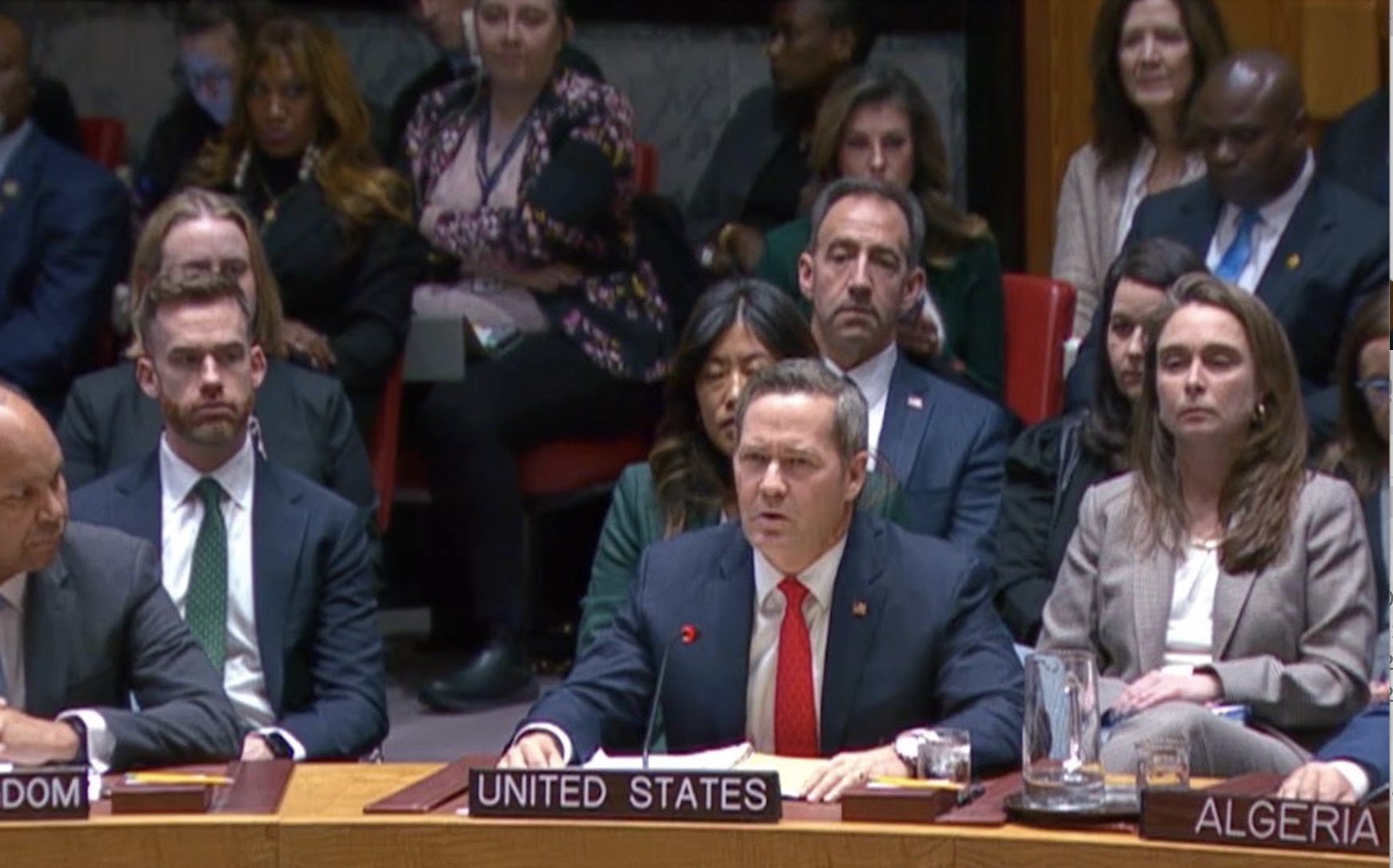
After years of open hostility, mutual suspicion, and sharp public criticism, President Donald J. Trump won a rare and emphatic victory at the United Nations on November 17, 2025. The Security Council approved a sweeping American proposal for Gaza that authorizes an international stabilization force, establishes a transitional authority overseen directly by the American president, and opens a narrow, conditional path toward Palestinian statehood.
The 13–0 vote — with only Russia and China abstaining — marks the first time during either of Trump’s presidencies that the world body has so clearly aligned with a major U.S. initiative in the Middle East. For an institution Trump once dismissed as “a club for people to get together, talk, and have a good time,” the approval represents a significant diplomatic breakthrough.
“This will go down as one of the biggest approvals in the history of the United Nations,” Trump declared on social media, casting the moment as a vindication after years of conflict with an institution he sees as slow, overly bureaucratic, and too sympathetic to U.S. adversaries.
Yet behind the triumphal rhetoric lies a complicated story: of a devastated Gaza searching for a governing structure, an American president seeking to imprint his vision on the region, and a United Nations navigating between Arab expectations, Israeli objections, and global geopolitical tensions.
A Rare Alignment After Years of Antagonism
Trump’s relationship with the United Nations has been combative from the start. He has accused the body of anti-Israel bias, threatened to slash funding, withdrawn from multiple U.N.-backed agreements, and regularly derided U.N. diplomacy as ineffective.
In 2017, early in his first term, he delivered a speech in the General Assembly declaring that the U.S. “will not be taken advantage of anymore.” Relations deteriorated further when Security Council members condemned U.S. policy in Jerusalem, prompting Trump to punish several countries by curtailing aid.
The Gaza resolution marks a dramatic departure. For the first time, the U.N. has endorsed a plan explicitly designed and driven by Washington, centered not on multilateral consensus but on Trump’s own 20-point framework for ceasefire, demilitarization, and reconstruction. The resolution authorizes an international stabilization force with broad powers and approves what the White House calls a “Board of Peace,” a transitional governing authority led directly by Trump.
The shift reflects, in part, the urgency of Gaza’s humanitarian and political crisis. Two years of war have dismantled local institutions, hollowed out infrastructure, and displaced hundreds of thousands. Many Arab governments, once skeptical of Trump, concluded that a U.N.-blessed framework — even one centered on American leadership — offered the clearest path to stabilizing the enclave.
Arab States Push for Stronger Language on Statehood
The U.S. secured broad backing only after a strenuous two-week diplomatic push, during which Arab nations and the Palestinian delegation demanded stronger references to eventual Palestinian self-determination. Several governments — including Qatar, Egypt, Saudi Arabia and the UAE — said they could not support a plan for Gaza that did not at least acknowledge a future Palestinian state.
Their partnership was essential: these countries had been pivotal in negotiating the fragile ceasefire that halted fighting, and they are expected to supply personnel for the stabilization force.
In response, the U.S. revised the text, introducing language that says that “conditions may finally be in place for a credible pathway” to statehood once Gaza is rebuilt and the Palestinian Authority undergoes reforms. The wording stops short of a guarantee — a concession to Israel, which opposes Palestinian sovereignty — but it was enough to satisfy Arab capitals eager for a workable framework.
Algeria’s ambassador, Amar Bendjama, called the resolution “a step forward,” while warning that “genuine peace cannot be achieved without justice for the Palestinian people.”
Israel’s Uneasy Endorsement
The Israeli government’s reaction has been ambivalent. Prime Minister Benjamin Netanyahu has repeatedly declared that he opposes Palestinian statehood under any circumstances, a stance he reaffirmed on Sunday. Many members of his right-wing coalition have voiced concern that the resolution opens a door to international pressure on Israel’s long-standing policies.
Yet Israel ultimately supported the U.S. initiative. Trump has maintained a close relationship with Netanyahu, and Israel’s U.N. ambassador, Danny Danon, praised the American president for “leading peace to the Middle East.”
Israeli officials were also reassured by the resolution’s core elements: an international force focused on demilitarization; a phased Israeli withdrawal tied to security “standards and milestones”; and a central role for Washington in overseeing Gaza’s transition.
Still, some Israeli analysts warned that endorsing even a hypothetical “pathway” to Palestinian statehood could become politically contentious at home.
Hamas Rejects the Plan, Raising Fears of Resistance on the Ground
Hamas immediately condemned the resolution, accusing the U.N. of endorsing “a political framework that does not meet the Palestinian people’s rights.” The group objected in particular to the stabilization force’s authority to carry out demilitarization — which Hamas says transforms the multinational force into “a party to the conflict in favor of the occupation.”
Whether Hamas intends to cooperate with or resist the new security structure remains unclear. Analysts say its opposition could complicate efforts to deploy international troops or secure humanitarian corridors.
Russia and China Choose Abstention, Not Veto
Perhaps the most striking diplomatic element of the vote was what did not happen: Russia, which circulated a rival resolution, did not veto the U.S. plan.
Moscow and Beijing abstained, citing concerns that the resolution did not sufficiently endorse Palestinian statehood or give the Security Council a stronger supervisory role. Russia’s ambassador, Vassily Nebenzia, said the final text left “major geopolitical questions unresolved.”
But neither country wanted to alienate Arab states or obstruct a ceasefire process they had publicly supported. Their abstentions reflect the delicate balance both powers are trying to maintain — opposing Washington while avoiding fallout in the Middle East.
A Region Exhausted by War Searches for Stability
The plan approved Monday envisions a staged process:
- deployment of the stabilization force
- demilitarization of Gaza
- rebuilding civil institutions
- creation of a vetted Palestinian police force
- gradual Israeli withdrawal linked to security guarantees
- a political dialogue led by the United States
- The international force is authorized to use “all necessary measures,” U.N. language that is widely understood to include military action. The authorization expires at the end of 2027.
Whether the plan can be implemented is another question entirely.
Gaza’s war, triggered by Hamas’ October 7, 2023, attack on southern Israel that killed about 1,200 people, has left more than 69,000 Palestinians dead, according to Gaza’s health ministry. Large parts of the territory have been reduced to rubble. Millions rely on emergency aid.
Diplomats say restoring order will require not only military coordination but a rebuilding effort of staggering scale — and a political process capable of bridging deep distrust among Palestinians, Israelis, and regional powers.
A Symbolic Turning Point — Or a Fragile Beginning?
For Trump, Monday’s vote represents symbolic vindication: the international community, which he often portrays as hostile or irrelevant, has now endorsed a plan he drafted personally and intends to supervise directly.
But for the United Nations, the approval reflects a more pragmatic calculation. After years of stalemate, Secretary-General António Guterres and key member states concluded that any meaningful step toward stabilizing Gaza required U.S. leadership — even if that leadership comes from a president who has spent years criticizing the institution.
Whether this moment becomes a turning point or another short-lived experiment in Middle East diplomacy will depend on what happens next: the deployment of the stabilization force, cooperation from regional powers, Israeli political dynamics, and the willingness of Palestinian factions to engage with a U.S.-led transitional framework.
For now, the unusually decisive vote underscores how, in the face of a broken Gaza and a fatigued region, even longtime critics can become indispensable partners — at least for a moment.
Disclaimer: The opinions and views expressed in this article/column are those of the author(s) and do not necessarily reflect the views or positions of South Asian Herald.