Join WhatsApp Channel


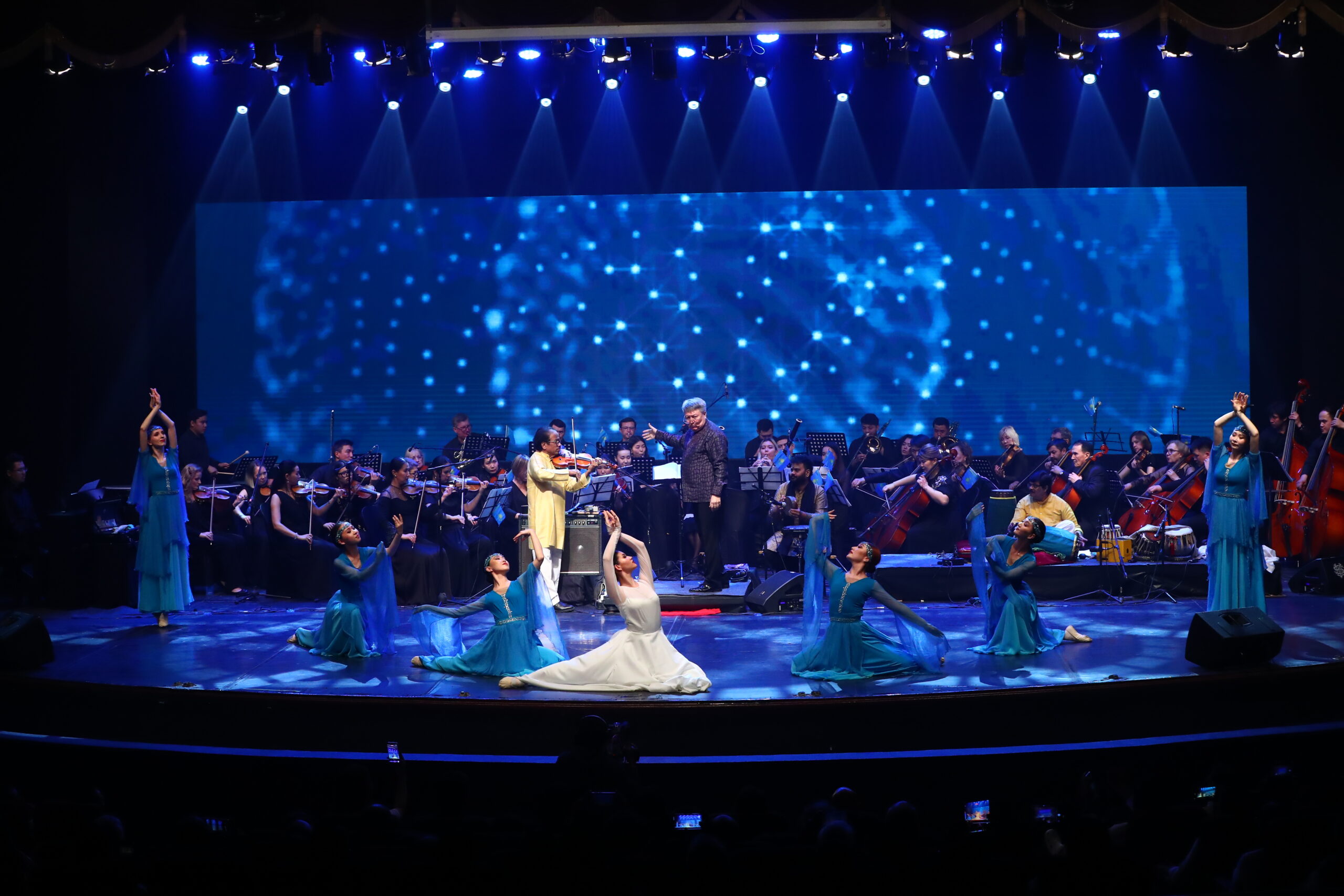
For almost five decades, Padma Vibhushan awardee, Dr. L. Subramaniam has stood at the forefront of a remarkable musical journey – bridging the worlds of Indian classical tradition and Western symphonic grandeur. Emerging in the early 1980s as the first Asian composer to create major symphonic works on the global stage, he has since made history by composing and presenting one of the largest bodies of symphonic works by any contemporary composer from Asia.
Over the years, his compositions have been recorded by leading orchestras and performed in some of the world’s most prestigious concert halls. With more than 315 orchestral performances to his credit, Dr. Subramaniam has created a rare legacy in which entire concert evenings are dedicated to the works of a living composer – an honor reserved for only a select few in the international classical music world. Today, his music continues to resonate across the world – an enduring testament to the power of artistic innovation and the universal language of sound.
His symphonic compositions have been performed by renowned ensembles including the New York Philharmonic, Orchestre de la Suisse Romande, London Symphony Orchestra, and London Philharmonic Orchestra, under the baton of celebrated maestros such as Zubin Mehta and Vladimir Fedoseyev.
Further cementing his place in global music history, he became the first Indian composer whose works are published by the prestigious Schott Music, a publishing house historically associated with legendary composers such as Ludwig van Beethoven and Johann Sebastian Bach.
Remarkably, Dr. Subramaniam’s artistic journey is also shaped by academic excellence. Initially trained as a physician, he completed his MBBS before pursuing advanced studies in Western classical music in California, later earning a Ph.D. in music. His contributions to music were further recognized with the conferment of a Doctor of Letters (D.Litt.).
Internationally celebrated violin virtuoso Yehudi Menuhin once remarked, “I find nothing more inspiring than the music-making of my very great colleague Subramaniam. Each time I listen to him, I am carried away in wonderment.” Critics across the world have echoed this admiration. The New York Times described him as “the best this listener has heard,” while The Times of India hailed him as “The God of Indian Violin.”
A pioneer of the global fusion movement, Dr. Subramaniam has created a vast and diverse body of work that spans classical concert stages, cinematic scores, and cross-cultural collaborations. His celebrated album Conversations and acclaimed film scores for Salaam Bombay! and Mississippi Masala stand alongside more than 40 large-scale orchestral compositions, each reflecting his vision of uniting musical traditions across continents.
Dr. L. Subramaniam along with Vijayashree Subramaniam established the Lakshminarayana Global Music Festival in 1992 in memory of Prof. V. Lakshminarayana, LGMF has evolved into one of the world’s most respected platforms for cultural exchange, spanning five continents, over 25 countries, and 75 cities. It remains the only festival in India that consistently presents legendary international artists while introducing audiences to rare instruments such as the kora, didgeridoo, djun-djun, kantele, koto, and pipa.
The 2026 edition stood as a celebration of Dr. L. Subramaniam’s unparalleled contribution to the global orchestral repertoire, reaffirming his position as a true pioneer who bridged Indian classical music with the Western symphonic tradition. LGMF presented an extraordinary ensemble from Kazakhstan, featuring a symphony orchestra, ballet troupe, and choir – many of whom performed in India for the very first time.
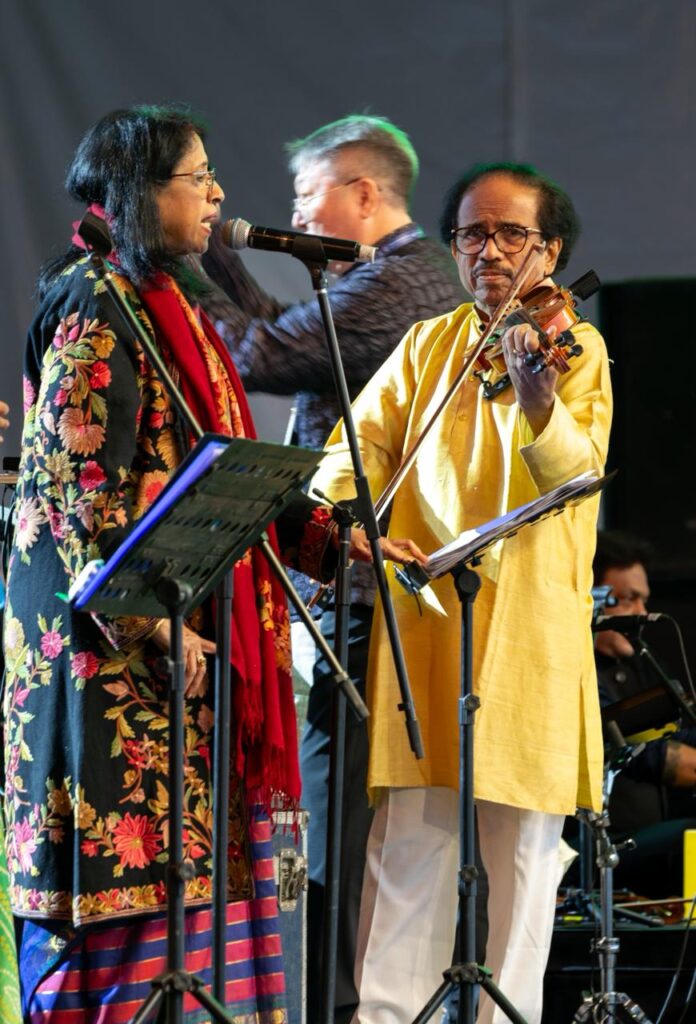
The LGMF featured the Indian premiere of Dr. Subramaniam’s brand-new orchestral composition, Navagraha Symphony which was performed by soloists Kavita Krishnamurti Subramaniam, Bindu Subramaniam, Ambi Subramaniam, and Mahati Subramaniam, representing three generations of a distinguished musical lineage.
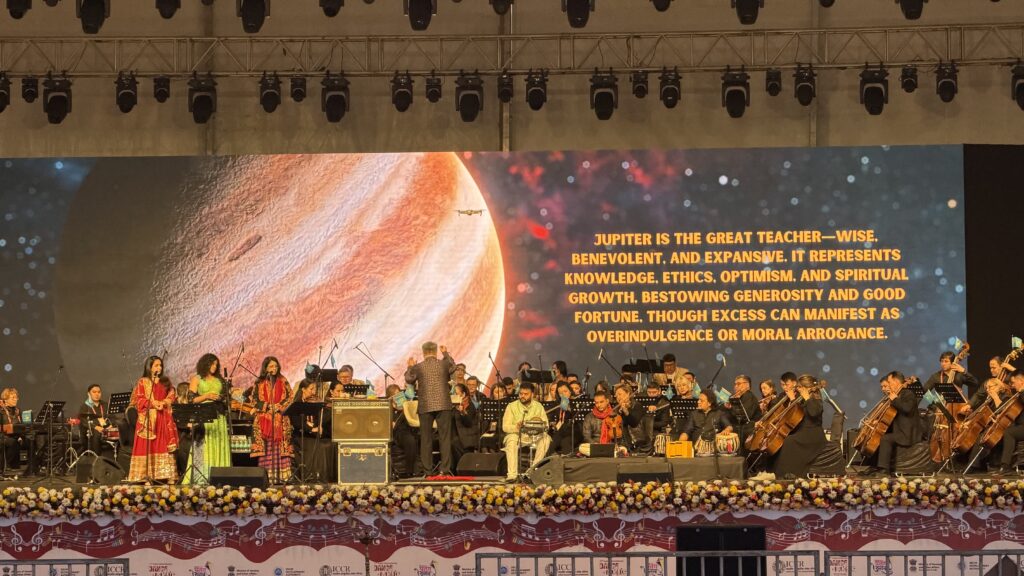
Significantly, this marked the first time a major new orchestral work by this pioneering composer was premiered in India, as many of his earlier compositions were commissioned by leading international orchestras and festivals and debuted abroad.
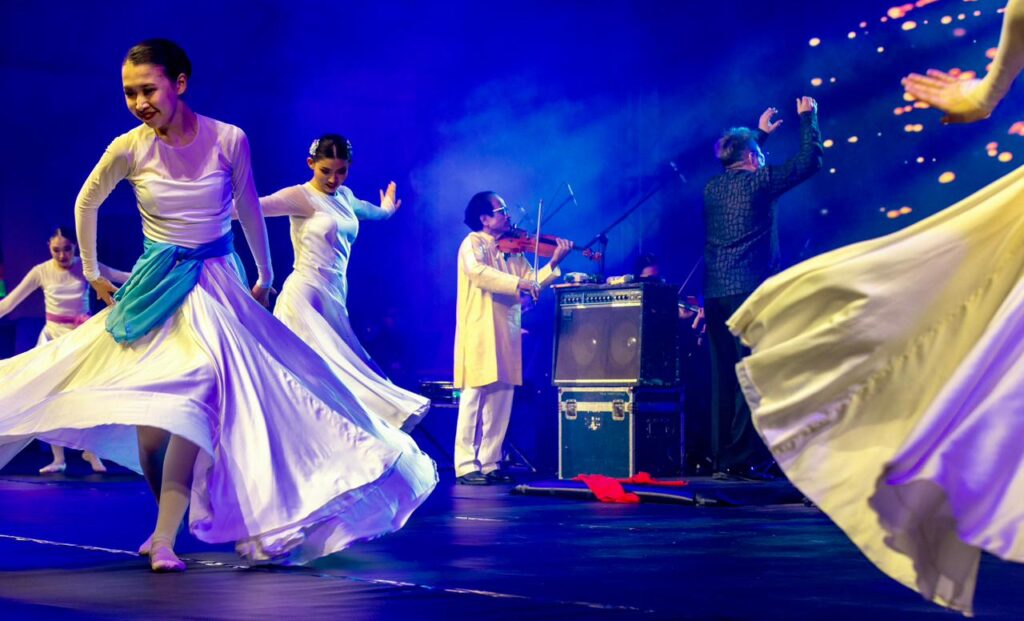
A major highlight of the tour was a stunning ballet performance by Ensemble Gakku, choreographed to Dr. Subramaniam’s acclaimed orchestral masterpiece Shanti Priya, itself a testament to his visionary approach to orchestral storytelling. In addition, the orchestra presented the Isabella Violin Concerto, with Dr. Subramaniam – a pioneer who redefined the role of the Indian violin on the global stage – as the soloist.
The grand finale featured the world premiere of Dr. Subramaniam’s orchestral composition of Vande Mataram, presented as part of the 150th-anniversary celebrations of this iconic national song – further cementing his role as a pioneer in bringing Indian cultural themes into the global orchestral idiom.
Related posts:
 Dr. L. Subramaniam Highlights the Global Impact of Classical Instrumental Music at APA 2025
 Mysore Brothers Perform Violin Concert in Support of the JSS Spiritual Mission in Maryland
 In Conversation with Rajesh Mehta: Sumathy Ram
 “GANDHI – Mantras Of Compassion” by Padma Shri Ricky Kej and Nobel Laureate Kailash Satyarthi Set to Release on July 14