 Join WhatsApp Channel


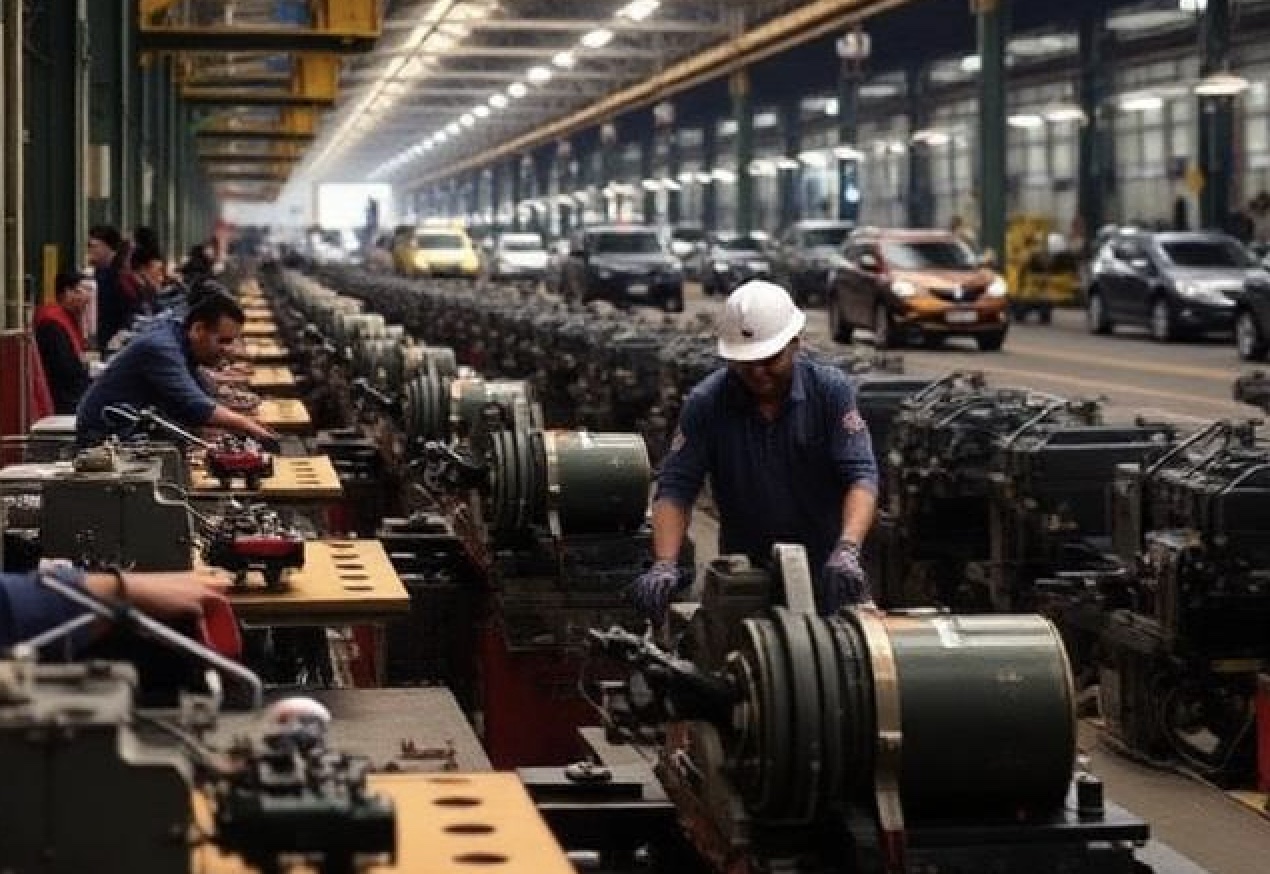
The United States has launched a wide-ranging trade investigation that places several of India’s key manufacturing sectors under scrutiny, raising the possibility of new tariffs on products ranging from solar equipment and steel to petrochemicals and electronics.
The probe, initiated by the Office of the United States Trade Representative under Section 301 of the Trade Act of 1974, will examine whether government incentives and industrial policies in 16 economies are creating global “excess capacity” that harms American manufacturers.
Among the economies under investigation are India, China, Japan, South Korea and the European Union. The industries listed in the probe include steel, aluminum, semiconductors, solar modules, electric-vehicle batteries, petrochemicals, machinery and automobiles—sectors that governments worldwide are heavily supporting as part of supply-chain and energy-transition strategies.
For India, the investigation touches the center of its economic policy.
Over the past decade, New Delhi has expanded manufacturing through a mix of tariffs, incentives and production-linked subsidy programs aimed at reducing import dependence and building export-oriented industries. More than $26 billion has been allocated across 14 sectors under the production-linked incentive scheme to encourage companies to build factories and increase domestic value addition.
That push has significantly expanded capacity in several industries now under U.S. scrutiny.
Solar manufacturing illustrates the scale of the shift. India’s solar module production capacity has risen from less than 10 gigawatts a decade ago to roughly 140–150 gigawatts today. Domestic solar installations, however, remain much smaller—around 45–50 gigawatts annually.
The gap means India can already produce far more solar panels than it installs each year. Industry estimates suggest module capacity could approach 200 gigawatts by the end of the decade as new factories come online.
Steel shows a similar expansion trajectory. India is the world’s second-largest crude steel producer, with installed capacity exceeding 200 million tons per year. Under the National Steel Policy, the government aims to raise capacity to 300 million tons by 2030.
Achieving that target would require building nearly 100 million tons of additional steelmaking capacity over the next few years. While much of the output is expected to serve domestic infrastructure demand, exports remain an important outlet when domestic consumption fluctuates.
Other sectors under investigation have also expanded rapidly.
Electronics manufacturing, particularly smartphones, has grown sharply as global companies diversify supply chains beyond China. Mobile phone production in India has risen from fewer than 60 million units annually in 2014 to well over 300 million units in recent years.
Petrochemical production is also expanding as large refinery and chemical complexes along India’s western coast increase output of polymers and industrial chemicals aimed at export markets.
Each of these sectors now appears in the U.S. investigation.
The inquiry will follow a structured but relatively fast timeline. Public dockets for written submissions will open on March 17, allowing companies, trade groups and governments to present evidence and comments. Requests to participate in hearings must be filed by April 15.
Public hearings will take place from May 5 to May 8 at the U.S. International Trade Commission in Washington. Participants will then have seven days after the hearings conclude to submit rebuttal comments before investigators make their recommendations.
Trade economist Biswajit Dhar says the compressed schedule raises questions about whether the investigation is primarily a fact-finding exercise or a step toward tariffs that may already be under consideration.
The probe also comes at a politically sensitive moment in U.S. trade policy.
Earlier this year, the administration of Donald Trump suffered a setback when the Supreme Court of the United States struck down the legal foundation of its “reciprocal tariff” regime, which had allowed Washington to impose country-specific tariffs aimed at forcing trading partners into negotiations.
Following that ruling, the administration introduced a temporary 10 percent tariff on imports under Section 122 of the Trade Act. The measure is due to expire in July, creating pressure to identify alternative trade tools.
Section 301 investigations provide one such mechanism. Once an investigation concludes that foreign practices harm U.S. commerce, Washington can impose targeted tariffs or other trade restrictions.
Trade analyst Ajay Srivastava says the investigation should also be viewed in the context of ongoing trade negotiations between Washington and several major partners.
Countries such as Japan, South Korea and members of the European Union have recently concluded trade arrangements with the United States, while others—including India—remain in discussions over market access and tariff reductions.
For India, the challenge is balancing an aggressive domestic manufacturing strategy with rising scrutiny abroad.
As governments worldwide expand subsidies and industrial incentives to secure supply chains in sectors such as clean energy, semiconductors and advanced manufacturing, disputes over “excess capacity” are becoming an increasingly common feature of global trade conflicts.
The U.S. investigation suggests those tensions are now extending directly to India’s industrial expansion—and could shape the next phase of trade relations between the two countries.
Related posts:
 India May “Retaliate” as US Doubles Metal Tariffs Under National Security Clause
 India’s Anti-Dumping Push Is Not Fixing the Manufacturing Problem
 Waaree Solar Americas Launches First Solar Module in Texas: A Breakthrough for US-India Clean Energy Collaboration
 JSW, POSCO Eye $7.2 Billion India steel JV as ‘Green Steel’ Demand Surges
