Join WhatsApp Channel


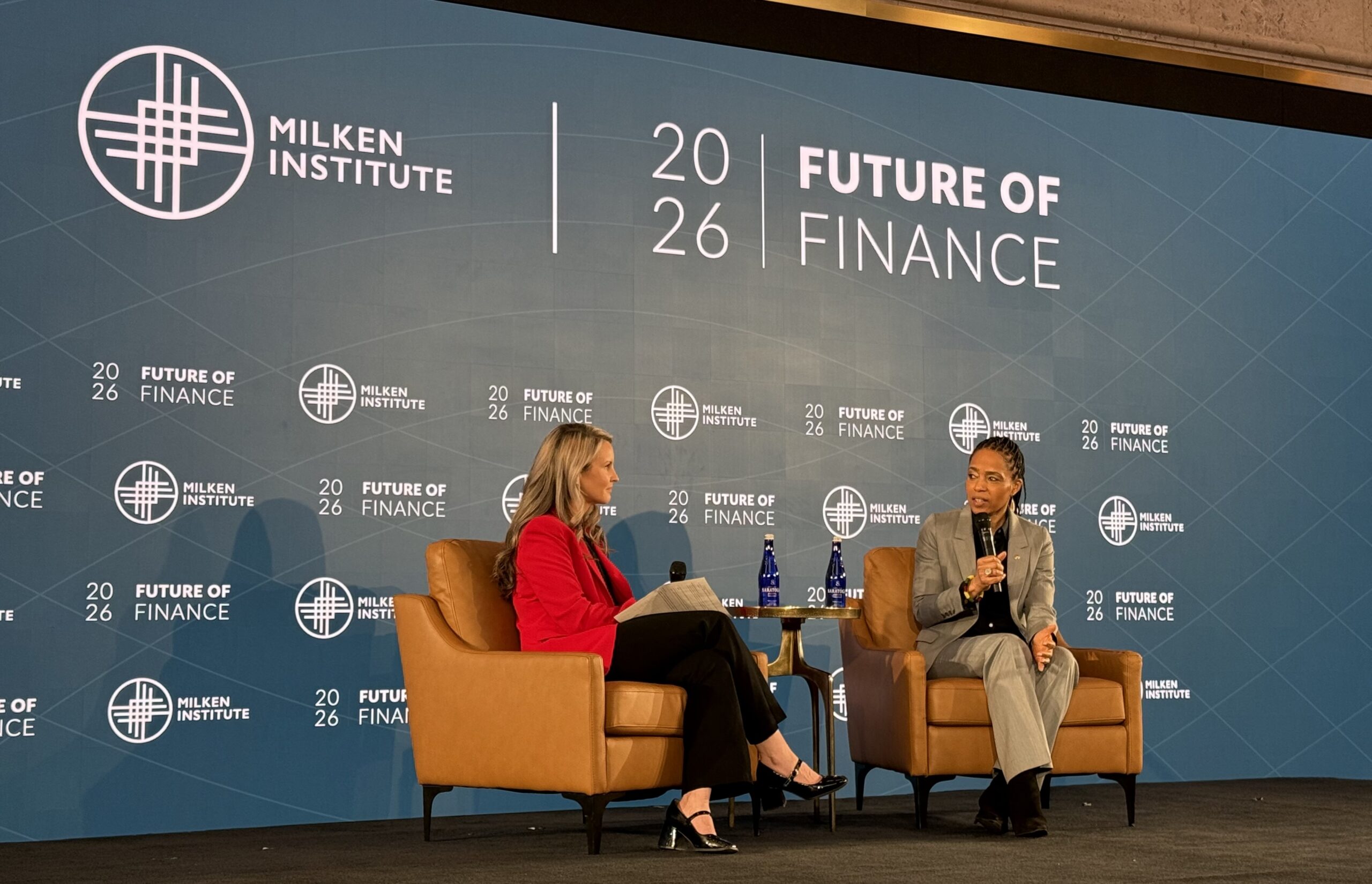
U.S. Senator from Maryland Angela Alsobrooks described Maryland as a “great state,” emphasizing that her top priority in the Senate is expanding economic opportunity for residents across the state.
Speaking during a discussion titled “Building Economic Prosperity: A Conversation with U.S. Senator Angela Alsobrooks,” held on March 3, 2026, at the Milken Institute’s inaugural Future of Finance Conference, Alsobrooks said she remains focused on that goal above all else. The discussion was moderated by Senior Director, Finance, Milken Institute, Rachel Reilly.
“I don’t care whether it was the reddest part of the state or the bluest part. The thing that came clear to me is that at their kitchen tables, every single family desired the same thing for their children,” she said. “It was the opportunity to develop wealth, to grow generational wealth, and opportunity. And I’ve decided to work with anyone at any time to make that particular goal come true.”
During the discussion, Alsobrooks also highlighted the Guiding and Establishing National Innovation for U.S. Stablecoins Act, widely known as the GENIUS Act, signed into law in July 2025. The legislation created the first comprehensive federal regulatory framework for payment stablecoins in the United States. Alsobrooks served as an original cosponsor and key negotiator of the measure, which passed the Senate 68–30 and the House of Representatives 308–122.
Explaining her decision to support the legislation, she said that although blockchain technology and stablecoins were not initially central to her policy focus, her daughter’s generation view innovation and technology as critical.
She recalled receiving advice from her 20-year-old daughter before heading to Senate orientation. Her daughter told her, “You’re used to operating in spaces with people who largely see the world the way that you do. You are now going to a place where they don’t see it quite the same. You know this is good for you,” Alsobrooks said. “She went on to say, you know, you are now a lucky person, because you not only get to hear how they see it, but you get to hear why.”
Reflecting on the legislative process behind the GENIUS Act, Alsobrooks described negotiations around the bill as a challenging but ultimately productive experience.
“We were there. We all didn’t see it the same way, but at the end of the day, we were able to get the legislation passed and signed into law,” she said, noting that relationship building was key to establishing the first regulatory framework for digital assets.
“I have been able to segue what the relationships I developed at the Genius Act… those relationships matter to being successful… I’ve decided I would build them and work with them just to benefit my constituents…” she added.
Alsobrooks also emphasized the importance of bipartisan collaboration in advancing economic initiatives. She cited efforts with Sen. Tim Scott on legislation providing tax breaks for small business owners, including hairstylists and barbers. She also noted working with Sen. Dave McCormick on legislation related to business development corporations and with Sen. Bill Hagerty on a proposal to raise Federal Deposit Insurance Corporation coverage limits on business accounts.
She said tax credits for small business owners, particularly hairstylists and barbers, could help strengthen local businesses.
“And again, it’s those kinds of small, incremental pieces of legislation that provides a benefit to businesses. And we all recognize the small businesses are the crux of our economy, especially in a place like Maryland, where about 80% of all our businesses are small businesses. So, we’re looking for more and more opportunities, not only to have tax benefits, but to build capital for businesses,” she said.
Alsobrooks also raised concerns about the economic impact of tariffs on Maryland’s businesses. She said discussions with businesses across the state indicate that tariffs have imposed significant financial pressures.
“What we know is that the cost associated with tariffs has really created tremendous hardship within our business,” she said, noting that such costs are often passed on to consumers and contribute to higher living expenses.
To better understand these effects, she introduced the Tariffs Transparency Act, aimed at assessing the impact of tariffs on consumers and small businesses.
The Senator also underscored the role of Historically Black Colleges and Universities (HBCUs) in Maryland’s economy. She said the contribution of HBCUs to the state’s economic and workforce development cannot be overstated.
According to Alsobrooks, Morgan State University is emerging as one of Maryland’s leading research institutions, Coppin State University is producing highly skilled nurses, Bowie State University supports innovation through a business incubator, and the University of Maryland Eastern Shore offers a strong aviation program.
“They are contributing to the economy of our state,” she said, noting that strengthening human capital and expanding pathways to the middle class remain key priorities.
“Our HBCUs are doing that especially well for students who very often will be overlooked. So we’re going to have to continue to work to make sure that the funding flows there and beyond, so that all of our students and children have opportunities,” she added.
Alsobrooks also addressed housing affordability, reflecting on how economic realities have shifted over time.
She said her parents were able to purchase a modest home within five years of their marriage, a milestone that has become increasingly difficult for younger generations. “We know that the age of the average first time home buyer in our country now is closer to 40 years old,” she said, advocating federal policies that encourage investment in affordable housing and enable banks to support such projects.
Looking ahead, she said her legislative priorities include market structure reforms that protect consumers while also supporting community banks that serve underserved communities.
Alsobrooks additionally warned about the “resurgence” of measles and other illnesses, stressing the importance of public health in sustaining economic progress. “We thought we’d eliminated it,” she said, adding, “the truth of the matter is, if you’re not healthy, none of what we discuss economically matters…”
She also highlighted the importance of public-private partnerships in infrastructure development, citing the construction of new schools in Prince George’s County as an example. She also discusses the importance of working across the aisle to promote economic opportunity and generational wealth.
Director of Domestic Investment at the Maryland Department of Commerce, Kavita Verma, who also attended the event, praised Alsobrooks’ focus on expanding economic opportunity in the state.
“Building generational wealth means ensuring that more families and communities can participate fully in our state’s economic growth,” Verma told South Asian Herald.
Related posts:
 Maryland Celebrates Immigrant Entrepreneurship at 2025 Asian American Business Conference
 12th World Tamils Economic Conference in Maryland Highlights Global Tamil Entrepreneurship; State Leaders Commend Diaspora’s Role
 Maryland Leaders Seek $4 Billion Refund After Supreme Court Strikes Down Trump Tariffs
 Maryland Governor Wes Moore and Lt. Governor Aruna Miller Celebrate Diwali with the South Asian Community