Join WhatsApp Channel

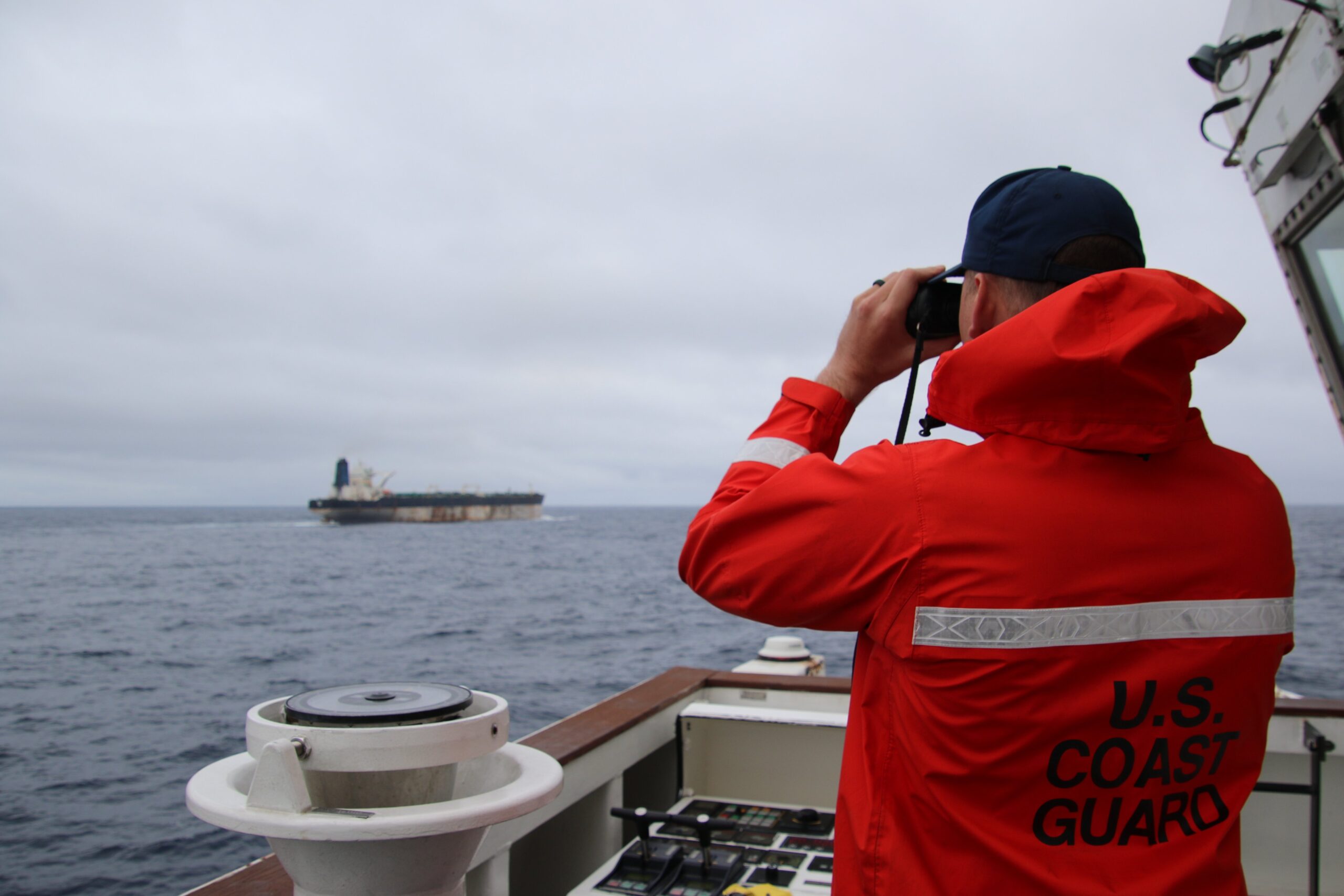
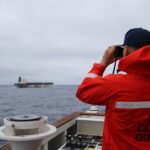
On January 7, 2026, U.S. forces seized the Russian-flagged oil tanker Marinera (formerly Bella-1), which was carrying Venezuela-linked oil cargoes. This happened after the vessel refused a U.S. Coast Guard boarding attempt in the Caribbean and headed across the North Atlantic. This event is one of its kind in recent history as the US military has seized a Russian-flagged vessel.
The seizure marks a shift in the U.S. sanctions enforcement. Moving beyond economic measures, like financial sanctions and asset blocking, to physically intercepting ships. Washington claims these actions are vital to dismantling “shadow fleets” that evade sanctions and bypass international norms. However, the operation itself and its legal justification undermine the rules-based order, the UN-backed maritime and sovereignty framework that the U.S. and Europe long championed. Washington’s departure from this system, which helped architect it, is doubly problematic.
U.S. authorities claimed that they were acting pursuant to a federal court warrant to justify their seizure. The vessel had been sanctioned by the U.S. Treasury in 2024 for allegedly transporting cargo linked to terror networks. Yet, a domestic sanction does not give the U.S. the right to board or seize a foreign-flagged ship on the high seas without the flag state’s consent.
While the U.S. is not a party to UNCLOS, its 1983 Oceans Policy states that the United States is prepared to “accept and act in accordance with” the Convention’s balance of interests relating to traditional uses of the oceans, including navigation and overflight, and that it will not “acquiesce” in unilateral restrictions on those freedoms. That position is reflected in practice through the U.S. Freedom of Navigation (FON) Program (commonly traced to 1979), which uses diplomatic and operational measures to challenge what Washington views as “excessive maritime claims.” UNCLOS strictly limits high-seas boarding without consent as an exceptional “right of visit” (Article 110), permitted only for piracy, slave trade, unauthorized broadcasting, statelessness, or false flags where the ship flies (or hides) a foreign flag while matching the warship’s nationality.
U.S. sanctions typically function by prohibiting dealings and freezing the interests of individuals or entities linked to sanctioned states or entities. They do not allow boarding and seizing vessels on the high seas, as the IEEPA (International Emergency Economic Powers Act), the primary tool for U.S. sanctions, was designed for peacetime emergencies. The U.S. employed additional legal mechanisms, such as the U.S. Coast Guard’s boarding powers and anti-terrorism asset forfeiture laws, along with claims of “statelessness,” to circumvent the limitations of IEEPA.
In the recent interdictions, “statelessness” has become a key jurisdictional lever. According to UNCLOS, if a ship lacks a valid nationality due to the absence of, or fraudulent or expired registry, it is treated as stateless and therefore open to boarding by any other nation. But here lies the legal fault line, as Russia claimed that the tanker was lawfully Russian-flagged by late December 2025. This changes the situation from one of statelessness to a direct challenge to the flag state’s rights.
This gives rise to a jurisdictional grey zone. Broadly, if powerful states begin to unilaterally assess foreign registries to justify armed boarding, it threatens high-seas freedom and flag-state authority, inviting reciprocal measures against the fleets of smaller states. Other nations could apply the same rationale against the fleets of smaller states. While such seizures target evasion networks in the short term, they risk transforming sanction enforcement from financial impediments into direct state-to-state confrontation on the high seas, thereby increasing the risks of escalation. This is illustrated by 17 vessels reflagged to Russia over the past month, shifting them from shadowy networks into open confrontation.
For India specifically, the main concern isn’t just future sanctions evasion but the precedents this sets for maritime law. If high-seas interdiction becomes routine, commercial shipping lanes could turn into arenas for coercion. India relies on choke points for its oil imports. If U.S. interdiction normalizes unilateral flag challenges, New Delhi’s 1,500-ship fleet becomes vulnerable. India should champion IMO working groupstandards on registry verification for sanctions evasion, ensuring smaller flag states aren’t unilaterally targeted.
Washington may view the Marinera seizure as a security win, but it risks normalizing high-seas jurisdictional shortcuts that undermine the predictability of maritime trade.
Disclaimer: The opinions and views expressed in this article/column are those of the author(s) and do not necessarily reflect the views or positions of South Asian Herald.