
Punjab is preparing to host the Hero Asian Champions Trophy for Men in Jalandhar and Mohali from October 27 to November 5, bringing international attention to a state with deep roots in the sport.
Nearly a century after players such as Thakur Singh of Sansarpur traveled to New Zealand on an early hockey tour, the tournament will highlight Punjab’s contribution to Indian and international hockey.
Pakistan will be absent after the Pakistan Hockey Federation decided against sending its Asian Games bronze medal-winning team. Its withdrawal removes the prospect of an India-Pakistan encounter, traditionally one of the most closely followed matches in the sport.
The tournament follows India’s success at the 2026 Aichi Asian Games, where the country won both the men’s and women’s hockey titles for the first time. Men’s hockey entered the Asian Games program in 1958, while the women’s competition was introduced at the 1982 Games in New Delhi.
Advertisement
India’s men also secured qualification for the 2028 Los Angeles Olympics by retaining their Asian Games title.
Their performance followed an eighth-place finish at the men’s FIH World Cup in Amstelveen, which prompted criticism of team selection and questions about the continued inclusion of some experienced players.
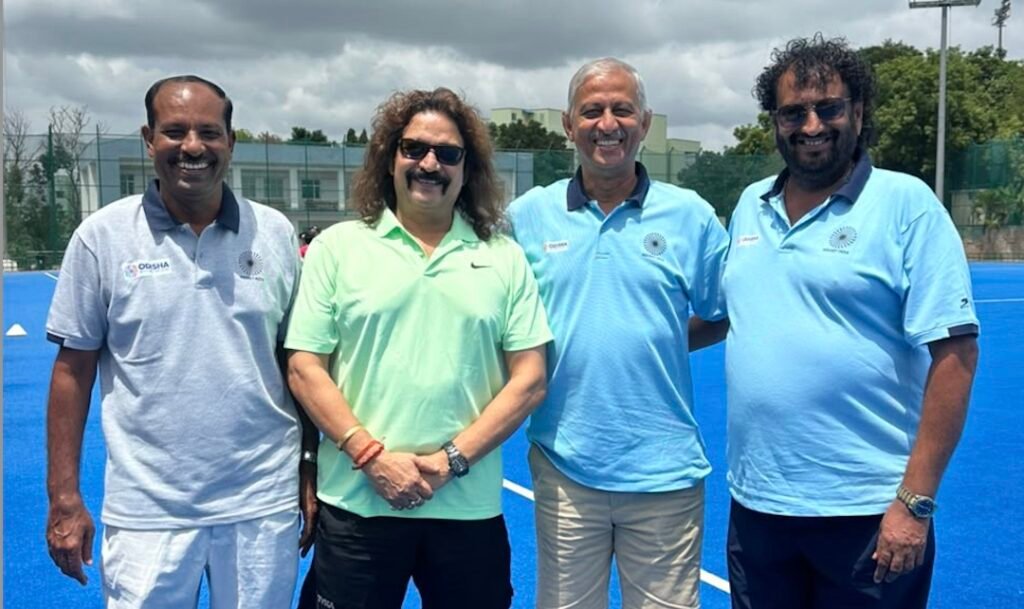
National selectors R. P. Singh, Balwinder Singh Shammi, Mohammad Riaz and M. M. Somaya retained the squad for the Asian Games, where the team returned to gold medal-winning form.
Shammi, an Olympian from Amritsar associated with Hockey Punjab, joined the other selectors in congratulating the men’s and women’s teams on their performances.
For Punjab, the Asian Champions Trophy offers an opportunity to showcase its hockey facilities and sporting heritage. Other states, including Odisha, Jharkhand, Chhattisgarh, Uttar Pradesh and Tamil Nadu, have also hosted major hockey events to promote the sport and engage local audiences.
The tournament comes ahead of Punjab’s Assembly elections early next year. Its timing has also raised concerns among some former players about the demands of a crowded international calendar.
The men’s and women’s FIH World Cups in the Netherlands and Belgium in August were followed closely by the Asian Games in September. Some Olympians and former international players from Punjab believe scheduling the tournament at the beginning of a new calendar year would have allowed players more time to recover.
Their concerns center on whether teams can perform at their best after competing in two major international events in quick succession.
The opening phase will take place at the Olympian Surjit Singh Hockey Stadium in Jalandhar, with each of the six teams playing the other five in a round-robin format.
Following a day’s break, the tournament will move to Mohali Hockey Stadium for classification matches to determine the final standings.
Beyond the competition, the event could provide opportunities for Punjab’s sports goods industry, particularly manufacturers in Jalandhar.
The city has longstanding links to hockey equipment production. Before synthetic playing surfaces were introduced at the 1976 Montreal Olympics, Jalandhar and Sialkot in Pakistan were known for producing leather hockey balls used on grass fields.
The transition to synthetic surfaces changed equipment requirements, with leather balls giving way to synthetic alternatives, including dimpled models initially supplied from Australia.
The tournament could give hockey stick manufacturers in Jalandhar and Meerut opportunities to connect with leading Asian players and explore endorsements. Manufacturers of protective equipment and other hockey products may also benefit from the international exposure.
For a state whose players have helped shape Indian hockey for generations, the event offers an opportunity to strengthen its role as a tournament host and showcase its sports manufacturing industry.