Join WhatsApp Channel


It is not an exaggeration to say that not all are math geniuses especially having moved from tens, hundreds and thousands to millions, billions, trillions and perhaps even zillions. In fact, common folks would not be able to say how many zeros are there in a billion, the math whiz kids and adults exempted.
But in politics, especially in America, it has now become common place to throw numbers around—if it is not 500 billion dollars then it must be 500 percent in tariffs. Either way a fondness for the number 500.
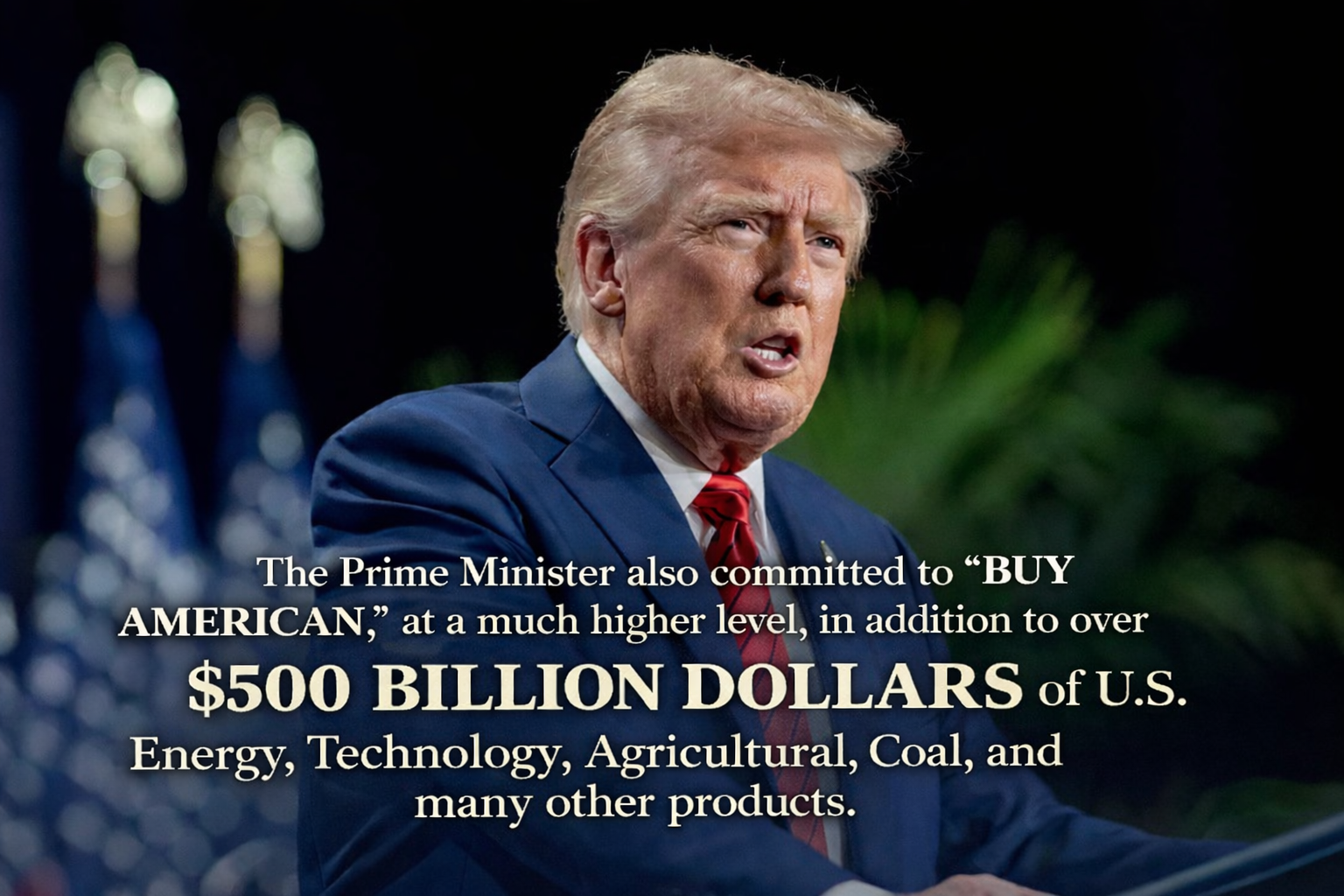
Look at the latest United States-India trade deal that was announced last week amidst all the fanfare and hoopla. In all the noise, many forgot to look at the Fact Sheet or even ask if there was one. What stuck in many a mind in India, especially in the political opposition, is a part of President Donald Trump’s statement—that India would buy “over 500 billion dollars of U.S. Energy, Technology, Agricultural, Coal and many other products.” No one either in Washington or New Delhi came forward to immediately explain if this magic number of 500 billion dollars would be on a yearly basis, or spread over many, say five to ten years.
The current trade surplus of India with the United States is below US$ 45 billion. That was not all. The charge was that New Delhi had not cared to say whether this US$ 500 billion referred to private sector purchases or public spending, especially since the Union Budget that was presented on February 1 did not have massive outlays to match US$ 500 billion of public spending; neither any purchase plan, annually or on a multi-year basis.
All the talk of India “surrendering” to the United States had of course factored in the assertion that India would “stop” buying Russian oil. This has raised the question whether this US$ 500 billion is commitment, intent or even aspirational. Time will tell if one-off purchases will be the order of the day or if structural challenges to the bilateral trade issues have been properly addressed.
India does not have the rights of thinking that the infatuation with 500 falls in its exclusive domain. In fact, the number is not just confined to trade; it is in the realm of investments too. For example, in April 2025 it was announced that Apple would invest US$ 500 billion over a four-year period but linked to prospective tariff negotiations. And in the first leg of his Middle East tour last year, the White House announced that it had secured more than US$ 500 billion from the government of Saudi Arabia and companies. The New York Times maintained that either the numbers did not add up or that it included projects that were already in the works when President Trump assumed office for his second non-consecutive term.
The number 500 also goes beyond trade and investments. President Trump during the campaign trail in 2024 and since coming to office last January has been sharply critical of the pharmaceutical industry stressing that he would be reducing drug prices and putting out numbers like 500 percent or more with late night comedy show hosts having a field day pointing out that reducing prices by 100 percent would bring cost to Zero as opposed to a 500 percent which would mean companies having to pay patients for purchases.
The fixation with 500 does not stop with trade, investments or drug prices. In the world of tariffs, President Trump and his minions continue to unleash threats of 500 percent tariff on countries like India, China and Brazil for the import of Russian oil. And there is a Bill in the Senate that is alive and kicking but waiting for instructions from the White House to take effect.
The Sanctioning Russia Act 2025 known as a “bone crushing” measure is intended to give President Trump “tremendous leverage” to force nations to choose between Russian oil and the American market. Senator Lindsey Graham, the White House top ally on Capitol Hill has vowed to “crush” India’s economy should it bankroll Russian war efforts in the Ukraine. It is said that this Bill has the support of between 70 and 80 in the Senate, Republicans and Democrats.
The magic number 500 is not without problems. At the time of signing the trade deal with Japan, it was maintained that the East Asian country would invest some US$ 550 billion in America; but Tokyo was quick to figure out the catch: that all of the returns of this massive investment will be with the United States. If the language is being sorted out, the strong return of Prime Minister Sanae Takaichi has signaled that Japan will not submit to any one-sided investment-return framework.
In chasing that 500, the Trump administration has come to face some political realities as well. With a small group of Republicans defying the whip, the White House and President Trump, the House of Representatives recently put the brakes on punitive tariffs on Canada in the guise of national emergency through the International Emergency Economic Powers Act.
And in the process sending a not-too-subtle message to the United States Supreme Court that is weighing in on the legality of tariffs with a judgement expected anytime. Ironically, a negative ruling by the nation’s apex court would mean Washington would have to fork out huge refunds for penalties it has been charging since mid-2025—perhaps not as high as US$ 500 billion.
Disclaimer: The opinions and views expressed in this article/column are those of the author(s) and do not necessarily reflect the views or positions of South Asian Herald.