Join WhatsApp Channel


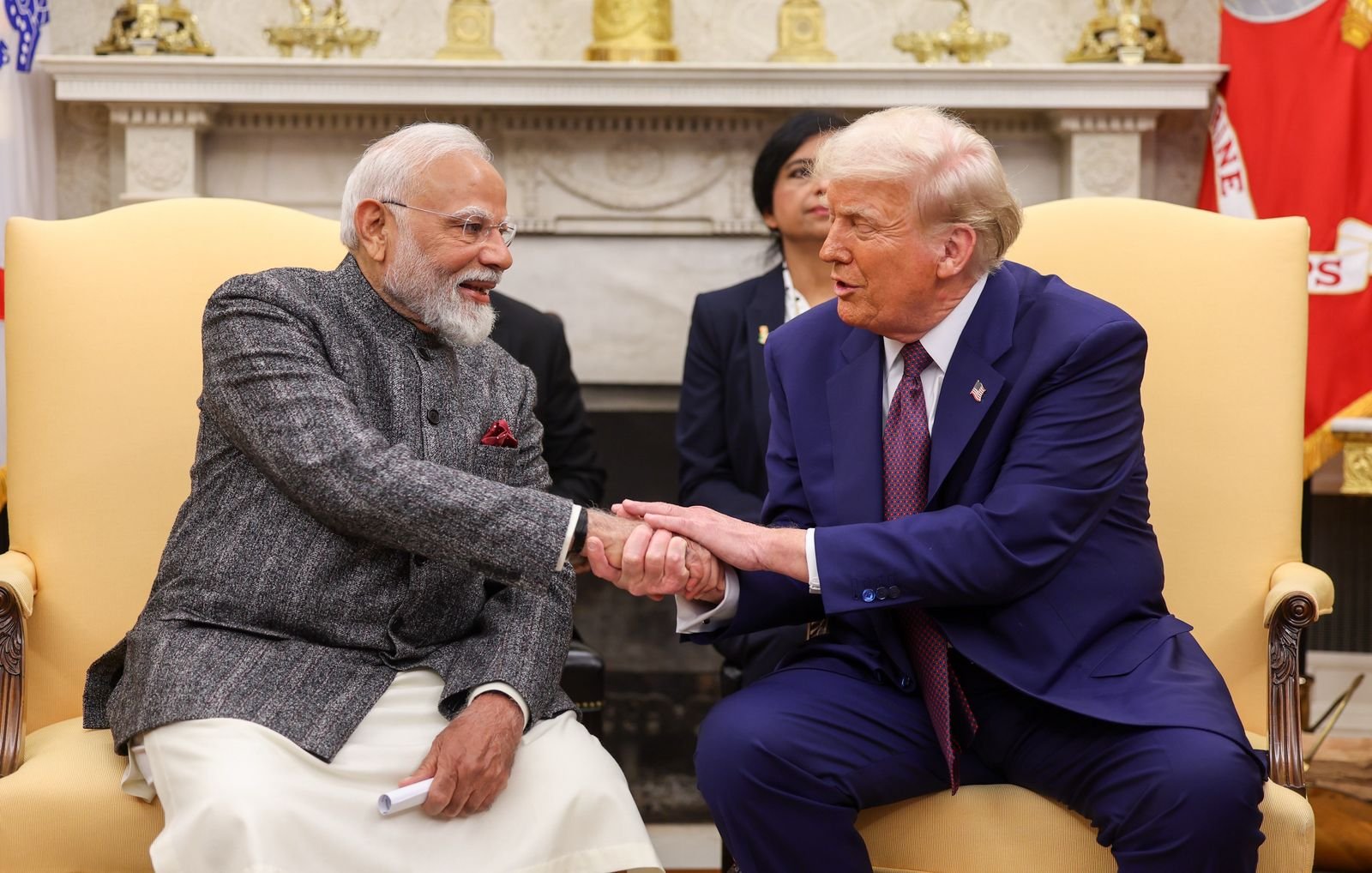
Between a best deal and a sellout, people of India are a witness to an ongoing shouting match between the government and the opposition on what exactly the deliverables are in the recently announced trade agreement with the United States.
The Government of India is talking of the deal as if it is next best thing that could have happened after a loaf of bread; the Opposition maintaining that the blood, sweat and tears of the farmers have been sold out or mortgaged to Washington. Perhaps the truth is somewhere in between; and the devil is always in the details, which are yet to be furnished.
For a start, attention is on what President Donald Trump wrote on his Truth Social on the rationale for bringing down the tariffs on India from 50 percent to 18 percent. Among other things it was maintained by the American President that New Delhi had agreed to stop buying Russian oil; American goods would be duty free; and a big announcement that India will buy up to US$ 500 billions of products including energy, agricultural and coal. Separately the Secretary of Agriculture, Brooke Rollins, chipped in: “New US-India deal will export more American farm products to India’s massive market, lifting prices and pumping cash into rural America,” she wrote on X.
It is a well-known fact that anything to do with agriculture is a political red rag in India and for months senior officials involved in the trade negotiations were stressing that the interests of the farmers would never be compromised. Even now that same line is maintained under the slogan of having protected the interests of “1.4 billion people.”
But Rollins’ refrain must have been music to the Opposition in India that was waiting to pounce on the government. “In 2024, America’s agricultural trade deficit with India was $1.3 billion. India’s growing population is an important market for American agricultural products, and today’s deal will go a long way to reducing this deficit,” the senior administration official maintained.
It was just not on agriculture that the political dispensation in New Delhi came under attack from within. The general notion that India had simply caved into pressures from the United States; and that is what lack of transparency will lead to. Even on the issue of Russian oil, it was not clear whether Indian imports were to halt immediately and generally or only from the sanctioned entities like Rosneft and Lukoil that were hit with the punitive measures in October 2025.
India that lifted less than 1 percent of its crude oil requirements before 2022, the Ukraine war saw imports jumping to as high as 40 percent, with imports peaking to nearly 2 million barrels per day by early 2025 before stabilising at around 1 million bpd by early 2026, in part due to sanctions.
What has been forgotten in all the ensuing noise about Russian oil and how India and China are the prime culprits in the ongoing war in the Ukraine is that New Delhi’s crude oil import base is quite diversified to include Iraq, Saudi Arabia, the United Arab Emirates and of late, the United States. The supplier base is now around 40 nations including a recent addition of Argentina and the prospect of Venezuela once again gaining momentum. Caracas drifted away from the radar due to tariffs as also for its heavy, sulfur rich blend and the added costs of transportation and logistics. With the Trump administration seemingly in control of Venezuela, the nudge could start for India to source more of its crude from Caracas and the payment in American dollars.
The lowering of tariffs on India and keeping the country on a different league from that of Pakistan, Bangladesh, Vietnam and China will be seen as a step in the right direction and a long awaited one. But to expect a quick turn around in bilateral ties when a lot of grief had gone around for about a year is perhaps asking for a lot. To Prime Minister Narendra Modi, the trade deal and the takeaways are critical for domestic play; what he says or does not will matter in India and from an electoral point of view.
But to President Trump, it is question of “one more country” coming with a trade deal, beneficial to America and the waving of the US$ 500 billion card giving the impression of “savings.” The Democratic Party that is busy with domestic issues is hardly expected to make any noise.
A new tariff structure on India may be in place but to look at this as the last word could be wrong given how sanctions prone the Trump administration has been in the last year. The excuse of Russian oil may be out of the way for India, but other headaches like New Delhi’s role in the BRICS will all matter to President Trump.
So will be in how India responds to pending and forthcoming invitations—the Board of Peace or in the yet to be formalized Group for Rare Earths. And New Delhi will have to put up with the zillionth utterance on Operation Sindhoor. All this is not to forget the big sword hanging over all by way of a Senate Bill still in play threatening tariffs of up to 500 percent pertaining to Russia and the war in the Ukraine that has the support of President Trump and his allies.
Disclaimer: The opinions and views expressed in this article/column are those of the author(s) and do not necessarily reflect the views or positions of South Asian Herald.