 Join WhatsApp Channel


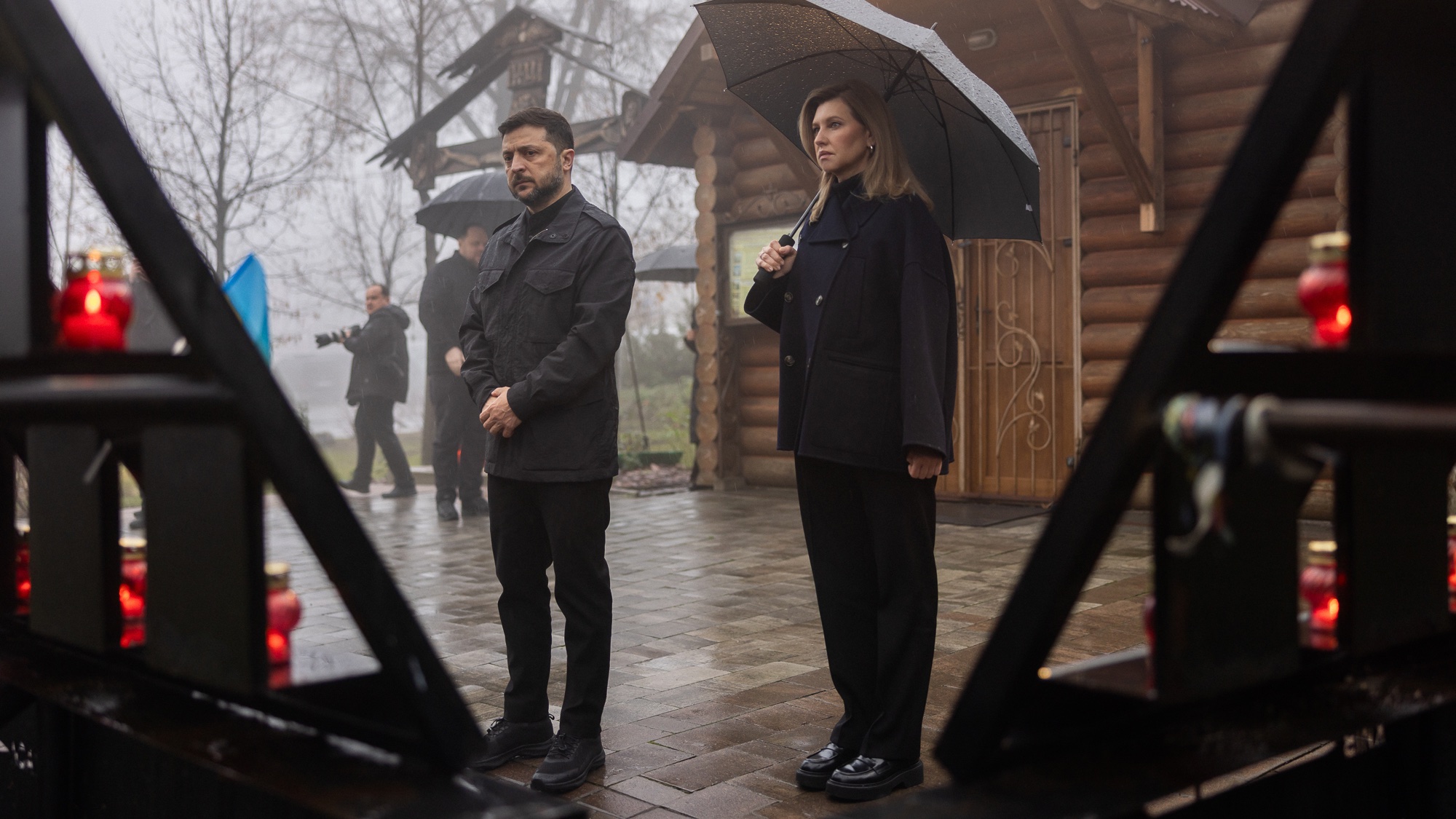
Hold your breath. There is now serious talk of a brutal war looking to enter its fourth year, perhaps winding down if reports quoting unnamed sources and officials not authorized to discuss are to be believed. Kyiv has agreed that it has been in conversations with top officials of the United States and is studying a plan that is still under wraps.
And the Kremlin would rather not use the word “consultations.” The bottom line to all these slick characterizations is that concerned and interested folks are talking. And then there are those, especially in Europe, who have prefaced it all by saying no peace deal should capitulate to the Russian President Vladimir Putin.
According to a Reuters News Agency story that has been picked up by several media outlets, a 28-point peace plan would require Ukraine to give up all of the Donbas region and downsize its military to about 600,000 troops in return for “robust security guarantees.” And in what would be seen by some as playing up to President Putin’s playbook, Crimea, Luhansk, and Donetsk will be recognized as de facto Russian territories and Kyiv’s forces will leave areas of control in the Donetsk. Apparently, the plan also speaks of a non-aggression pact that will be initialed by Russia, Ukraine, and Europe. Significantly, there will be no expansion of the North Atlantic Treaty Organisation (NATO) or any of its troops stationed in Ukraine.
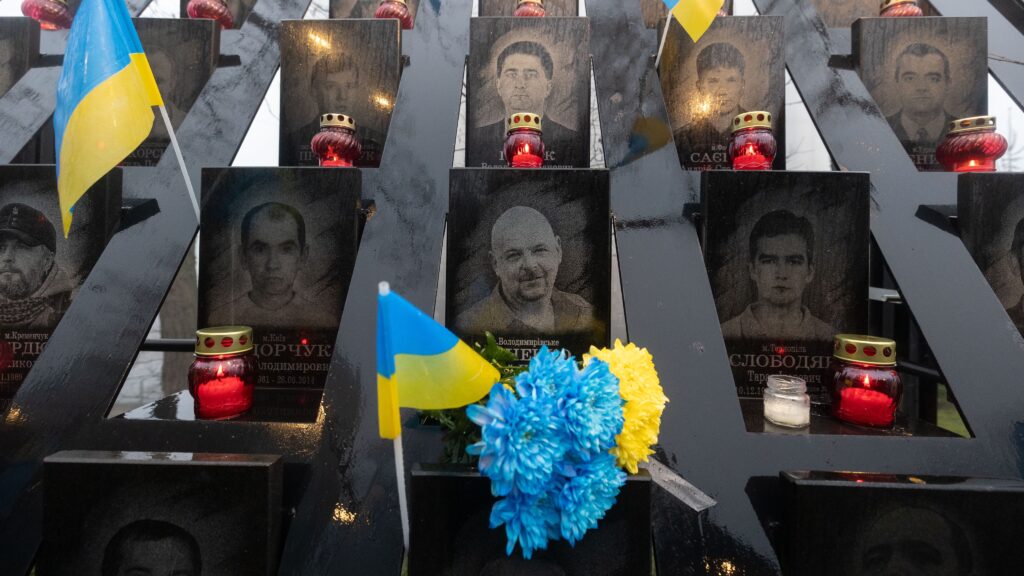
The draft plan supposedly speaks about a number of things for Russia specifically: its re-integration into the global economy; lifting of sanctions in a phased manner and on a “case-by-case” basis; getting back into the Group of Eight; and Washington and Moscow looking at agreements covering energy, natural resources, infrastructure, artificial intelligence, and rare earth metals extraction in the Arctic.
According to the White House, the Secretary of State Marco Rubio and Special Envoy Steve Witkoff have been quietly working on the plan that has the backing of President Donald Trump. “This plan was crafted to reflect the realities of the situation, after five years of a devastating war, to find the best win-win scenario, where both parties gain more than they must give,” White House spokesperson Karoline Leavitt said.
The first word out of Europe has been one of caution, with the European Union Foreign Ministers in Brussels stressing that they would not accept demands on Kyiv to make “punishing” concessions. “Ukrainians want peace, a just peace that respects everyone’s sovereignty, a durable peace that can’t be called into question by future aggression. But peace cannot be a capitulation,” the Foreign Minister of France has been quoted. But the impression has been that the elaborate peace plan came about as a result of talks between Witkoff and Kirill Dmitriev, the special envoy of President Putin. But according to Secretary Rubio, Washington will “continue to develop a list of potential ideas for ending this war based on input from both sides.”
According to some, the acceleration of negotiations is coming at a time when President Volodymyr Zelensky is mired in a corruption scandal at home and when troops are at the receiving end in the frontlines. Worse, both Russia and Ukraine are facing the prospects of a brutal winter, with Kyiv especially facing the brunt of escalated Russian drone and missile attacks on energy installations that are clearly taking a toll on an already battered civilian population. And the Kremlin continues stubbornly with any peace deal having to address the “root causes,” whatever they might mean, as well as not playing up to any “new” initiatives of the Trump administration. “Consultations are not currently under way. There are contacts, of course, but there is no process that could be called consultations,” the Kremlin spokesman said.
President Trump is certainly under no illusions, for he knows full well that the Ukraine conflict is not the same as that of Gaza, which continues to present challenges to Washington in spite of getting through a peace deal that has been endorsed by the United Nations Security Council. In the case of Ukraine, President Trump would have to factor in the demands of Kyiv, Moscow, and the capitals of Europe, and make sure of retaining political capital at home.
The man in the White House also knows that he cannot get away with only a nod from President Zelensky. The leader in the Kremlin is a different cup of tea, who has seen the United States both during the height of the Cold War and after the collapse of the Berlin Wall.
The frivolous rationales dished out for the “Special Military Operation” aside, President Putin has shown the international community that he still has the wherewithal to stand up to punishing sanctions of the United States, the United Nations, and the European Union. And worse, he has dragged other countries that buy his oil into the mess. The war has taken a very heavy toll on Russia, with not just thousands of dead soldiers but also hundreds of thousands of families left in the lurch. Attempts to end the war do not mean showing the white flag; it means coming to terms with reality.
Disclaimer: The opinions and views expressed in this article/column are those of the author(s) and do not necessarily reflect the views or positions of South Asian Herald.
Related posts:
 Ukraine-India Relations: Navigating Historical Ties and Russian Disinformation in a New Geopolitical Era
 Opinion: Another Set of Sanctions on Russia
 US expresses concern over India-Russia relationship
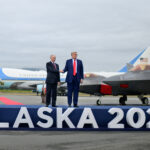 “There’s No Deal Until There’s a Deal,” Says Trump After Meeting Putin at the US-Russia Alaska Summit
