Join WhatsApp Channel


India made its sharpest attack ever on Pakistan for fueling cross border terrorism in the wake of the Pahalgham and Red Fort blasts in what diplomatic circles considered the starkest warning to its nuclear armed neighbor.
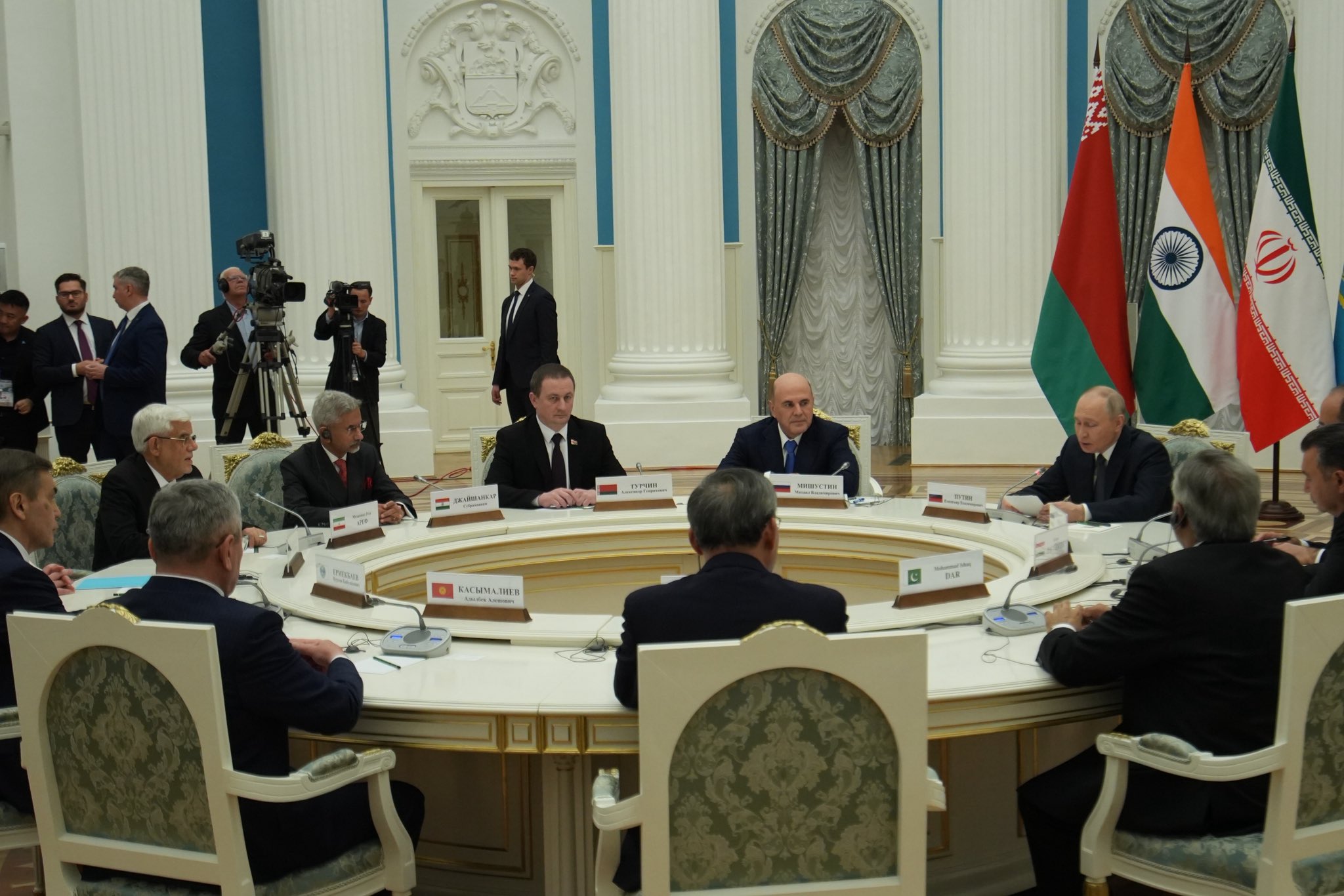
At a crucial gathering of the Shanghai Cooperation Organisation (SCO) in Moscow this week, India unmistakably called out cross-border terrorism in what many in diplomatic circles are calling its sharpest public warning yet to Pakistan.
The message, delivered by External Affairs Minister S. Jaishankar, came framed by two recent, traumatic acts of violence on Indian soil — the Pahalgam massacre in Kashmir and a car bomb near Delhi’s Red Fort — and underscored New Delhi’s evolving willingness to defend its citizens aggressively and use multilateral forums to isolate terror sponsors.
“As India has demonstrated, we have the right to defend our people against terrorism — and we will exercise it,” Jaishankar declared at the SCO Council of Heads of Government meeting. “There can be no justification, no looking away, no whitewashing of terrorism.”
The Immediate Context: Pahalgam and Red Fort
India’s warning comes in the aftermath of two brutal attacks. On April 22, 2025, 26 civilians — including a Nepali national — were gunned down by The Resistance Front (TRF) in Pahalgam, Jammu & Kashmir. The TRF is widely regarded as a proxy of Lashkar-e-Taiba, a Pakistan-based militant group.
Then, on November 10, a car loaded with explosives blew up near Delhi’s Red Fort, killing at least 12 people and injuring dozens. The Indian government quickly classified it as a terror incident, with the Union Cabinet issuing a resolution condemning the blast.
In Moscow, Jaishankar linked these attacks as part of a grim continuum. He invoked the founding purpose of the SCO — to fight terrorism, separatism, and extremism — and warned that these threats have only intensified. “It is imperative that the world display zero tolerance towards terrorism in all its forms and manifestations,” he said.
A Diplomatic Warning — and a Red Line
While Jaishankar did not name Pakistan explicitly in his address in Moscow, his remarks could scarcely have been more pointed. Indian media reports cited his tough message calling for a “united international stance” against terrorism and noting that the era of diplomatic ambiguity is over.
On the sidelines, he met with Russian President Vladimir Putin — signaling that India’s security concerns are now firmly enmeshed in broader Eurasian geopolitics.
India’s strike posture is no longer covert. Earlier this year, in May 2025, New Delhi launched Operation Sindoor, a pre-emptive cross-border strike targeting terrorist infrastructure — a signal that India is prepared to act when diplomacy fails.
Terror Beyond the Headlines: A Millennium-long Legacy
To understand the weight of India’s message in Moscow, one must look back at the longer arc of terror originating in Pakistan. Since the turn of the millennium, India has endured—and fought back against—an evolving ecosystem of cross-border groups guided by jihadi ideology and shadow-state patronage.
- Lashkar-e-Taiba (LeT): The group behind the 2008 Mumbai attacks, LeT has long been India’s principal security adversary, with roots deeply embedded in Pakistani military and intelligence structures.
- Jaish-e-Mohammad (JeM) and Lashkar-e-Jhangvi: Various skirmishes, bombings, and assassination attempts over the past two decades have tied these groups to militant nexuses in Pakistan, with ideological, financial, and logistical networks that operate with uneven but palpable state complicity.
- The Resistance Front (TRF): As mentioned, TRF is viewed by Indian and international analysts as a modern reincarnation of this spectrum — a tactical proxy to sow terror in Kashmir with plausible deniability.
This web has forced India to recalibrate its counterterror strategy. Diplomatic appeals, designations at international bodies, and targeted military action have become part of its toolkit — but so too has an increasingly bold public posture, as seen in Moscow.
India’s Counter-Action: From Diplomacy to Decisive Retaliation
India’s response to the Pahalgam atrocity and the Red Fort blast has followed a multi-pronged strategy:
- Military Calibration: Operation Sindoor, carried out earlier this year, is not an outlier. It follows a calculated pattern — targeted, time-bound, and meant to degrade terror infrastructure without escalating into all-out war.
- Diplomatic Mobilization: At the SCO summit, Jaishankar’s message was clear: terror cannot be whitewashed, even in multilateral fora. He appealed for reforms in the SCO’s modus operandi, urging greater flexibility, modernization, and the capacity to address terrorism with the seriousness it demands.
- Framing Narrative: By linking the Red Fort blast and Pahalgam attack, India is reframing terrorism not as isolated tragedies, but part of a relentless campaign. This narrative helps rally regional partners and shapes global perception — implicitly placing responsibility on Pakistan for enabling such violence.
- Security Reforms: Back home, the government has already taken political steps: declaring the Red Fort explosion a terror incident, forming inquiry teams, and signaling that support networks — including financiers and sponsors — will be held accountable.
What This Means for SCO and Regional Power Dynamics
India’s stance in Moscow has deeper implications for the SCO and the region’s geopolitics. Once considered by some to be a mildly permissive space for Pakistani posturing, the SCO is now seeing India press for institutional reform. Jaishankar’s call for zero tolerance is not just moral — it is a push for collective capacity building: intelligence sharing, financial tracking of terror funding, and perhaps even joint counterterrorism operations.
At the same time, India is signaling that multilateralism is not a shield for inaction. Its message is: words are not enough; action is non-negotiable. By tying its sovereign right to defend itself to the SCO’s foundational mission, India is staking out a more militant space within a diplomatic forum.
Risks and the Road Ahead
India’s resolve, however, comes with risks. A hardened posture could provoke Pakistan to double down on its strategic deniability, or to rally alliances at SCO to defend its perceived interests. There is also the challenge of sustaining international unity: unified rhetoric on terror can splinter when national interests clash over economic or geopolitical deals.
Moreover, translating reformist ambition into institutional change within the SCO will not be easy. Calls to modernize the organization — for instance, to adopt English as an official language, or to enhance cooperation mechanisms — will face entrenched bureaucratic inertia.
Conclusion: India’s Turning Point
India’s address in Moscow marks a turning point in its diplomatic and security strategy. By invoking both symbolic and existential touchstones — Pahalgam and the Red Fort — Jaishankar’s warning to Pakistan was not merely rhetorical. It was a declaration of intent. In his own words: “We must never forget that the SCO was founded to combat the three evils … these threats … have become even more serious.”
Whether other SCO nations heed that call, however, remains to be seen. What is clear is that India, shaken by pain and loss, is no longer content with spiritual outrage. It is demanding real accountability — and, if necessary, acting on it.
Disclaimer: The opinions and views expressed in this article/column are those of the author(s) and do not necessarily reflect the views or positions of South Asian Herald.
Related posts:
 Smoke and Questions at the Red Fort: Inside the Hunt for the Perpetrators of Delhi’s Deadly Car Blast
 India Welcomes U.S. Designation of TRF as Global Terrorist Organization
 India’s Foreign Minister Characterizes ‘Terrorism, Extremism, and Separatism’ as ‘Three Evils’
 SCO Summit 2025: Leaders Emphasize Multilateralism, Security, and Global Governance Reforms