Join WhatsApp Channel


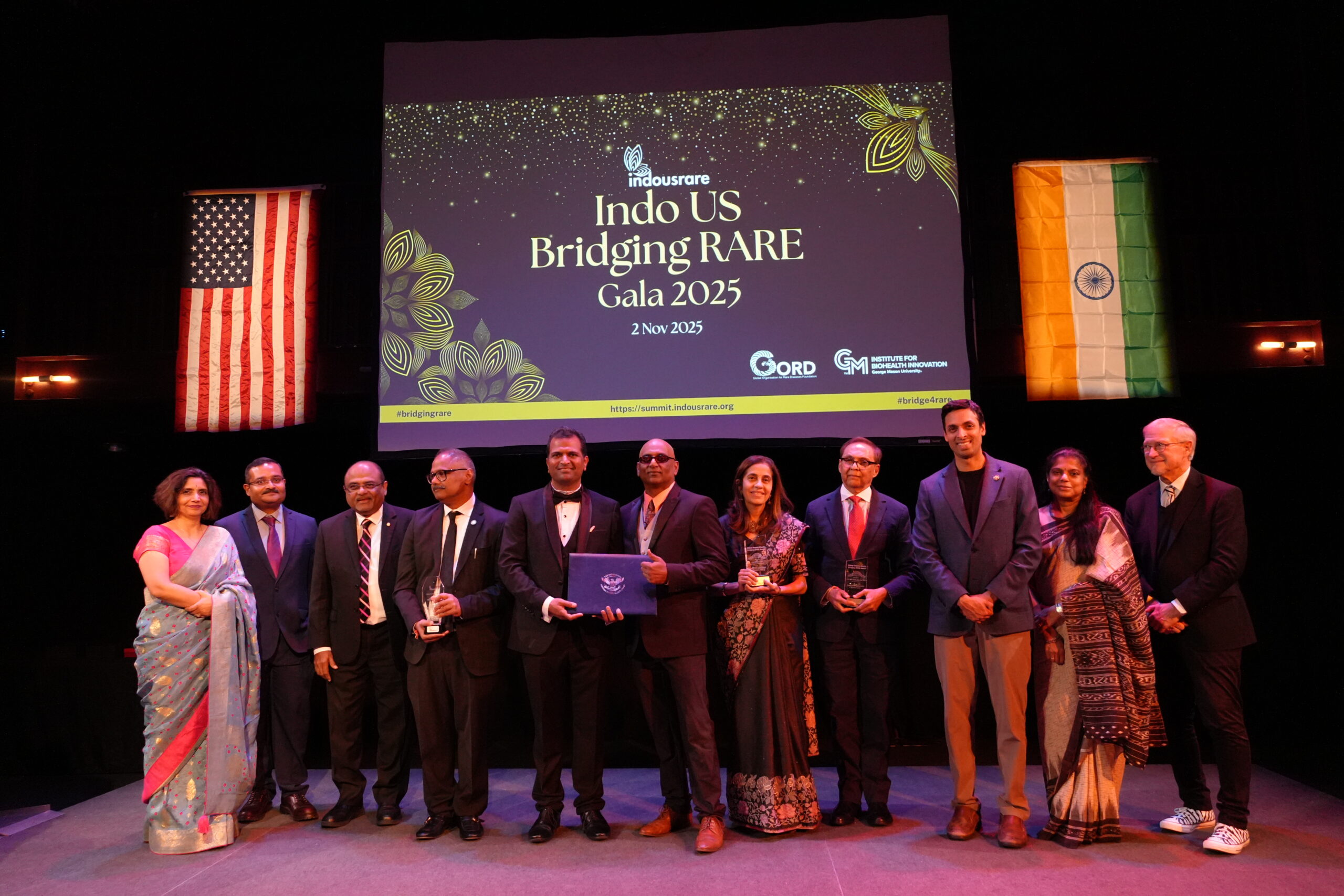
The Indo US Bridging RARE Summit, held from November 2 to 4 in Manassas, Virginia, convened more than 300 participants from 14 countries for a major gathering focused on strengthening global partnerships in rare-disease research and care.
Co-hosted by the Indo US Organization for Rare Diseases (IndoUSrare) and George Mason University, the Summit brought together scientists, patient advocates, government leaders, biopharma executives, and policy experts.
According to a statement released by IndoUSrare on November 18, participants shared a unified mission: “transforming the future of care for the 400 million people worldwide living with rare diseases.” Delegates from the United States, India, the United Kingdom, Nepal, Pakistan, several African nations, and the Middle East committed to continued collaboration beyond the Summit.
In his opening remarks, Dr. Harsha Rajasimha, founder and chair of IndoUSrare, outlined a bold vision for 2030, stating that “No rare-disease clinical research or orphan-drug program should proceed without engaging the Indian, or broader South Asian, diaspora through IndoUSrare or equivalent channels.”
He also announced the launch of the Global Organization for Rare Diseases (GORD), headquartered in India with dual bases in Virginia and Bengaluru. Designed to broaden IndoUSrare’s impact, GORD aims to establish a partner contact in every country to expand equitable access to diagnosis, therapies, and research participation.
The Summit received written recognitions from several US elected officials. Representative Suhas Subramanyam applauded IndoUSrare “for building a bridge of hope between the United States and India,” while US Senator Tim Kaine commended the organization “for connecting stakeholders across the rare-disease community to empower families and improve outcomes.”
US Senator Raphael Warnock encouraged leaders to “keep the faith and keep looking up,” and Virginia State Senator Kannan Srinivasan highlighted the urgency of policy solutions, noting that “These breakthroughs, accelerating diagnostics and therapies, are essential complements to our policy efforts, ensuring medical progress translates into treatments families can truly afford.”
The organization said the bipartisan support underscored the rising recognition of rare-disease equity as both a moral and economic priority.
Keynotes and special addresses throughout the Summit showcased the intersection of science, advocacy, and policy. John F. Crowley, CEO of BIO and former chairman of Amicus Therapeutics, delivered an impassioned address, stating that “When nations collaborate to cure rare diseases, we don’t just share data, we share destiny.” Dr. Bobby Mukkamalla, president of the American Medical Association, emphasized the role of clinicians, saying, “Every clinician must become an advocate for patients with rare diseases, because awareness is the first prescription.” Dr. Gary A. Puckrein, CEO of the National Minority Quality Forum, underscored the importance of diversity in research, noting that “We cannot achieve precision medicine without inclusion; diversity is the engine of discovery.”
A highlight of the gathering was the Abbey Meyers Khushi Bridging RARE Awards 2025 Gala, where Representative Suhas Subramanyam presented awards named in honor of Abbey Meyers, founder of the US National Organization for Rare Disorders (NORD), and Khushi, representing the human face of rare diseases.
The 2025 honorees included:
- Dr. Priya Kishnani, Duke University Medical Center, for her decades of translational research in lysosomal storage disorders.
- Dr. Pramod Mistry, Yale University School of Medicine, for pioneering work in Gaucher and metabolic-disease research and supporting charitable access to therapies.
- Dr. Madhulika Kabra, Indian Council of Medical Research, for advancing genetic diagnostics and newborn screening in India.
- Rajesh Gooty, recipient of the RARE Community Impact Award, for mobilizing diaspora support for patient families.
The organization said these stories earned a standing ovation and reinforced commitments to sustained Indo-US cooperation. Families from the United States and India also shared personal experiences that highlighted the urgency of accelerating research and access to treatment. Cultural performances, including traditional Indian and fusion dance and music, celebrated unity across borders.
Summit sessions covered a wide range of themes, from screening and diagnostics to AI-enabled clinical trial efficiency, data interoperability, digital patient registries, biomanufacturing, supply-chain resilience, and rare-disease policy.
The event concluded with the formation of four new Indo US multi-stakeholder working groups focused on:
- Newborn Screening and Diagnostics
- Cross-Border Clinical Research and Data Harmonization
- Policy and Regulatory Harmonization for Orphan Drugs
- Affordable Innovation for Rare Diseases
IndoUSrare recognized the contributions of sponsors, academic partners, and community supporters. Gold Sponsor Soleno Therapeutics led the list, alongside Silver Sponsors including Entrada Therapeutics, BridgeBio, the Fairfax County Economic Development Authority, and the Prince William County Department of Economic Development. Additional support came from CloudThrottle, Immigrants First, the EveryLife Foundation for Rare Diseases, Amneal Pharmaceuticals, Amicus Therapeutics, and Virginia Bio.
South Asian Herald served as a media partner.
Looking ahead, post-Summit resolutions reaffirmed IndoUSrare’s and GORD’s commitment to making cross-border collaboration the default standard for rare-disease research. As Dr. Rajasimha noted, “The next phase is about scaling partnerships into a global ecosystem that turns today’s hope into tomorrow’s cures. Together, IndoUSrare and GORD will drive a decentralized, equitable, and AI-enabled framework for global rare-disease research.”
Preparations are already in progress for the Bridging RARE Summit 2026, which will be held in India in collaboration with leading research institutions, government partners, and industry stakeholders, noted the statement.
Related posts:
 Indo-US Bridging RARE Summit 2025 to Convene Global Experts and Advocates at George Mason University
 ‘There are Plenty of Problems Begging to be Solved in Rare Diseases’
 Congressman Suhas Subramanyam Pledges to Champion Rare Disease Community at 2025 Indo-US Bridging RARE Summit
 PLI Scheme Cuts Therapy Costs by 95% As India Ramps up Rare Disease Focus