Join WhatsApp Channel

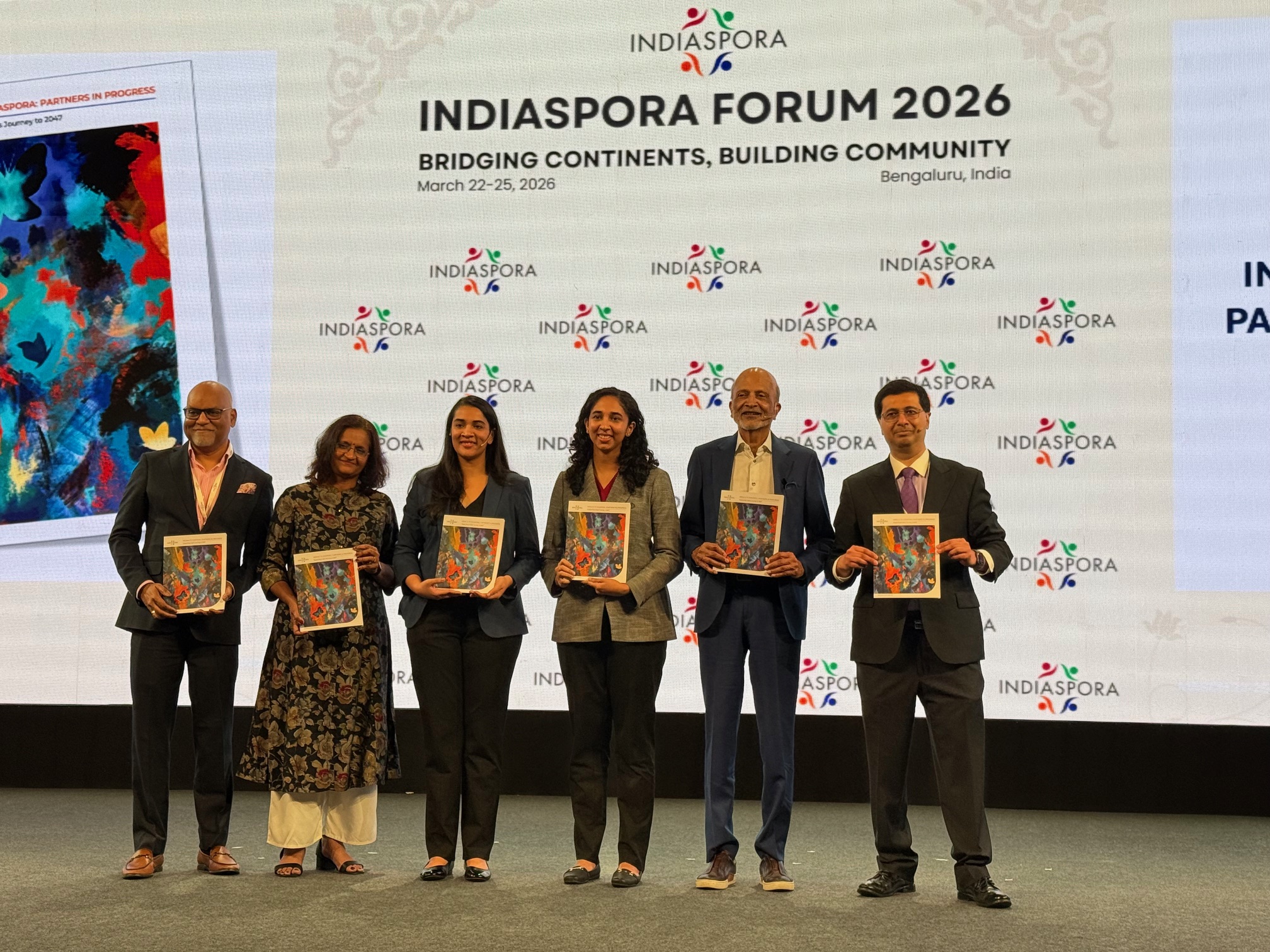
Indiaspora has unveiled a major new report, “India and its Diaspora: Partners in Progress,” on March 23, 2026, at the JW Marriott Hotel and Convention Centre in Bengaluru, examining the expanding role of the global Indian diaspora in shaping India’s future in business, culture, philanthropy, innovation, and the arts.
With more than 35 million people of Indian origin living in over 200 countries and an estimated combined annual income of $730 billion, the diaspora is the largest in the world and among the most influential.
The report underscores how this global community is transitioning from a traditional source of “remittances into a powerful force of capital, capability, and credibility helping accelerate India’s rise as it pursues its India@100 vision of becoming a developed nation by 2047.”
While remittances once defined the diaspora’s relationship with India, its role today is far more expansive. Leaders across sectors now contribute “investment, knowledge, technology partnerships, and global networks that strengthen India’s economic growth, innovation ecosystem, and international standing.”
Findings also reflect strong optimism within the diaspora. Survey respondents expressed confidence in their ability to contribute meaningfully to India’s future, with many envisioning a nation that, by 2047, ranks among the world’s leading economies, drives global innovation, reduces inequality, and offers a high quality of life.
At the same time, structural barriers and inefficiencies continue to limit deeper participation. Drawing on insights from more than 200 leaders across 24 countries, the report outlines practical recommendations for policymakers and diaspora stakeholders to strengthen collaboration and long-term impact.
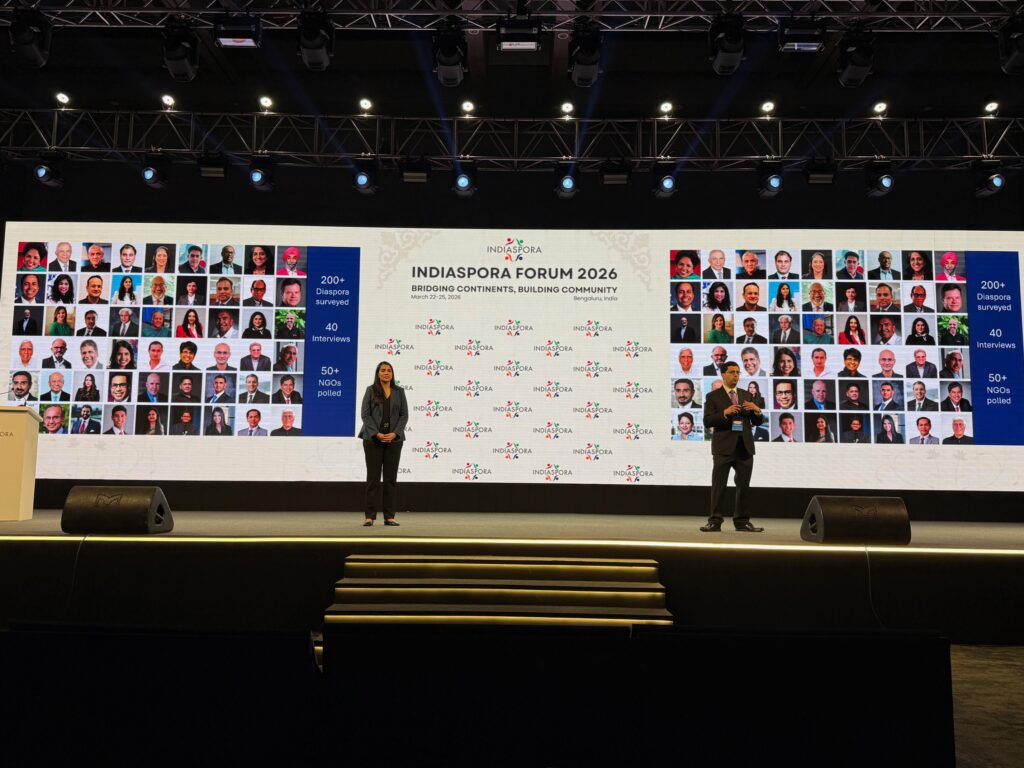
According to Indiaspora, while earlier studies have documented diaspora contributions, Partners in Progress is the first comprehensive report to focus on actionable strategies spanning economic, cultural, social, and philanthropic domains.
The report builds on Indiaspora’s earlier Impact Reports produced in collaboration with the Boston Consulting Group. The first, Small Community, Big Contributions (2024), highlighted the outsized influence of Indian Americans across sectors, while a second report in 2025 examined the growth and impact of the Indian community in the United Arab Emirates.
“In 1991, India opened its doors to the world. Today, the world is knocking on India’s door. At this inflection point, India has the opportunity to unlock the power of a 35-million-strong diaspora, bringing capital, capability, and credibility as true partners in India’s journey to 2047,” Founder and Chairman, Indiaspora, MR Rangaswami.
“India @100 is an inspiring vision not just for the people of India, but to the 35 million members of the Indian diaspora that live elsewhere. In the countries we call home, we create positive outcomes for society, serve as cultural ambassadors, and build a bridge between our country of residence and India. The diaspora members are working hand in hand with India to help shape its future,” said Executive Director, Indiaspora, Sanjeev Joshipura.
“Today, we are releasing our third Impact Report. Niranjana Rajagopal is one of my co-authors,” Joshipura said adding that the report talks about the Indian diaspora globally, how they have worked with India and what we can do in the future.
He also noted that the report’s artwork was created by a young artist, Jeena Raghavan, who has contributed to Indiaspora’s previous impact reports.
In terms of economic contribution, the diaspora sends approximately $138 billion in annual remittances to India, accounting for nearly 47 percent of the country’s goods trade deficit and significantly exceeding foreign direct investment inflows.
Rajagopal highlighted that one of the most notable findings was that 60 percent of those surveyed identified staying connected to their roots as the primary motivation for engagement with India. She referenced a recent example involving Antonio Costa, who, while holding up his Overseas Citizen of India card at the signing of the India-European Union Free Trade Agreement in January, remarked, “I am the President of the European Council, but I’m also an overseas citizen of India.”
She also pointed to the diaspora’s role in India’s startup ecosystem, noting that Indian-origin angel investors from 56 countries have often provided the first round of funding, with nearly 75 percent of overseas angel investors in India coming from the diaspora.
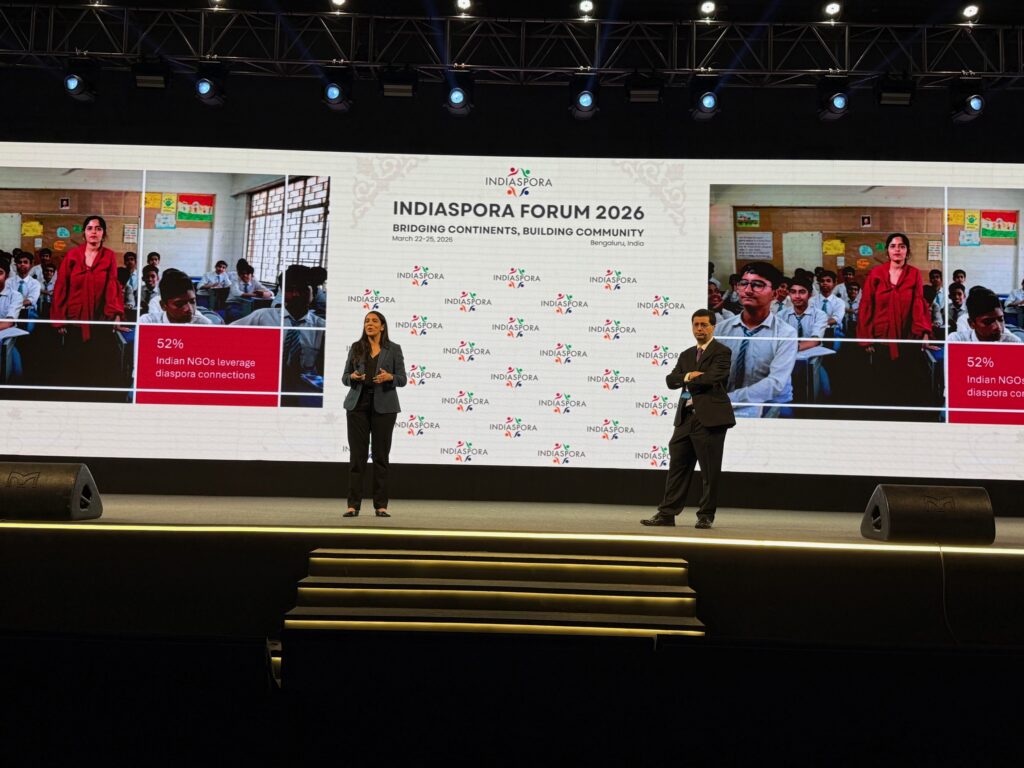
In the philanthropic space, participation remains particularly strong. “Our survey of NGOs showed that 60% of NGOs have raised funds from individual diaspora donors, and 52% of them have leveraged diaspora connections for institutional funding,” she added.
Beyond financial contributions, diaspora members also support the social sector through volunteering, advisory roles, and idea generation. Rajagopal cited an example shared by Lord Karan Bilimoria, founder of Cobra Beer in the United Kingdom, who proposed adapting the UK’s Teach First model during a UK-India roundtable discussion. This idea later contributed to the creation of Teach for India.
On cultural and societal impact, the report highlights the diaspora’s role as ambassadors, patrons, collaborators, and advocates across fields such as food, fashion, arts, and sports. Rajagopal pointed to the India Pride Project as a “powerful model” in this space.
“These are a group of diaspora volunteers globally who trace stolen artifacts, lobby international authorities, and have successfully facilitated the return of over 600 priceless artifacts back to the homeland,” she added.
The report also features perspectives from prominent global leaders, including Indra Nooyi, former Chairman and CEO of PepsiCo; Romesh Wadhwani, Chairman of the Wadhwani Foundation; and Vinod Khosla, Founder of Khosla Ventures, among others.
Related posts:
 ‘Indiaspora Forum for Good’ to Unite Global Indian Leaders for Actionable Solutions, Collaboration, and Innovation
 Indiaspora Forum 2026 Opens in Bengaluru with Focus on Philanthropy, Community Impact, and Cultural Celebration
 Indiaspora Founder MR Rangaswami Emphasizes “Force for Good” Vision at Forum 2026 in Bengaluru
 Indiaspora Forum 2026 in Bengaluru to Convene Global Leaders on AI, Climate, Geopolitics and Diaspora Impact