 Join WhatsApp Channel


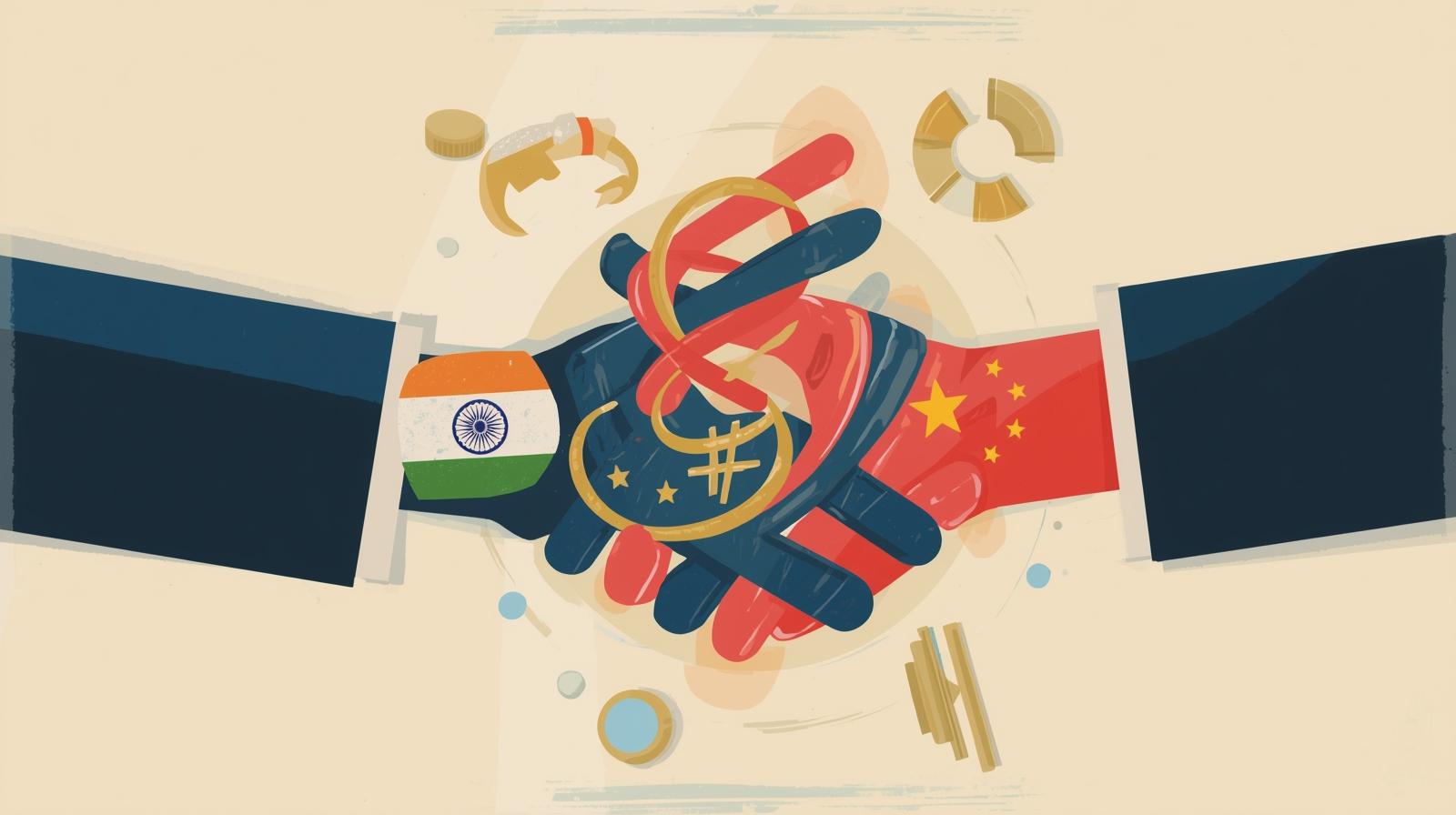
Nearly six years after India imposed sweeping curbs on investments from neighboring countries, the government has introduced a limited relaxation to its foreign direct investment (FDI) rules, offering modest relief to investors while leaving the broader regulatory framework largely intact.
The revised framework, announced on March 10, modifies restrictions introduced through Press Note 3 (PN3) in April 2020, which required prior government approval for all investments from countries sharing a land border with India. The rule primarily targeted Chinese capital and was introduced during the early months of the pandemic amid concerns that financially stressed Indian companies could become targets for opportunistic acquisitions.
Under the updated guidelines, non-controlling investments involving up to 10 percent beneficial ownership from investors in neighboring countries — including China, Bangladesh, Pakistan, Nepal, Bhutan, Myanmar and Afghanistan — will now be permitted through the automatic route, subject to sectoral caps and disclosure requirements.
Investments exceeding that threshold, or those involving sensitive sectors, will continue to require government scrutiny.
The new policy also introduces a time-bound approval window of around 60 days for larger investments in selected manufacturing sectors such as electronic components, capital goods and solar manufacturing. Officials say the move is aimed at reducing procedural uncertainty and accelerating investments linked to industrial supply chains.
Industry groups welcomed the move, particularly the introduction of timelines for approvals that had previously stretched for months.
Pankaj Mohindroo, chairman of the India Cellular and Electronics Association (ICEA), said the decision could improve the investment climate for electronics manufacturing.
“ICEA welcomes the Government’s decision to introduce greater clarity and timelines in the FDI approval process for investments from land bordering countries. The provision of a 60-day decision window is a step towards improving ease of doing business. This will further encourage greater domestic value addition in electronics supply chains manufacturing sector,” Mohindroo said.
He added that the reform would help companies move faster in forming technology partnerships and expanding production in India.
“This reform will help companies move faster in forming technology partnerships, expanding manufacturing in India and integrating with global value chains. Overall, this is a progressive policy measure that strengthens India’s position as a trusted and competitive destination for advanced manufacturing and global investment,” he said.
While the amendments introduce some procedural relief, analysts say they stop short of a broader overhaul of the controversial PN3 framework.
Press Note 3 was introduced in April 2020 when policymakers feared that pandemic-weakened Indian firms could become vulnerable to foreign takeovers. The immediate trigger was a disclosure showing that China’s central bank had increased its stake in HDFC Bank, sparking concerns in New Delhi about strategic investments.
Later that year, the military standoff between India and China in eastern Ladakh hardened the government’s stance toward Chinese economic engagement. Investment restrictions became part of a wider policy shift that included bans on dozens of Chinese mobile applications and tighter scrutiny of technology collaborations.
One of the most persistent complaints from investors has been the ambiguity surrounding “beneficial ownership”, a concept that determines who ultimately controls an investment.
The revised policy attempts to address this by introducing a clearer threshold — allowing investments with less than 10 percent ownership and no controlling rights to proceed automatically.
However, experts say tracing the true origin of capital remains difficult in an era when global funds operate through complex layers of offshore entities and pooled investment vehicles. Determining whether an investment ultimately originates from a neighboring country may still require extensive compliance checks.
India’s startup ecosystem has been among the sectors most affected by the earlier restrictions. Many venture capital funds have small Chinese limited partners, and even minimal exposure had previously forced startups to seek government approval for new funding rounds, sometimes delaying investments for months.
The new 10 percent threshold may provide limited breathing space, but analysts note that several experts had recommended a higher ceiling — closer to 25 percent — for non-controlling stakes in sectors already open to 100 percent foreign investment.
India’s screening system also continues to focus primarily on the geographic origin of capital rather than the strategic sensitivity of the assets being acquired. Most advanced economies instead review investments based on national security risks in sectors such as defense, telecommunications or critical infrastructure.
Trade researchers say the revised policy could still open some avenues for investment, particularly in manufacturing segments where India is seeking to deepen domestic production.
According to the Global Trade Research Initiative (GTRI), Chinese investment in India’s core manufacturing sector had been relatively limited even before the 2020 restrictions were introduced. The policy change therefore represents more of an opportunity to attract new manufacturing investment rather than a significant shift in existing capital flows.
However, the scale of investment that ultimately materializes will depend on broader structural factors, including logistics costs, electricity prices, regulatory efficiency and the development of local supply chains.
In many global markets, Chinese firms typically retain high-value manufacturing activities at home while exporting intermediate components for final assembly abroad. Analysts say a similar pattern could initially emerge in India, with assembly operations expanding faster than deeper technology-intensive manufacturing.
For now, the government’s policy adjustment appears designed to strike a balance — easing procedural bottlenecks for investors while maintaining a politically sensitive screening regime shaped by geopolitical tensions.
The changes clarify certain rules and introduce modest timelines, but the core structure of Press Note 3 — and India’s cautious approach to investment from neighboring countries — remains firmly in place.
Related posts:
 India Anchors South Asia’s FDI Stability Amid Global Investment Headwinds
 Dragon and Elephant’s Dance: China’s Consumer as India’s Next Big Opportunity
 Market Overview – One-Month and YTD Snapshot
 Indian American-led Micron Technology Invests $2.17 Billion in its Northern Virginia Expansion, Creating 340 Jobs
