Join WhatsApp Channel


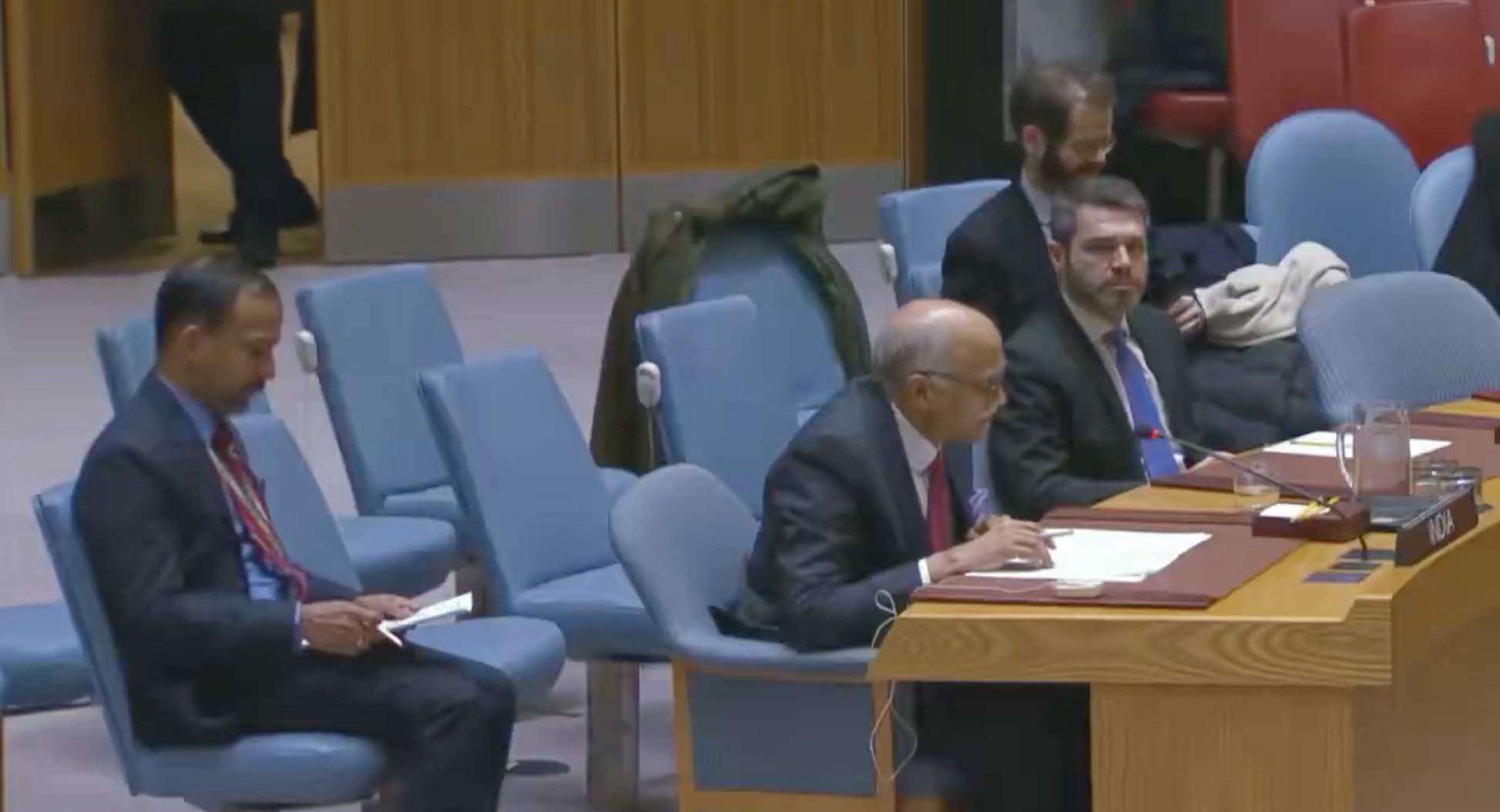
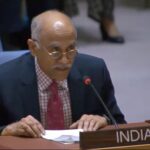
Permanent Representative of India to the United Nations, Ambassador Harish Parvathaneni, reaffirmed that India has consistently supported a “sovereign, independent, viable” Palestine, living side by side in “peace and security” with Israel within “secure and recognized borders,” which he said remains central to any lasting solution.
Speaking at the United Nations Security Council (UNSC) Open Debate on the Situation in the Middle East on January 28, 2026, Ambassador Harish noted, “In pursuit of its commitment, India became the first non-Arab country to recognize the state of Palestine in 1988. India has advocated that the means to achieve this end is through dialogue and diplomacy.”
At the outset of his address, the Ambassador expressed gratitude to Somalia for convening the quarterly Open Debate on the situation in the Middle East.
Ambassador Harish stated that India views the challenges facing the Middle East as “interconnected” and requiring “comprehensive, inclusive, and sustained diplomatic engagement and humanitarian support.”
“Guided by dialogue, diplomacy and the spirit of international cooperation, India stands ready to work with all partners to promote peace, stability, and humanitarian relief in the region,” he added.
Describing the debate as timely, he observed that several parts of the Middle East continue to face “protracted conflicts, political divisions and humanitarian distress.” These issues, he emphasized, are interlinked and have implications that extend beyond the region, affecting the broader landscape of international peace and security.
“India hopes that sustained dialogue and diplomacy achieve durable solutions that could positively impact the lives of the people and the security of the region,” Ambassador Harish added. “India takes note of recent progress with regard to implementation of UN Security Council Resolution 2803 to end the Gaza conflict. India also takes this opportunity to express appreciation to the United States in addressing this long-standing issue.”
Highlighting the scale of post-conflict needs, the Ambassador said that reconstruction and economic recovery in Gaza, along with the resumption of public services and humanitarian assistance, represent a “herculean task.” He called for “sustained support and commitment” from the international community to alleviate the suffering of the Palestinian people.
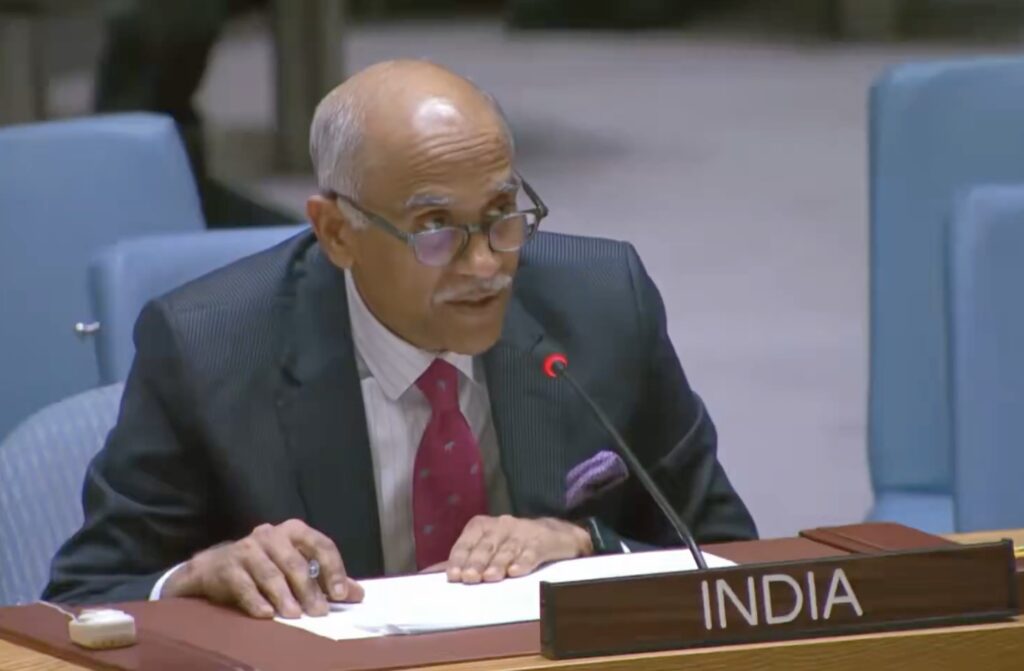
At the same time, he cautioned, “let us be clear that terrorism has no place in civilized societies and must be condemned in all its forms and manifestations.”
Ambassador Harish noted that while there have been incremental improvements in the humanitarian situation in Gaza, harsh winter conditions and the extent of destruction continue to pose serious challenges. Shortages of food and fuel, limited access to health and education facilities, and inadequate hygiene and sanitation, he said, affect all sections of society, particularly women and children.
He also reiterated India’s call for safe humanitarian access and urged member states to support the aspirations of the Palestinian people to lead normal lives. He added that the scale of reconstruction required in Gaza is “massive.”
Citing estimates from the United Nations Office for Project Services, the Ambassador noted that Gaza is burdened with nearly 60 million tons of rubble, much of which contains “harmful” material. As a result, he said, traditional reconstruction models would face limitations, underscoring the need for innovative approaches with technological rigor.
“India has sought to contribute meaningfully to humanitarian relief efforts, particularly bilaterally as also in partnership with the UN. Over the course of the last two years, we supplied nearly 135 metric tons of medicines and supplies,” Ambassador Harish said.
He added that Indian projects at various stages of implementation amount to approximately $40 million, bringing India’s cumulative support to the Palestinian people to more than $170 million.
Turning to Syria, Ambassador Harish emphasized that political, security, and humanitarian dimensions must be addressed in an integrated manner.
“We support a Syrian-led and Syrian-owned political process that meets the legitimate aspirations of the Syrian people, in line with UN Security Council Resolution 2254,” he said. He added, “India remains fully committed to assisting the friendly people of Syria through provision of humanitarian support and supplies, and capacity building. As the third largest contributor to UNDOF, Indian peacekeepers have demonstrated the will and determination in carrying out its mandate.”
On Lebanon, the Ambassador said India remains committed to the country’s “peace, stability and development,” noting that more than 900 Indian Army personnel have been deployed with UNIFIL since 1998.
“We have emphasized that safety and security of peacekeepers are non-negotiable. The Blue Helmets cannot become targets or victims,” he said, adding that capacity building, technical assistance, and support for the Lebanese Armed Forces must be strengthened so they can effectively assume enhanced responsibilities by the end of the year.
Ambassador Harish also highlighted India’s strong “bilateral relations and friendship” with the people of Yemen. Calling for support for unity and stability in the country, he said, “We would like to emphasize the focus on safety of Indian nationals in Yemen as also the need for stepping up humanitarian operations to assist the Yemeni people.”
He noted that India’s assistance, including medicines, medical equipment, vaccines, food supplies, capacity building initiatives, and educational scholarships, has helped ease the hardships faced by the Yemeni population.
Related posts:
 U.N. Backs Trump’s Gaza Plan, Marking an Unusual Convergence After Years of Mutual Distrust
 India Reaffirms Support for Two-State Solution at High-Level UN Conference
 At UN Security Council, India Affirms Jammu & Kashmir, Ladakh as Integral Parts of India, Criticizes Pakistan’s Conduct
 India Reaffirms Support for Palestine, Urges Ceasefire and Humanitarian Access in Gaza