Join WhatsApp Channel


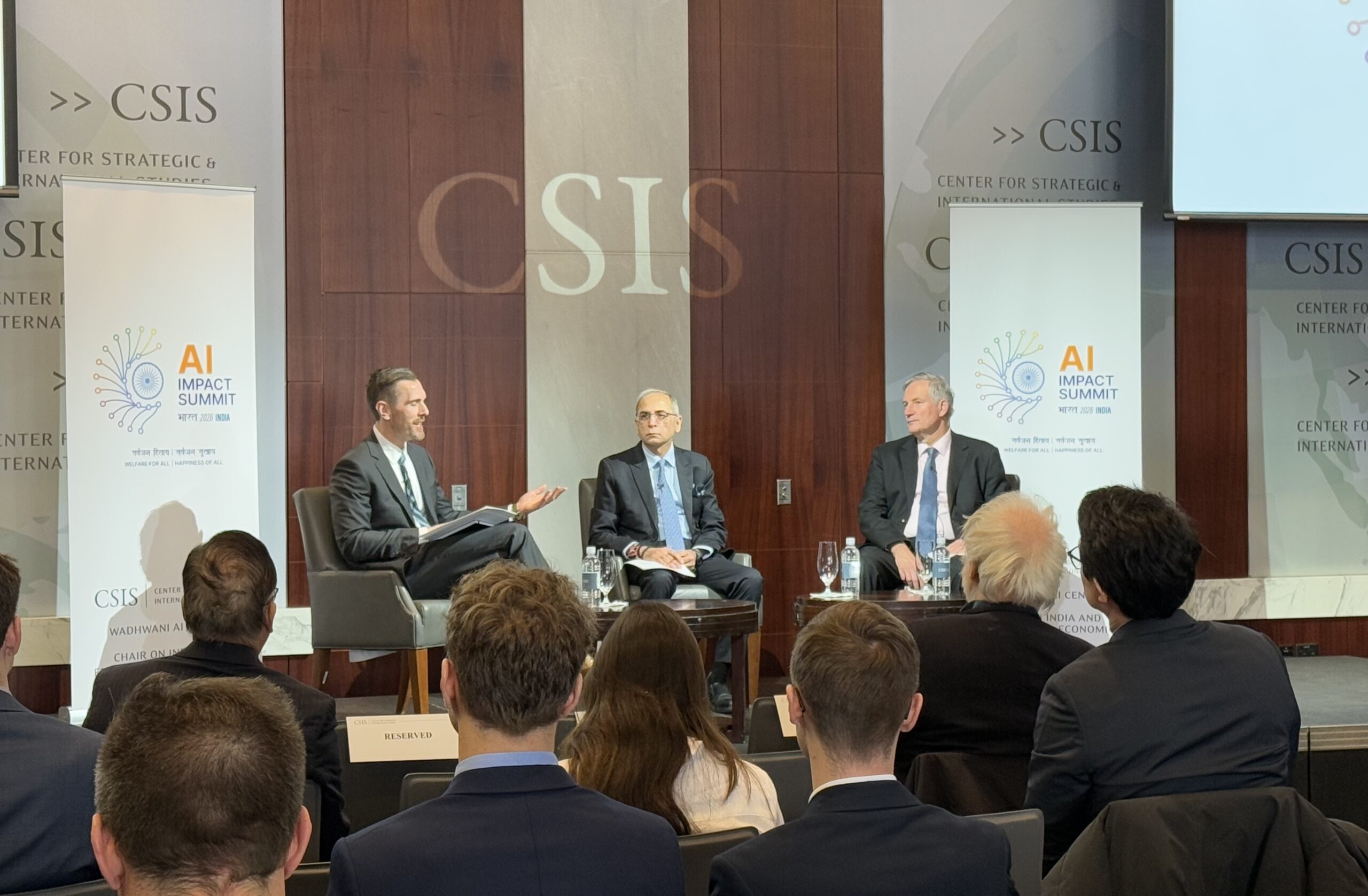
Indian Ambassador to the United States, Vinay Kwatra, has outlined that the India–AI Impact Summit 2026 is anchored in the principles of “People, Planet, and Progress,” noting that this will be the first time the Summit is being hosted in the Global South.
The Summit will be held from February 16 to 20, 2026, at Bharat Mandapam in New Delhi and will focus on “policy, research, industry, and public engagement.”
“It’s therefore of great consequence that it captures the significance that the technology per se and AI in particular, holds for the countries of the Global South and for the rest of the world,” Ambassador Kwatra said while participating in a panel discussion titled “Reflections on Paris and Prospects for New Delhi” on January 30, 2026, hosted by the Center for Strategic and International Studies (CSIS) in Washington DC.
The discussion also featured the Ambassador of France to the United States, Laurent Bili, who highlighted the growing France-India partnership in artificial intelligence and their joint initiatives in the sector. The session was moderated by Gregory C. Allen, Senior Adviser at the Wadhwani AI Center at the CSIS. John J. Hamre, CSIS President and CEO, welcomed participants to the event.
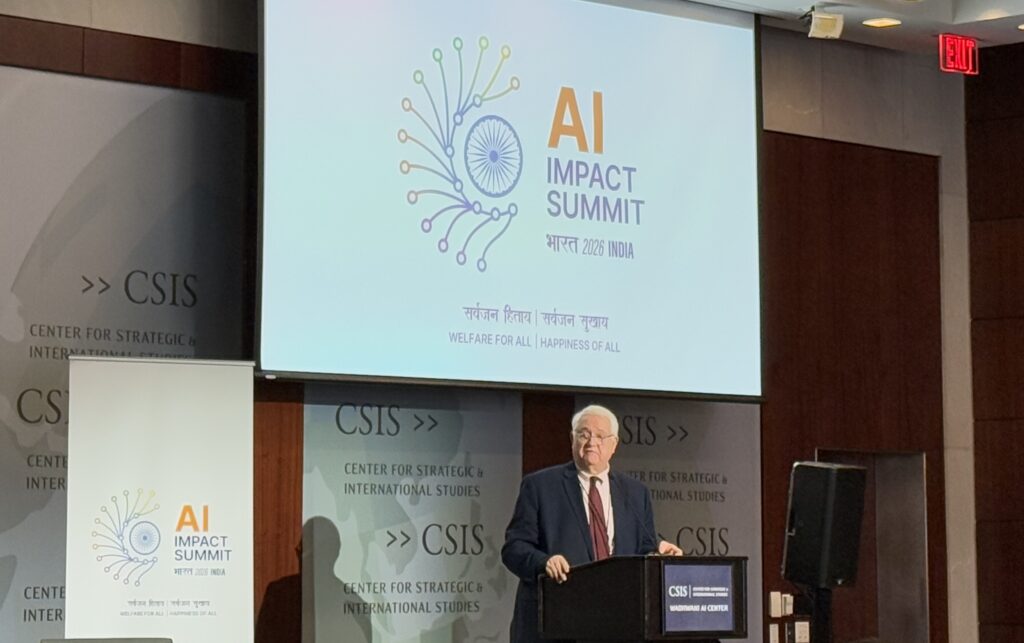
Ambassador Kwatra said that the summit is being anchored on three major platforms, noting “We call it three sutras.” He explained that the first anchor or sutra of the Summit is “’people” centered on the “cultural diversity, dignity of people, and the access of people to the technology are ensured.”
He said the second pillar focuses on the “planet,” noting “The idea is that any technology is not centered just on a particular geography but is available for the progress of the planet.” The third element, is “progress,” he said adding “Which must lead to economic and technological progress and the prosperity of society.”
The Ambassador emphasized Prime Minister Narendra Modi’s vision of the “need to democratize AI,” and the importance of ensuring that artificial intelligence is easily available and accessible to everyone.
Ambassador Kwatra also shared details about the scale and scope of the Summit, stating that India expects more than 400 exhibitors from over 30 countries. The exhibition component of the Summit will be organized across 10 specific domains, showcasing capabilities in areas such as agriculture, healthcare, governance, and various industry segments.
He further emphasized that India is aiming to conclude the Summit with a comprehensive declaration that reflects all three anchors, people, planet, and progress. According to him, a key factor driving innovation and its rapid spread in India is that Indian society is generally comfortable with adopting new technologies and integrating them into everyday life. He noted that inclusivity and widespread adoption are central to India’s approach to technology and innovation.
Ambassador Bili underscored that France and India share a “very special partnership” that spans decades, noting that in recent months the relationship has been particularly focused on artificial intelligence. He recalled that Prime Minister Narendra Modi and French President Emmanuel Macron co-hosted the AI Action Summit in Paris.
Following that summit, the French Ambassador said, both countries are now preparing for the upcoming Delhi AI Impact Summit. President Macron is expected to travel to New Delhi with a large delegation that will include several ministers, researchers, and private sector representatives. France, he added, will organize a number of side events in collaboration with India, with a strong emphasis on implementation outcomes from the Paris Action Summit, particularly in areas such as sustainable AI and public-interest AI.
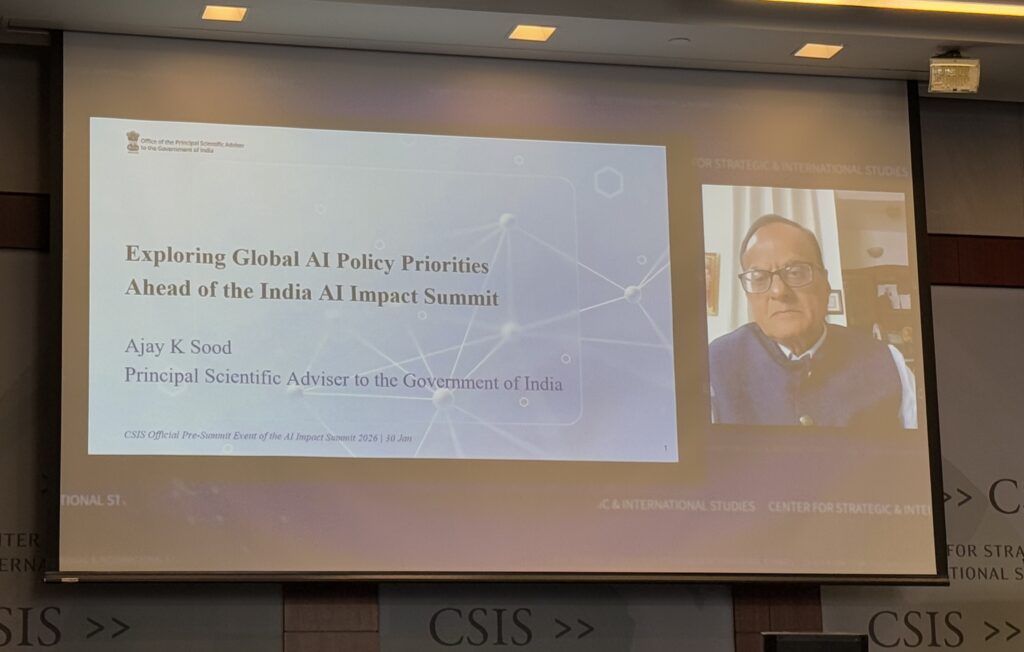
Principal Scientific Adviser to the Government of India, Ajay Sood, also participated in the discussion and highlighted the pace at which artificial intelligence is advancing. He noted that AI is growing “rapidly,” and is no longer limited to isolated enterprise use cases. Instead, it has expanded across sectors including healthcare, financial services, and mobility, and now serves as a broader digital backbone for modern economies.
Sood explained that AI capability is increasingly linked with competitiveness in areas such as “computer, data access, advanced semiconductors, cyber resilience, knowledge infrastructure and critical supply chains.” At the same time, he pointed out that the infrastructure footprint of AI is rising sharply. According to estimates by the International Energy Agency, data centers consumed 415 terawatt-hours of electricity in 2024, accounting for nearly 1.5 percent of global electricity consumption. This demand is projected to increase to 945 terawatt-hours by 2030.
“These trends make clear that AI governance is no longer yet another niche policy area,” Sood said, adding that it has become a core element of economic strategy, public trust, and sustainable development.
The Summit, he noted, aims to democratize access to AI resources and ensure equitable distribution across geographies and industries. It places strong emphasis on global governance, guidelines, standards, sustainability, and safety in AI development. As a historic event hosted in the Global South, the Summit seeks to broaden participation and build capacity in artificial intelligence, particularly among developing nations.
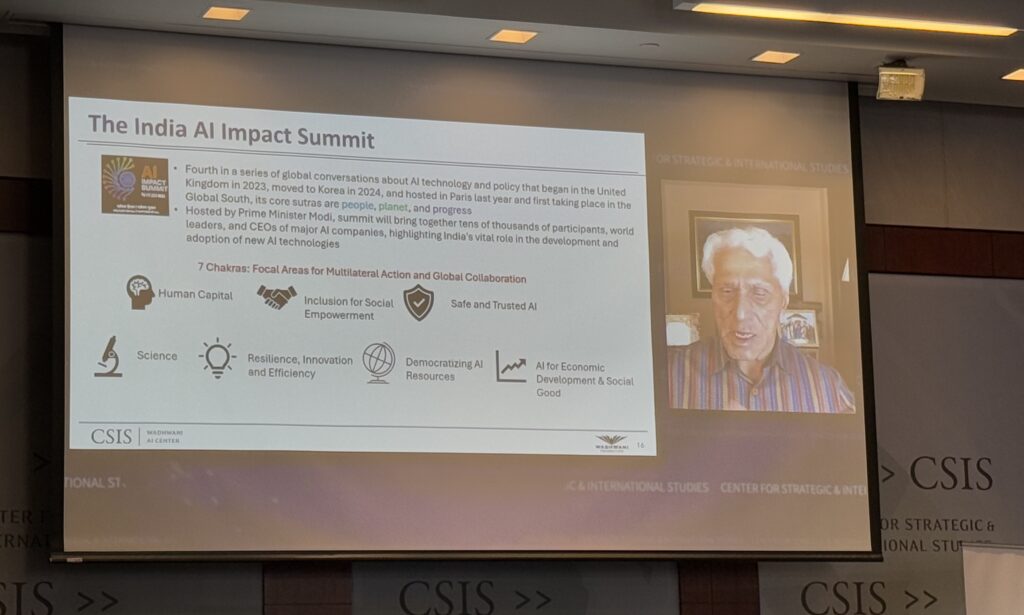
As AI increasingly becomes a foundational layer for economies and societies, Sood explained that the measure of success for the Summit will not be technological capability alone. Instead, it will be judged on whether those capabilities translate into widely shared public value. The priority, he said, is to shape a future in which AI is “developed and deployed” in an “equitable, safe and trustworthy way,” and where access to core resources and opportunities is not restricted to a small number of countries or industries. India’s approach, he added, is grounded in the belief that “innovation and equitable” benefit must move forward together.
The event also featured a keynote address titled “The Strategic Policy Response to Explosive AI Growth,” delivered by Founder and Chairman of SymphonyAI and the Wadhwani Foundation, Romesh Wadhwani.
Wadhwani observed that artificial intelligence is experiencing “explosive” growth and suggested that many people may underestimate the scale of change expected over the next five years. He noted that if this level of disruptive technological change unfolds over a five-year period, compared to earlier technology revolutions that took 20, 30, or even 50 years, the resulting impact on society, business, and government would be unprecedented.
“It’s not something that we have seen before, and of course, it goes for a strategic policy response,” Wadhwani said, adding that he would focus on his perspectives regarding strategic policy responses across four major powers, the United States, China, Europe, and India. He clarified that these views represented his personal impressions and forecasts, “and not of any governments.”
Discussing the United States, Wadhwani noted its focus on global dominance in AI technology. “So, in the US, AI sits at the center of national security and geopolitics,” he said.
Turning to Europe, he described it as a region characterized by regulatory reform preceding innovation. He pointed out that the AI Act was passed more than a year ago, with its provisions scheduled to take effect in August this year. While acknowledging that the high regulatory burden could bring certain benefits for European citizens, he suggested it may also slow innovation compared to other regions.
In China, Wadhwani said the emphasis is on technological competitiveness combined with political control. He characterized China’s approach to AI as one of “political control and mandatory adoption.”
India’s focus, by contrast, is centered on “economic growth,” according to Wadhwani. “So I think of India as the land of practical innovation using AI,” he said.
He predicted large-scale national deployment of AI across government and enterprise, driven by a strong emphasis on “innovation and reskilling,” alongside relatively light regulation. He noted that there are currently no major laws in India that significantly slow practical innovation in artificial intelligence.
Commenting on the evolution of AI tools, Wadhwani said, “I must tell you that what was breakthrough technology three years ago. Now seems kind of quaint.” He noted that while ChatGPT entered public vocabulary just three years ago and is now used by billions, the world is rapidly transitioning toward AI agents.
According to Wadhwani, AI agents understand their “context and reasons,” enabling them to “plans, executes, learns, and improves.” He said these agents are increasingly comparable to human capabilities.
“There are obviously very large similarities between what an AI agent can do and what a human being can do, and a full function AI agent can augment, replace, or surpass human workers,” he said. “We will be in this journey from augmentation to surpassing over the next five years.”
Declaring that the “era of AI agents” has arrived, Wadhwani noted that in 2025 there were fewer than five million AI agents, primarily designed to assist and augment human workers. Over the next five years, he projected a compound annual growth rate of more than 200 percent in both the number and capabilities of AI agents.
“AI agents this year will begin to collaborate and execute workflows autonomously, meaning no human intervention required,” he said. He added that these agents will increasingly replace humans in many tasks, and that within two to three years, artificial general intelligence for enterprise applications could begin to emerge.
Looking further ahead, Wadhwani suggested that AI agents could eventually operate major business processes autonomously. Within five years, he estimated that between one billion and five billion artificial general intelligence agents could manage entire business enterprises autonomously, with possible exceptions including boards of directors, chief executive officers, and certain senior management roles.
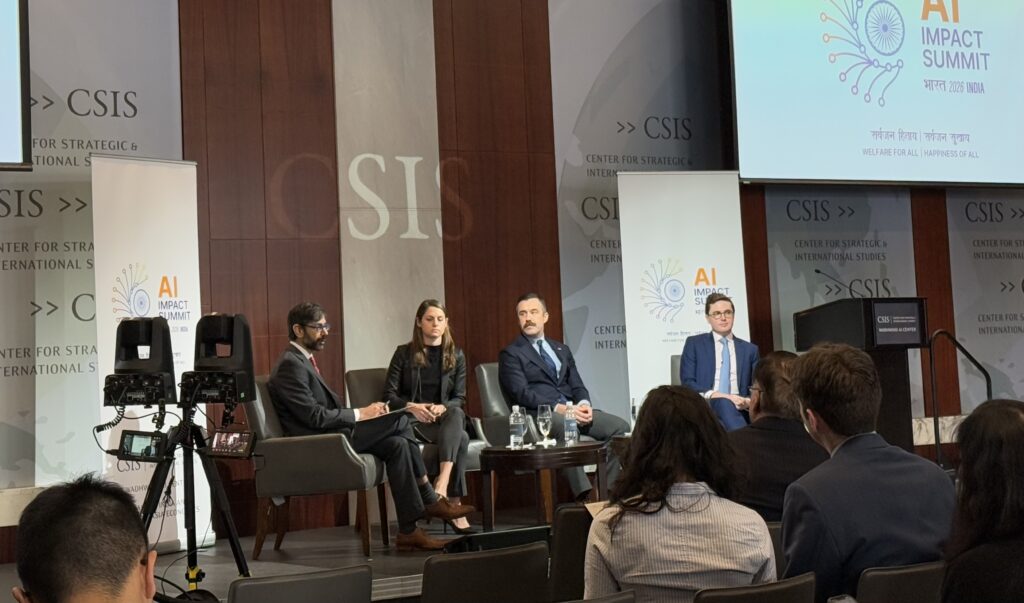
The program also included a second panel discussion titled “Unpacking the Global Challenges and Opportunities for AI Governance,” featuring Dean Ball, Senior Fellow at the Foundation for American Innovation; Russ Headlee, Senior Bureau Official at the U.S. Department of State’s Bureau of Cyberspace and Digital Policy; and Shana Mansbach, Vice President of Strategy and Communications at Fathom. The session was moderated by Aalok Mehta, Director of the Wadhwani AI Center at CSIS.
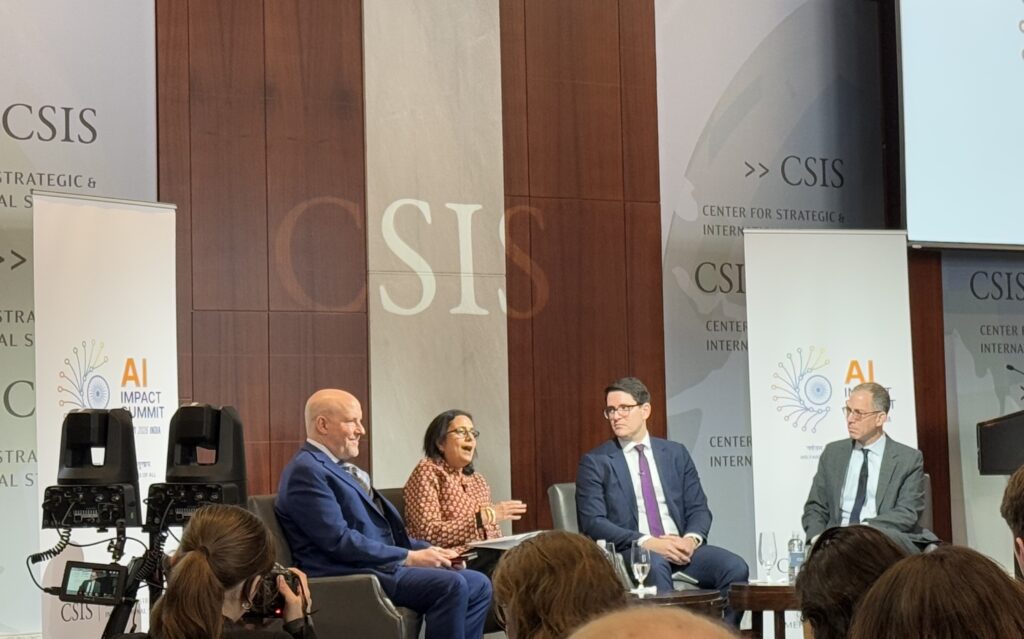
A third panel discussion, “Industry Perspectives on AI Innovation in India,” featured speakers including Khalil Gharbieh, Senior Director of Trade Policy at Microsoft; Poornima Shenoy, U.S. Representative of the Federation of Indian Chambers of Commerce and Industry; and David Weller, Senior Director of Emerging Technology, Competitiveness and Sustainability Policy at Google. The discussion was moderated by Rick Rossow, Senior Adviser and Chair in India and Emerging Asia Economics at CSIS.
Related posts:
 India and France Host United Nations Event to Set Stage for AI Impact Summit 2026 in New Delhi
 10th TiE Global Summit Set to Kick Off in Jaipur with Focus on Technology, Growth, and Sustainability
 Agentic AI and the Future of DPI: Governing Autonomy in Democracies
 Technology Trends To Look Out Between US and India In 2025