Join WhatsApp Channel

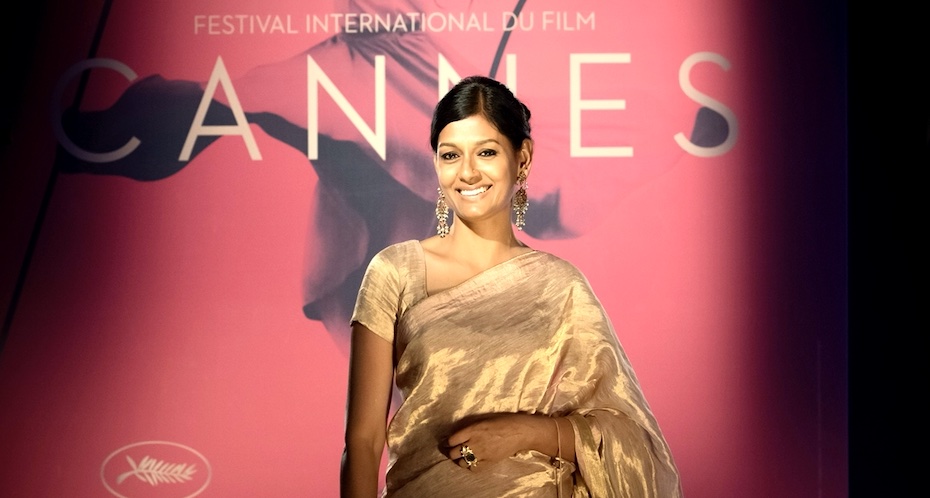
Few artists in Indian cinema have navigated performance, direction, and advocacy with the clarity of purpose that defines Nandita Das. With a body of work spanning 40 films in 10 languages, and three critically acclaimed feature films as a director — Firaaq, Manto, and Zwigato — Das has built a career that refuses to separate art from conscience.
Her last two directorial ventures were produced under Nandita Das Initiatives, the creative platform she founded in 2016 to nurture independent storytelling. But to view her journey merely through her filmography would be to miss the larger story. Das is not simply making films; she is attempting to reshape the ecosystem that sustains them.
In this exclusive interview, with South Asian Herald actor and filmmaker Das speaks about cinema, her films, the diaspora, and her experiences in making movies.
Independent Film as Belief
For Das, independent cinema is not defined by budget, but by conviction.
“Independent film is a way of thinking, producing, and trusting stories that matter. Every independent film begins with belief, long before it begins with money.”
That belief has guided her across languages and geographies, from mainstream productions to deeply personal narratives. It also underpins her insistence that the challenges facing independent cinema are structural, not artistic.
“The problem is not that independent films lack audiences, but that audiences lack access to independent films. Funding independent cinema is not charity; it is an investment in cultural memory, diversity of thought, and cinematic language.”
Her argument reframes the conversation. Independent films are not niche indulgences -they are repositories of identity, dissent, and imagination. Without support, the cultural record becomes narrower, less daring, less honest.
Beyond Formulas and Fear
Das has long resisted the assumption that only commercially proven formulas deserve investment.
“Independent films don’t fail because they are small; they fail because the system around them has no space for them to succeed. If we only fund what already works, we ensure that nothing new ever will.”
It is a critique aimed not at audiences but at industry inertia.
“Independent cinema survives on courage of filmmakers, producers, and funders willing to look beyond formulas. Markets can measure returns, but they cannot measure impact.”
Her call is for a recalibration of value -one that acknowledges that some of the most influential films in history were once considered risky.
“India has never lacked storytelling talent. What it lacks is a structure that trusts and supports that talent, financially, creatively, and structurally.”
In this, her work as a filmmaker converges with her advocacy: the need to build systems that enable, rather than merely applaud, creativity.
Building an Ecosystem, Not Just Films
Through Nandita Das Initiatives, she is putting philosophy into practice.
“I would like to build a fund for an ecosystem supporting independent filmmakers who have impactful stories to tell. From any region or religion, gender or caste, to receive quality mentorship and infrastructure. So that important stories have an opportunity to become significant films.”
Her ambition is intergenerational and cumulative.
“I want like-minded people – writers, filmmakers, funders, cast and crew to come together to create a cultural ecosystem that is truly independent, nurturing, and financially sustainable.”
This vision recognizes that sustainability in cinema requires circulation -of resources, mentorship, and opportunity.
“Independent cinema carries a country’s creative identity to the world stage. It deserves a home-grown support structure. I don’t think we need to choose between a return and a conscience.”
For Das, financial success and artistic integrity are not mutually exclusive; they require strategy and imagination.
“The goal is to build a roster of films that India can be proud of years from now. Time is the true judge of art. And financial success is possible if it is strategized well and these two things do not have to be mutually exclusive.”
Cinema as Empathy
Beyond industry reform, Das remains deeply invested in what cinema does to us as viewers. With a Master’s degree in Social Work and a lifelong engagement with human rights and social justice, she views storytelling as transformative.
“Art humanizes the ‘other’. It allows us to recognize ourselves in someone else and becomes a catalyst for empathy. And empathy is transformative.”
She believes that art gives tangible form to universal human experience.
“That is where every real change begins. It gives form to our dreams and fears, to emotions and predicaments that are deeply personal yet universally experienced.”
Films, she argues, work subtly yet powerfully.
“Films subconsciously challenge our biases and prejudices, create awareness, and nudge us towards action. It has the power to provoke both personal reflection and social change.”
Her directorial work -from the communal tensions explored in Firaaq to the literary and political complexities of Manto and the gig-economy struggles depicted in Zwigato -reflects this belief in cinema as both mirror and catalyst.
The Diaspora as Cultural Bridge
Das also sees a powerful role for Indians living beyond India’s borders. In an increasingly interconnected world, she believes the diaspora can be a catalyst for broadening representation and deepening global understanding.
“A committed Indian diaspora can help give voice to diverse stories and reshape how India is seen globally. Our stories need to be rooted in our context but with universal resonance that goes beyond borders.”
For her, this is not about packaging India for global consumption, but about authenticity. Stories grounded in local realities -linguistic, social, and political -can still travel when they tap into universal emotions. The diaspora, with its dual vantage point, is uniquely positioned to amplify these narratives, create cross-cultural dialogue, and challenge monolithic portrayals of India on the world stage.
Global Bridges, Local Stories
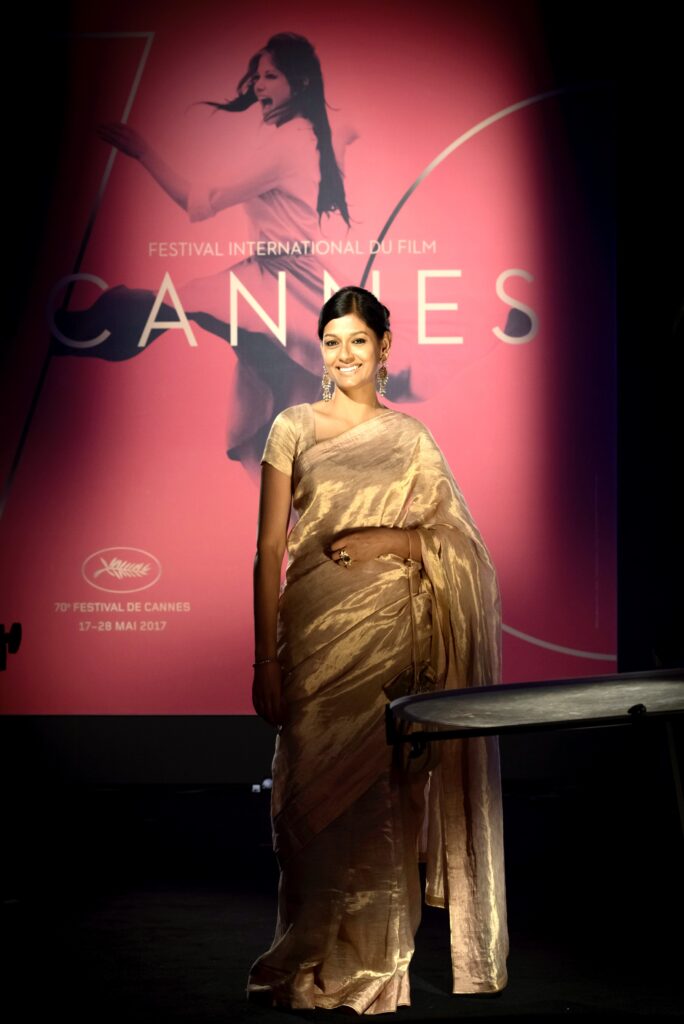
Das’s global presence reinforces her stature as a cultural ambassador. She has served twice on the jury of the Cannes Film Festival, among other prestigious festivals, and in 2011 was conferred the Knight of the Order of Arts and Letters by the French Government. She became the first Indian inducted into the Hall of Fame at the International Women’s Forum in Washington DC and is a 2014 World Yale Fellow.
Yet she resists over-romanticizing festival validation.
“As an actor, filmmaker, and juror, my experience at festivals, such as Cannes, has shaped my understanding of cinema and its impact. But they are neither the ultimate yardstick nor something to be dismissed; they are simply another bridge between films and audiences. They create momentum that allows a film to be released and seen in India.”
Festivals, in her view, are connectors -not arbiters of worth.
Acting and Directing: Two Languages of Expression
For Das, she concluded by highlighting that performance and direction are not competing pursuits but complementary ones.
“I have never seen acting or directing as a career, but as a means of communication. It has never been an either–or choice; they are simply different ways of engaging with stories.”
Directing, however, offers a particular intensity.
“Directing is immersive, demanding, and deeply fulfilling—it allows me to tell stories I feel need to be told.”
In that statement lies the essence of her journey. Whether in front of the camera, behind it, or advocating for systemic change, Das has consistently chosen stories that interrogate, illuminate, and endure.
At a time when cinema often chases immediacy, she is playing a longer game -one measured not just in box-office numbers, but in empathy generated, conversations sparked, and futures enabled.
Related posts:
 US based Indian Film-maker Sumathy Ram Earns Acclaim at the 2025 Angel Film Awards in Monaco
 “Queenissima” Shines at Art Basel 2025 With Bold Eco-Fashion and Wearable Art Movement
 Opinion: Regional Cinema Cannot Thrive Through Coercion and Quotas
 From a 100 to a 600! 20 Interesting Facts About the 100-Crore Club