 Join WhatsApp Channel


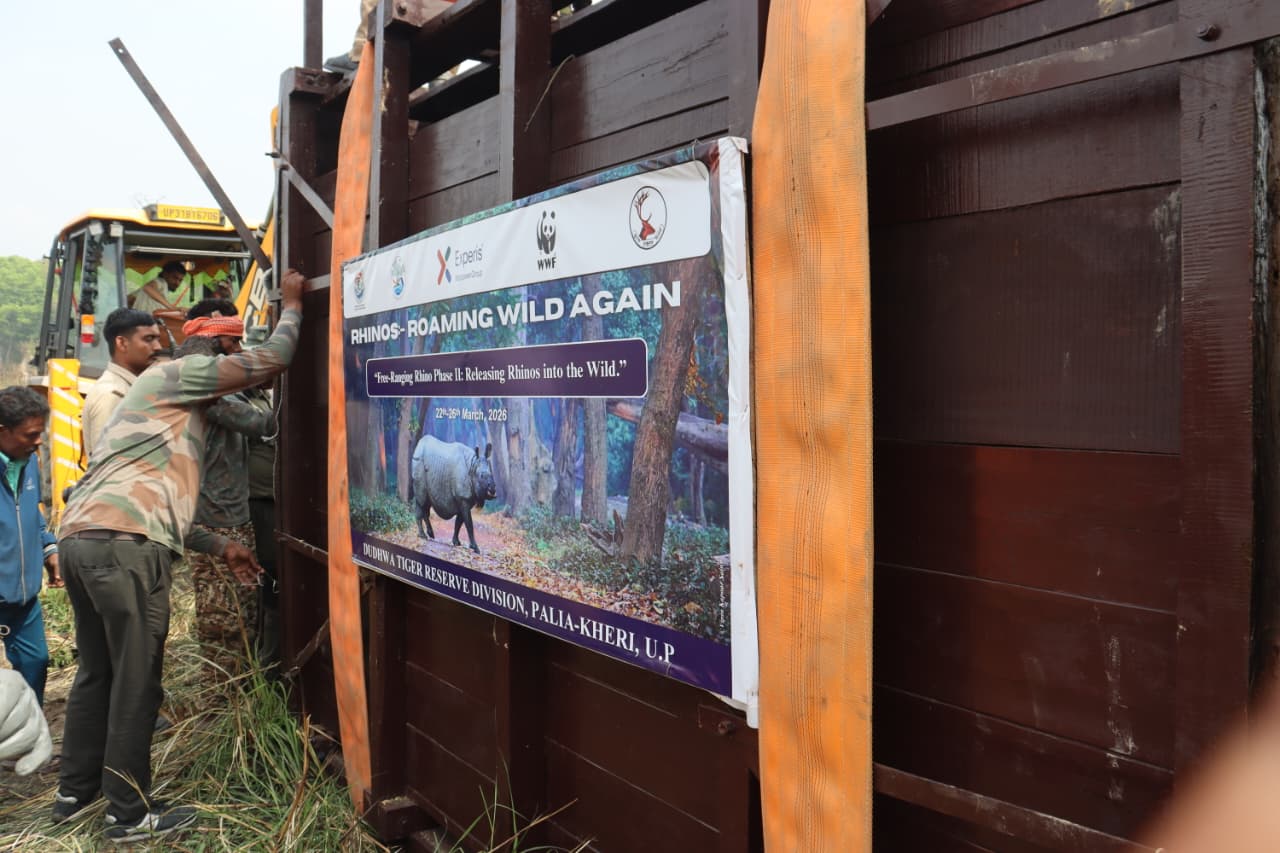
In a carefully choreographed operation spanning two days, conservation authorities released four greater one-horned rhinos into the wilds of Dudhwa Tiger Reserve, marking a significant milestone in efforts to rebuild the species’ presence in India’s Terai belt.
The translocation, carried out between March 23 and 24, saw the animals—one male and three females aged between 15 and 25—moved out of a 27-square kilometer fenced rehabilitation zone and into a natural grassland habitat within the reserve’s core. With their release, the number of free-ranging rhinos in Dudhwa has doubled to eight, lending fresh momentum to a long-running conservation programme aimed at restoring ecological balance in the region.
The operation, led by the Uttar Pradesh Forest Department with logistical and scientific support from WWF-India, involved a complex mix of veterinary precision and field coordination. Teams of wildlife experts tranquilized the animals before fitting them with radio collars, allowing for continuous post-release monitoring. Each rhino underwent health checks before being guided into its new habitat.
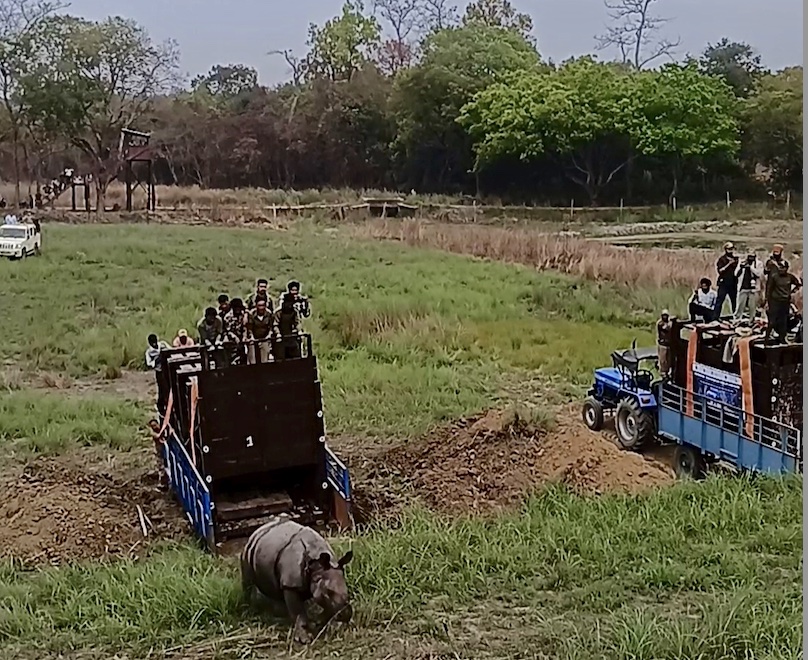
Officials described the exercise as both technically demanding and ecologically significant. “The successful relocation is a giant leap for rhino conservation,” said Dr H. Rajamohan, Field Director of Dudhwa Tiger Reserve. “After decades of sustained effort, the vision of restoring rhinos to the Terai landscape is beginning to translate into visible outcomes.
The greater one-horned rhinoceros, once widespread across the floodplains of northern India and Nepal, had nearly vanished from the Terai due to hunting and habitat loss. Dudhwa’s reintroduction programme, initiated decades ago, has relied on a phased approach—first stabilizing animals within protected enclosures before gradually releasing them into the wild.
The latest move builds on earlier releases in November 2024 and March 2025, when four rhinos were similarly reintroduced. Forest officials say early monitoring data from those cohorts has been encouraging, with the animals adapting well to the terrain, foraging patterns, and seasonal changes.
Conservationists argue that the significance of the effort extends beyond a single species. “A viable population of free-ranging rhinos strengthens the entire Terai Arc Landscape,” said Dr Dipankar Ghose of WWF-India. “Rhinos are ecological engineers—they regulate grassland structure through grazing, preventing invasive or unpalatable species from taking over.”
The Terai Arc, a mosaic of grasslands and forests stretching along the Himalayan foothills, is among the most biologically productive regions in South Asia. Experts say the return of large herbivores like rhinos is critical to maintaining this productivity, supporting not just biodiversity but also ecosystem services such as water retention and soil health.
To ensure the animals’ survival, authorities have established a dedicated monitoring system within the reserve. A control room equipped to track VHF and satellite signals now follows the movements of each collared rhino, while field teams remain on alert to respond to any signs of distress or conflict.
For now, the focus is on adaptation—how the newly released animals navigate their expanded territory, interact with existing wildlife, and establish home ranges. If the early signs hold, officials say, Dudhwa could emerge as a model for grassland restoration and species recovery in India.
What began as an experiment in rewilding is, slowly but steadily, taking the shape of a broader ecological revival—one that hinges on the return of a species long absent from these plains.
Related posts:
 Five Cubs, One Mother, and a Nation’s Hope: India’s Cheetah Comeback Grows at Kuno
 Abhinav Bindra Welcomes Lionel Messi’s India Visit, Urges Focus on Grassroots Systems Over Spectacle
 City of Brampton Breaks Ground on Cassie Campbell Field Hockey and Multisport Training Dome
 India Reports Rising Forest Cover, but Experts Warn Gains May Mask Degradation
