 Join WhatsApp Channel


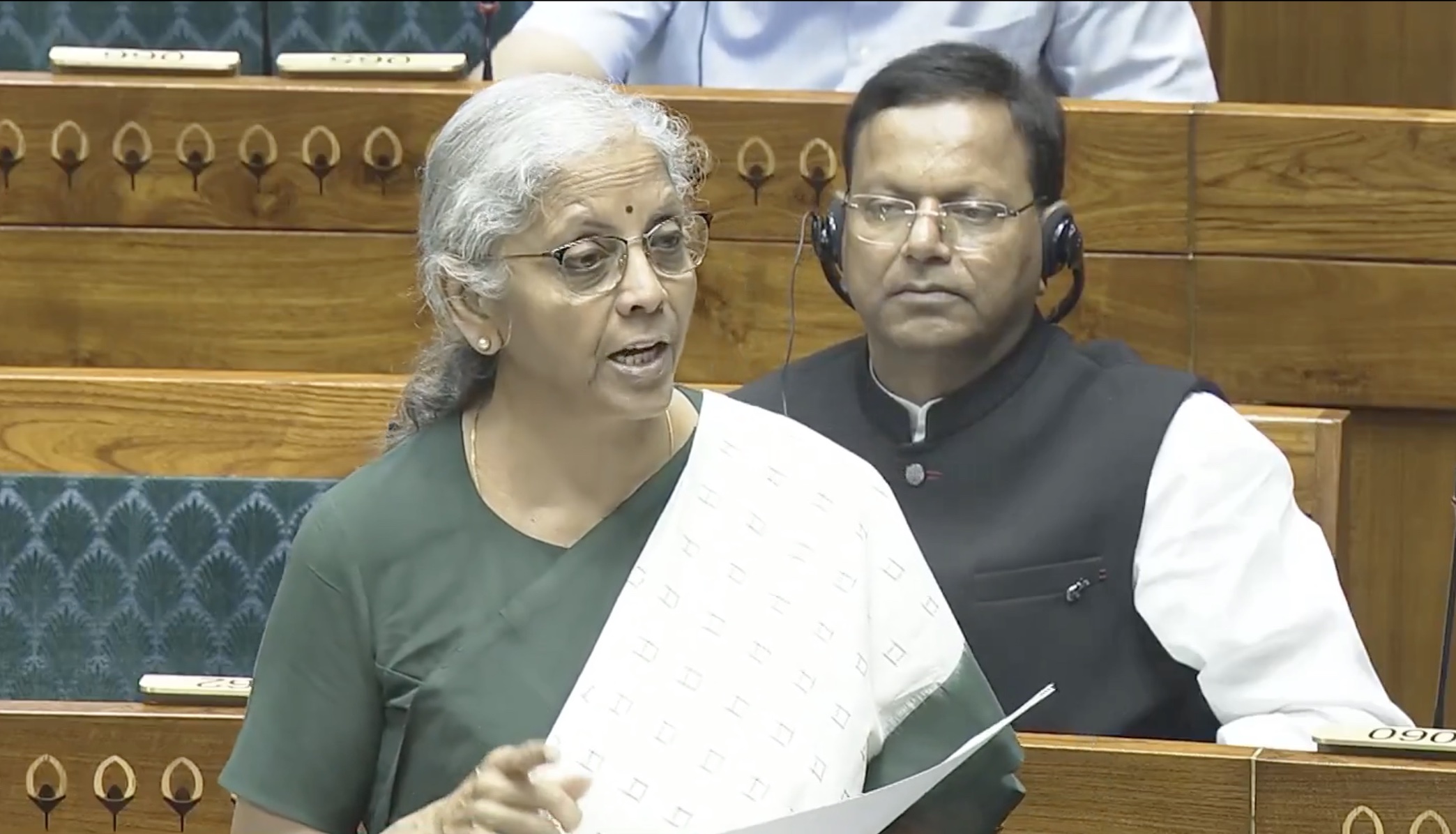
The Lok Sabha on Wednesday passed the Finance Bill, 2026, marking a significant recalibration of India’s direct tax framework, with far-reaching implications for capital gains taxation, shareholder returns, and investor behavior.
Replying to a marathon debate in the House, Finance Minister Nirmala Sitharaman framed the legislation as part of a broader shift toward “trust-based taxation,” stressing that reforms are now driven by “conviction, clarity, confidence and commitment” rather than crisis.
While the government positioned the Bill as easing compliance and improving the investment climate, tax experts say its most consequential impact may lie in how capital gains—particularly from share buybacks—are taxed going forward.
Capital gains regime reshaped through buyback taxation
At the heart of the changes is a restructuring of how buyback proceeds are taxed, effectively shifting the burden more decisively onto shareholders and altering the relative attractiveness of capital gains versus dividend income.
Sandeepp Jhunjhunwala, M&A Tax Partner at Nangia Global Advisors, said the introduction of a flat 12% surcharge on capital gains arising from buybacks marks a clear break from the earlier slab-based surcharge system.
“The move to a uniform 12% surcharge increases the effective tax cost for a large segment of individual investors, especially those in lower surcharge brackets earlier. This makes buybacks a relatively less efficient route for cash extraction compared to dividends,” Jhunjhunwala said.
Under the previous regime, surcharge rates varied depending on income thresholds—ranging from nil to 10% for individuals earning up to ₹1 crore (about $120,000). The new flat rate standardises the levy but raises the burden for many mid-tier investors.
Analysts note that the change could influence corporate payout strategies, with companies potentially rethinking buybacks in favour of dividend distributions, particularly in sectors where retail shareholding is significant.
However, the impact is not uniform across all investor classes.
“For high-value buybacks where gains exceed ₹1 crore (roughly $120,000), the earlier surcharge was already 15%. In such cases, the new framework actually lowers the surcharge to 12%, marginally reducing the tax burden,” Jhunjhunwala added.
Corporate investors face higher effective tax burden
The changes are also expected to affect corporate shareholders, especially those in lower taxable income brackets.
Jhunjhunwala pointed out that companies with taxable income below ₹1 crore, which previously faced no surcharge, and those earning between ₹1 crore and ₹10 crore (approximately $120,000 to $1.2 million), earlier subject to a 7% surcharge, will now see an increase in effective taxation due to the flat 12% rate.
“This shift raises the cost of buybacks for corporate investors as well, potentially distorting capital allocation decisions and influencing how companies return surplus cash,” he said.
Clarity on surcharge cap welcomed by industry
Amit Maheshwari, Managing Partner at AKM Global, said the government’s clarification on capping surcharge at 12% provides much-needed certainty, particularly for high-income taxpayers and promoters.
“The Finance Bill 2026 shifts buyback taxation squarely to the shareholder level, and the introduction of a capped surcharge brings clarity. In some cases, especially for high-income taxpayers, this could even reduce the overall tax burden compared to earlier ambiguity,” Maheshwari noted.
He added that the reform signals a broader intent to rationalize capital gains taxation while aligning it with evolving corporate payout structures.
Wider tax philosophy: fewer disputes, more compliance
Beyond capital gains, the Bill introduces a series of procedural and retrospective amendments aimed at reducing litigation—an area long seen as a drag on India’s tax system.
A key provision validates electronically issued tax notices and approvals retrospectively, even if they lack certain procedural elements such as digital signatures or detailed reasoning.
Jhunjhunwala described this as a “curative” step:
“The retrospective validation of electronic approvals reflects a clear legislative intent to prioritize substance over procedural form. However, it may weaken taxpayer positions in ongoing disputes where cases hinge on technical defects.”
The move is particularly relevant in the context of India’s faceless assessment system, where digitization has increased efficiency but also led to procedural inconsistencies.
Decriminalization and litigation reforms
The Bill also signals a continued push toward decriminalizing non-serious tax offences and easing compliance pressures.
Maheshwari highlighted several structural changes:
“Procedural defects in tax communications will no longer invalidate proceedings, and internal approvals in assessments are being treated as administrative. This ensures technical lapses do not derail substantive tax actions.”
He added that the removal of arrest provisions for non-payment of tax dues reflects a shift toward a more taxpayer-friendly enforcement regime, with authorities relying instead on asset attachment and recovery mechanisms.
Other measures include: A minimum 30-day window for taxpayers to respond to reassessment notices; Digital publication of Income Tax Appellate Tribunal (ITAT) orders for faster implementation; Clarification that interest will not apply to penalties for misreporting of income.
Implications for investors and markets
Taken together, analysts say the Finance Bill 2026 subtly but decisively alters the capital gains landscape in India.
By making buybacks less tax-efficient for a large class of investors while simplifying procedures and reducing litigation risk, the government appears to be pursuing a dual strategy: tightening revenue streams from capital transactions while improving overall compliance sentiment.
For investors, the immediate takeaway is clear—capital gains planning, especially around buybacks, may need recalibration.
For companies, the message is equally significant: the choice between dividends and buybacks is no longer just a corporate finance decision, but increasingly a tax-sensitive one.
As Sitharaman underscored in Parliament, the government’s bet is that a simpler, more predictable tax regime—anchored in trust—will ultimately drive voluntary compliance and sustain long-term growth.
Related posts:
 India’s New Tax Rules Widen Net for NRIs, Tighten Scrutiny of Offshore Income
 India Moves to Decriminalize Corporate Offences, Replace Jail With Penalties
 Overseas Indians to See Simpler Compliance Under Revamped Tax Regime
 Bangladesh’s $67 B Budget Focuses on Inflation Control and Renewable Energy, Faces IMF and Transparency Hurdles
