Join WhatsApp Channel


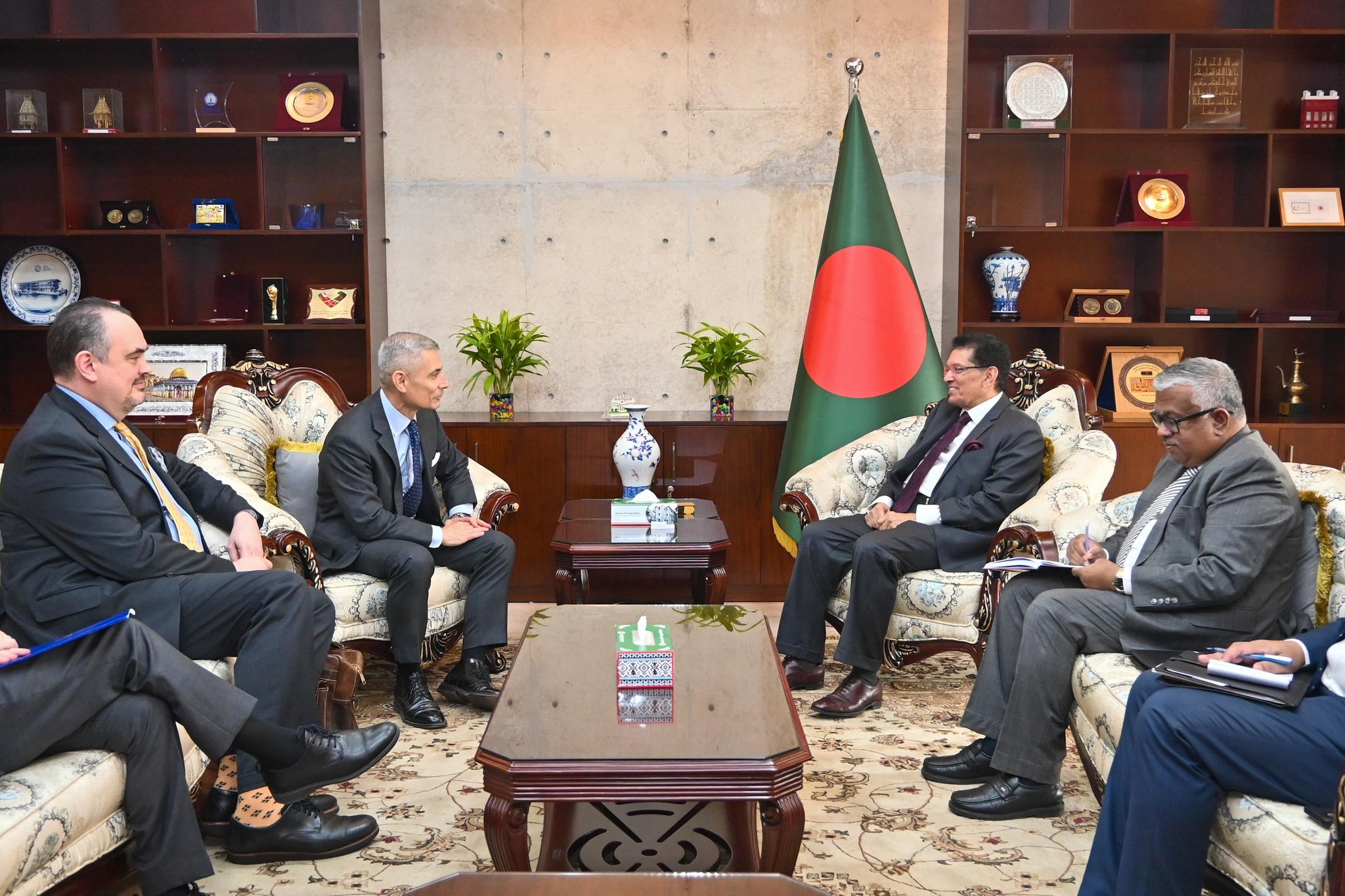
U.S. Assistant Secretary of State for South and Central Asian Affairs Paul Kapur’s recent visit to Dhaka should not be viewed merely as a routine diplomatic engagement. Rather, it reflects Bangladesh’s growing strategic importance in a South Asia that is increasingly shaped by geopolitical competition, shifting alliances, and evolving economic dynamics.
The U.S. Embassy described the visit as an effort to strengthen the strategic relationship between the United States and Bangladesh. While such phrasing is common in diplomatic statements, in the current geopolitical climate it carries broader implications. Strategic engagement today often extends beyond conventional diplomacy to include issues such as security cooperation, economic partnerships, maritime stability, supply-chain resilience, and technological collaboration.
After meeting Bangladesh’s Foreign Minister Khalilur Rahman, Kapur briefly described the discussions as “good.” In diplomatic practice, such restrained language can often signal substantive conversations behind closed doors. When discussions involve sensitive areas such as defense cooperation, strategic alignment, or regional security, officials typically avoid elaborating publicly, preferring discretion over detail.
Much of the discussion surrounding the visit has focused on the potential consideration of agreements such as the Acquisition and Cross-Servicing Agreement (ACSA) and the General Security of Military Information Agreement (GSOMIA). These frameworks are commonly used to facilitate logistical military cooperation, ensure secure exchange of sensitive information, and improve interoperability between defense partners. Many countries maintain similar arrangements with the United States, making the prospect of such discussions with Bangladesh neither unusual nor unexpected.
However, the significance of these conversations extends beyond the technical aspects of defense cooperation. In Bangladesh’s case, any move toward deeper security arrangements inevitably intersects with the broader regional balance of power and the country’s longstanding diplomatic approach of maintaining strategic equilibrium among major global actors.
South Asia over the past decade has emerged as a key arena for global strategic competition. The United States, China, and India are increasingly active in shaping the region’s political and economic landscape, while other powers also maintain important roles. Infrastructure investments, maritime access, economic partnerships, and security cooperation have all become tools through which influence is projected across the region.
India has strengthened its strategic partnership with the United States and has become a central pillar of the broader Indo-Pacific framework. Pakistan, historically aligned with Washington, has deepened its relationship with China in recent years, particularly through major infrastructure and connectivity initiatives. Sri Lanka’s recent economic crisis has heightened the visibility of external competition for influence, while Nepal continues its long-standing effort to balance relations between India and China. In the Maldives, changes in domestic politics have also triggered renewed debates about foreign policy orientation.
Against this backdrop, Bangladesh is increasingly viewed as a strategically important actor. Its geographical position at the crossroads of South and Southeast Asia, its access to the Bay of Bengal, and its role in regional maritime routes give it considerable geopolitical relevance. At the same time, Bangladesh’s steady economic growth and expanding integration into global supply chains have enhanced its international profile.
Bangladesh has traditionally pursued a foreign policy based on balance and pragmatism. The guiding principle of “friendship to all, malice to none” has shaped the country’s diplomatic engagement for decades. Maintaining that balance, however, has become more complex in a world where geopolitical competition is intensifying and global politics is gradually becoming more polarized.
China remains one of Bangladesh’s most significant development partners, particularly in large-scale infrastructure projects. India, as Bangladesh’s immediate neighbor, shares extensive economic, security, and connectivity ties with Dhaka that continue to deepen. Meanwhile, the United States is Bangladesh’s largest export destination and a critical partner in trade, development cooperation, and global economic integration.
Navigating these relationships requires careful diplomatic calibration. Any deepening of security cooperation with one partner inevitably attracts attention from others. For Bangladesh, therefore, the central challenge is to strengthen partnerships that serve national interests without undermining the broader balance that has long characterized its foreign policy.
Economic engagement is another important dimension of Kapur’s visit. Meetings with government officials and business leaders highlight the growing importance of trade, investment, and technological collaboration in the bilateral relationship. For Bangladesh, expanding economic ties with the United States offers opportunities to diversify investment sources, strengthen industrial capacity, and support long-term economic growth.
In an era marked by global economic uncertainty, developing countries increasingly benefit from maintaining diverse economic partnerships. Greater U.S. investment and technology cooperation could support Bangladesh’s efforts to move further up the global value chain while reinforcing its position within international supply networks.
The broader Indo-Pacific context also shapes these discussions. The United States has placed significant emphasis on strengthening partnerships across the Indo-Pacific region as part of its strategic outlook. Given Bangladesh’s location along the Bay of Bengal and its proximity to major maritime routes, the country inevitably occupies an important place in these evolving regional dynamics.
At the same time, Bangladesh must approach this evolving strategic landscape with caution. The Indo-Pacific concept has become closely associated with the broader competition between the United States and China. For Dhaka, the priority remains ensuring that engagement with any regional framework contributes to economic development, maritime security, and regional cooperation without drawing the country into the strategic rivalries of larger powers.
The changing dynamics of South Asia also create new opportunities for Bangladesh. Several countries in the region are grappling with political instability or economic difficulties. If Bangladesh can maintain relative stability and sustain economic growth, it could play a more prominent role in regional economic connectivity and cooperative initiatives.
Ultimately, Kapur’s visit reflects a broader shift in regional geopolitics rather than a single diplomatic event. It signals growing international recognition of Bangladesh’s strategic value and its potential role in shaping the evolving dynamics of South Asia.
For Bangladesh, the challenge lies in translating this attention into tangible benefits while preserving the balance that has long defined its foreign policy. Careful diplomacy, economic pragmatism, and sensitivity to regional realities will remain essential in navigating the opportunities and challenges created by this changing geopolitical environment.
In a rapidly evolving South Asian landscape, Bangladesh’s foreign policy choices will increasingly carry implications not only for its own national interests but also for the broader strategic equilibrium of the region.
Disclaimer: The opinions and views expressed in this article/column are those of the author(s) and do not necessarily reflect the views or positions of South Asian Herald.
Related posts:
 India’s Expanding Defense Ties with Europe and Bangladesh’s Strategic Balancing in South Asia
 Turkey’s Growing Engagement in Bangladesh Adds a New Layer to South Asia’s Strategic Balancing
 Why Political Uncertainty in Bangladesh Demands India’s Attention
 Why U.S.–India Cooperation Is More Powerful When Aligned with the UAE and Israel