Join WhatsApp Channel


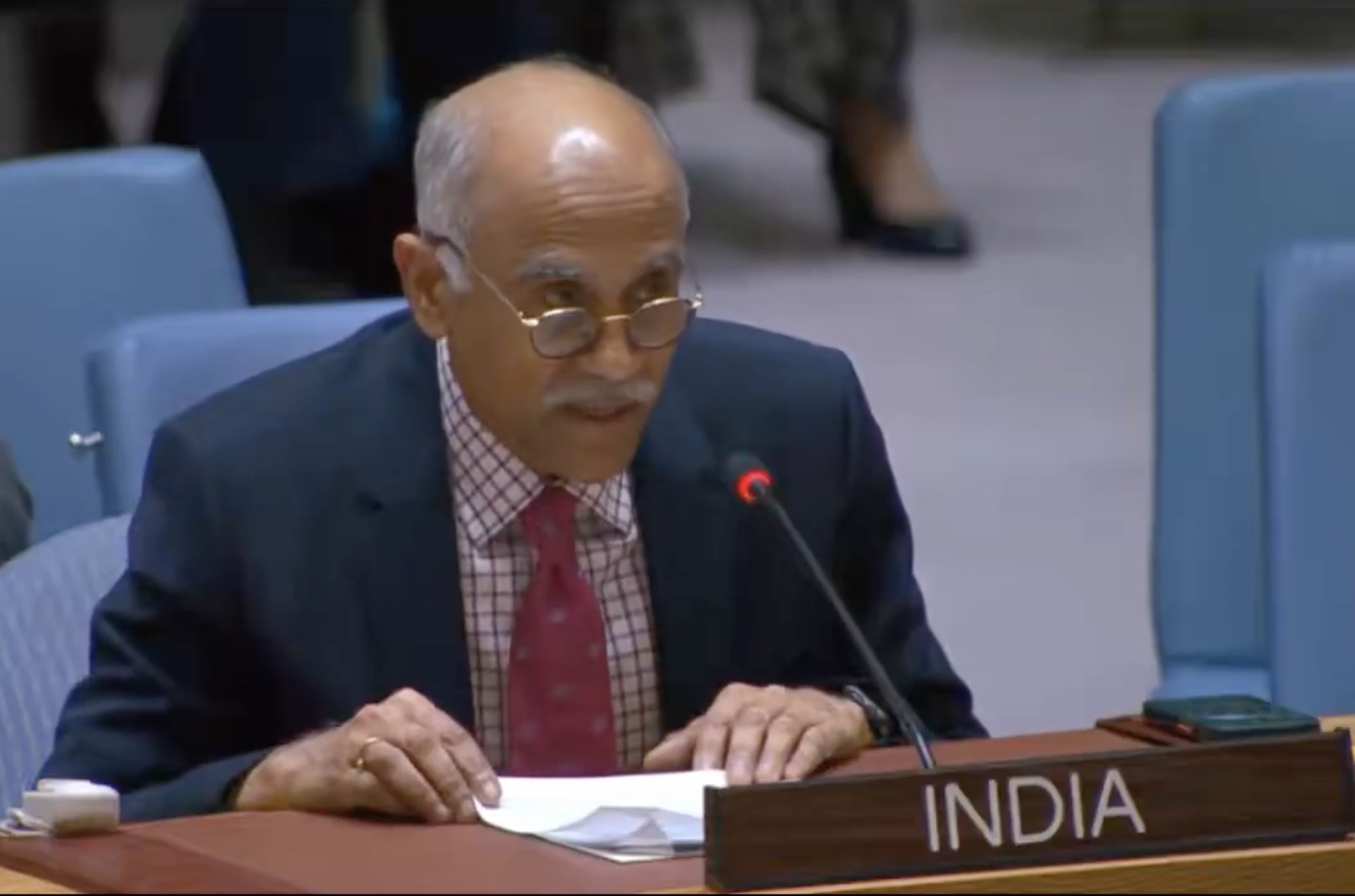
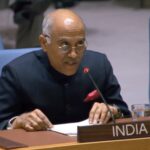
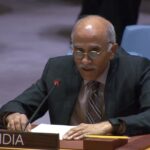
India’s Permanent Representative to the United Nations, Ambassador Parvathaneni Harish, has asserted that the Union Territories of Jammu & Kashmir and Ladakh are an “integral and inalienable” part of India.
“They were, are, and will always remain so,” Ambassador Harish reiterated during a United Nations Security Council Open Debate on “Leadership for Peace” held on December 15, 2025, at the United Nations.
He said Pakistan’s “unwarranted reference” to Jammu & Kashmir during the debate reflected its “obsessive focus” on harming India and its people. Ambassador Harish added that a serving non-permanent member of the Security Council that chooses to pursue such an agenda across UN platforms cannot be expected to fulfill its responsibilities and obligations.
Recalling the Indus Waters Treaty signed 65 years ago, he said India had entered into the agreement “in good faith, in a spirit of good will and friendship.” Over the subsequent six and a half decades, he noted, Pakistan has “violated the spirit” of the Treaty by waging three wars and carrying out thousands of terror attacks against India.
Ambassador Harish said that in the last four decades alone, tens of thousands of Indian lives have been lost to Pakistan sponsored terrorism. He cited the most recent Pahalgam terror attack in April 2025, which involved religion based targeted killings of 26 innocent civilians by Pakistan sponsored terrorists.
He explained that it was against this backdrop that India announced the Indus Waters Treaty would be held in “abeyance” until Pakistan, described as a “global epi-center” of terror, “credibly and irrevocably” ends its support for cross border and other forms of terrorism.
Referring to Pakistan’s domestic political situation, he said the country has a “unique way of respecting the will of its people,” citing the jailing of a prime minister, banning of the ruling political party, and what he described as a constitutional coup through the 27th amendment that grants lifetime immunity to its Chief of Defense Forces.
“Let me be clear – India will counter Pakistan-sponsored terrorism in all its forms and manifestations with all its might,” he said. “With abiding faith in multilateralism, India reiterates that we stand ready to contribute towards working for peace, security and prosperity for all.”
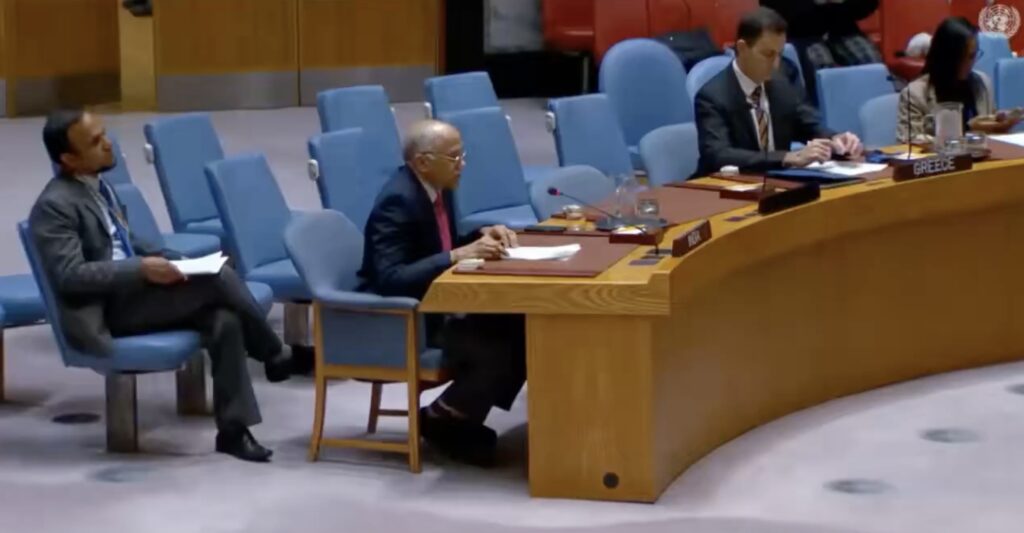
During his address, Ambassador Harish congratulated Slovenia on assuming the Presidency of the Security Council and thanked it for convening the open debate. He also thanked former UN Secretary General Ban Ki-moon for his “insightful briefing,” as well as the external briefer for her remarks.
He said the theme of the debate, “Leadership for Peace,” was “particularly pertinent” in the current global context. According to him, the United Nations was founded on the desire of member states to achieve sustainable peace, making the maintenance of international peace and security its central pillar.
“Consequently, maintenance of international peace and security became its central pillar, and the United Nations Security Council was primarily entrusted with this onerous task,” he said, adding that the Council’s inability to meaningfully intervene in ongoing conflicts has disappointed citizens worldwide, who now question the UN’s “legitimacy, efficacy, credibility, and relevance.”
Ambassador Harish noted that the next Secretary General would assume office at a critical moment for the organization. Against this backdrop, he outlined several key points.
He emphasized that the primary responsibility for maintaining international peace and security rests with the Security Council, particularly its permanent members who have served continuously over the past eight decades.
“When their approaches were focused on global public goods, the chances of peace prevailing have brightened; when their approaches focused on narrower national interests, chances of peace have dimmed. The quality and focus of the leadership displayed by members of the Council thus represents the most important aspect impinging on maintenance of international peace and security,” he said.
He further argued that structural and systemic elements of the Council’s eight-decade old architecture act as obstacles to effective peacekeeping. The current configuration, he said, is largely frozen in time, quoting Secretary General António Guterres: “We can’t create a future fit for our grandchildren with systems built for our grandparents.”
Calling Security Council reform an urgent global imperative, Ambassador Harish said the Inter-Governmental Negotiations framework on reform has so far remained largely unproductive. He urged a shift toward time bound, text-based negotiations to enhance representation from underrepresented and unrepresented regions, in both permanent and elected categories of membership.
He stressed that “leadership for Peace” should guide the ongoing UN80 reforms initiative aimed at improving the efficiency, effectiveness, and relevance of the United Nations and the multilateral system. He said this must be viewed as a continuous process that will extend into the tenure of the next Secretary General, who will be tasked with both addressing current challenges and reinvigorating multilateralism.
Ambassador Harish also said the new Secretary General must embody the aspirations of the majority of humanity, particularly those from developing countries in the Global South. “These aspirations largely cover the development spectrum and pertain to ensuring the basic minimum of living standards, and cover areas such as financing for development, climate equity and justice, achieving SDGs, overseas development assistance,” he said.
The Ambassador also underscoring that leadership must be “inclusive” to be “representative, legitimate, and effective.” Senior UN appointments, he said, should follow transparent and objective processes rather than a division of spoils approach, adding that no position should remain the exclusive preserve of a select group of member states.
Related posts:
 India’s UN Envoy Calls for Security Council Reforms, Rejects Pakistan’s Claims on Jammu and Kashmir
 India Urges United Nations to Impose “Serious Cost” on States Sponsoring Cross-Border Terrorism
 United Nations Has Lost Its “Foundational Focus,” Says India’s Envoy P Harish at UNSC Open Debate
 India Calls for Overhaul of UNSC Rules and Greater Transparency in Security Council Functioning