Join WhatsApp Channel


India – the country dubbed as Bangladesh’s doula during its nascence – has suffered a strategic setback due to recent monumental political transformation along its eastern border. This unavoidable fallout will impact Bangladesh’s economic prosperity and security for decades to come.
The establishment of Bangladesh may have been misinterpreted as a rejection or failure of the two-nation theory. The negation of such a paradigm should have prompted the Muslims in East Pakistan to remerge with India’s West Bengal under the banner of Bengali nationalism. Whereas, they chose to remain independent of India as Muslim-majority country, cementing the notion that Muslim and Hindu Bengalis cannot coexist.
Notwithstanding the religious divide, all Bangladeshi governments maintained cordial relations with New Delhi and profited significantly from India’s generous economic assistance. One could say that India’s enduring guidance played vital role in preventing Bangladesh from becoming a beggar like Pakistan and establishing itself as a net-exporter.
However, this goodwill did not stop Bangladeshi Muslims from committing atrocities and discriminating against country’s non-Muslims, who accounted for roughly 20% of the population in 1971. When it comes to targeting Hindus, Muslims in Bangladesh behave similarly to those in India’s arch enemy, Pakistan.
Very few know that the Chakma tribal head under British pressure merged his Buddhist princely state with what is now Bangladesh. Like Hindus, the Buddhists continue to experience forced conversion, damage to sacred sites and religious centers, and displacement. Buddhists and Hindus now comprise less than 7% of the nation’s population.
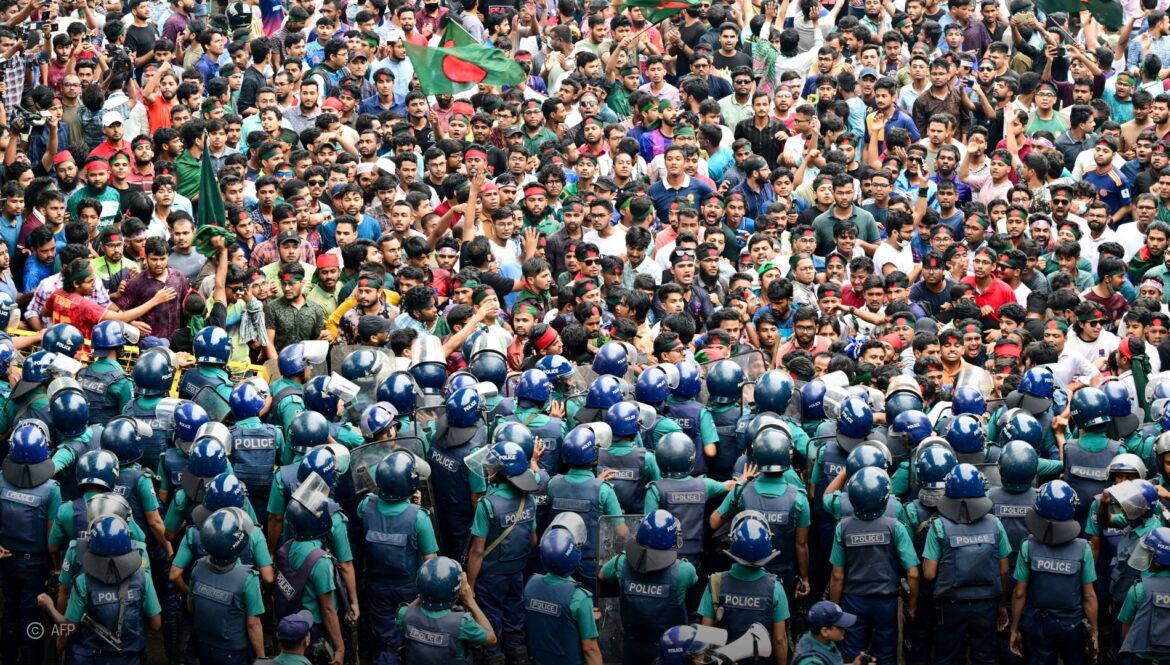
Since the collapse of the Wajid government in 2024, radical and extremist groups have taken over the political scene, resulting in increased anti-India actions and a deteriorating security climate in bordering districts. As the nationwide anti-India protests continue, several Islamist leaders have attempted to recast the 1971 liberation war by portraying India as a colonial meddler that subjugated Bangladesh.
Until lately, it was customary for local politicians to express gratitude to India on Vijay Diwas, which commemorates the end of Pakistani occupation. This year, many leaders used the occasion to threaten and condemn India, with vows to dismember West Bengal and seven eastern Indian states to form a greater Bangladesh. One of Yunus’ cabinet members disparaged the Indian Prime Minister for giving the Indian military unwarranted credit for Bangladesh’s independence.
Despite India’s warnings, thousands of protesters were seen marching on towards multiple Indian High Commission and consulate buildings in recent days, attempting arson and vandalism. Following Pakistan’s blame game, Bangladeshi radicals have branded war hero Mujib Rahman as a national traitor and Indian spy. During protests, they defaced Mujib’s statues and set fire to his residence. The current government also intends to change the national anthem and restrict the nationalist ‘Joy Bangla’ slogan.
The division of Pakistan and subsequent establishment of Bangladesh severely hurt the ego of the Punjabi ruling class. To avenge this insult, Pakistan relentlessly employs every conceivable strategy to break India, but with no result.
The ouster of Prime Minister Wajid provides Pakistan with yet another opportunity to weaken India. Since then, both Pakistan and Bangladesh have moved quickly to pledge enhanced military and intelligence cooperation, economic MOUs, and deeper unity among trans-Islamic political and militant entities.
According to Indian reports, Pakistan’s intelligence agency, ISI, aims to interfere with the upcoming national election. ISI has extensive domestic expertise influencing electoral processes and engineering unrest to help install regimes of its liking.
Sources also claim that ISI has established terror operations and sleeper cells in Bangladesh near the Indian border. Local media also claims the presence of operatives from the Pakistani terrorist group Lashkar-e-Taiba in their country. It is feared that Pakistan will use Bangladeshi soil to incite discontent and separatism in India’s Muslim and Christian-dominated districts, a tested strategy that has helped fan insurgency in restive Kashmir. Recently demonstrators were spotted screaming freedom for Kashmir on Bangladeshi streets thereby boosting Islamabad’s measures to pressure India.
The rebirth of Islamabad-Dhaka fraternity also bolsters Chinese imperial ambitions. With China’s help, Pakistan has persuaded Bangladesh to create a regional block to counter India’s growth in South Asia. It is believed that the Chinese embassies in Nepal, Sri Lanka, and the Maldives are working overtime to make this happen. Chinese and Pakistani collaboration on Bangladeshi territory will complete India’s strategic encirclement.
The US-India rift weakens seculars in Bangladesh, and helps Islamists fill the void. Trump regards Islamic terrorism as the most serious global threat. However, his backing for regime change in Bangladesh has turned the country of 170 million Muslims into a hotbed of terrorism; where the tyrant Muslim Brotherhood cadre roams free. Patrons of the Muslim Brotherhood, such as Turkey and Malaysia, who are equally concerned about India’s economic rise, could aid and abet the Islamists against India. According to reports, political pressures are causing Saudi Arabia’s monarch to snuggle up to the Muslim Brotherhood, potentially strengthening Pakistani plans for South Asian supremacy.
It will be too late before the Bangladeshi leaders realize that Pakistan’s fascist military, led by Field Marshal Asim Munir, harbors long-term expansionist agenda and intend to abuse their resources and territory with no tangible benefits to its inhabitants.
Disclaimer: The opinions and views expressed in this article/column are those of the author(s) and do not necessarily reflect the views or positions of South Asian Herald.
Related posts:
 South Asian Hindu Americans Protest Near the White House Demanding Justice for Hindus in Bangladesh
 Why Political Uncertainty in Bangladesh Demands India’s Attention
 US and UK Hindu Organizations Urge Global Institutions to Confront Islamist Terrorism Targeting Hindus
 Hindu American groups express concern over the plight of Hindus in Bangladesh