Join WhatsApp Channel

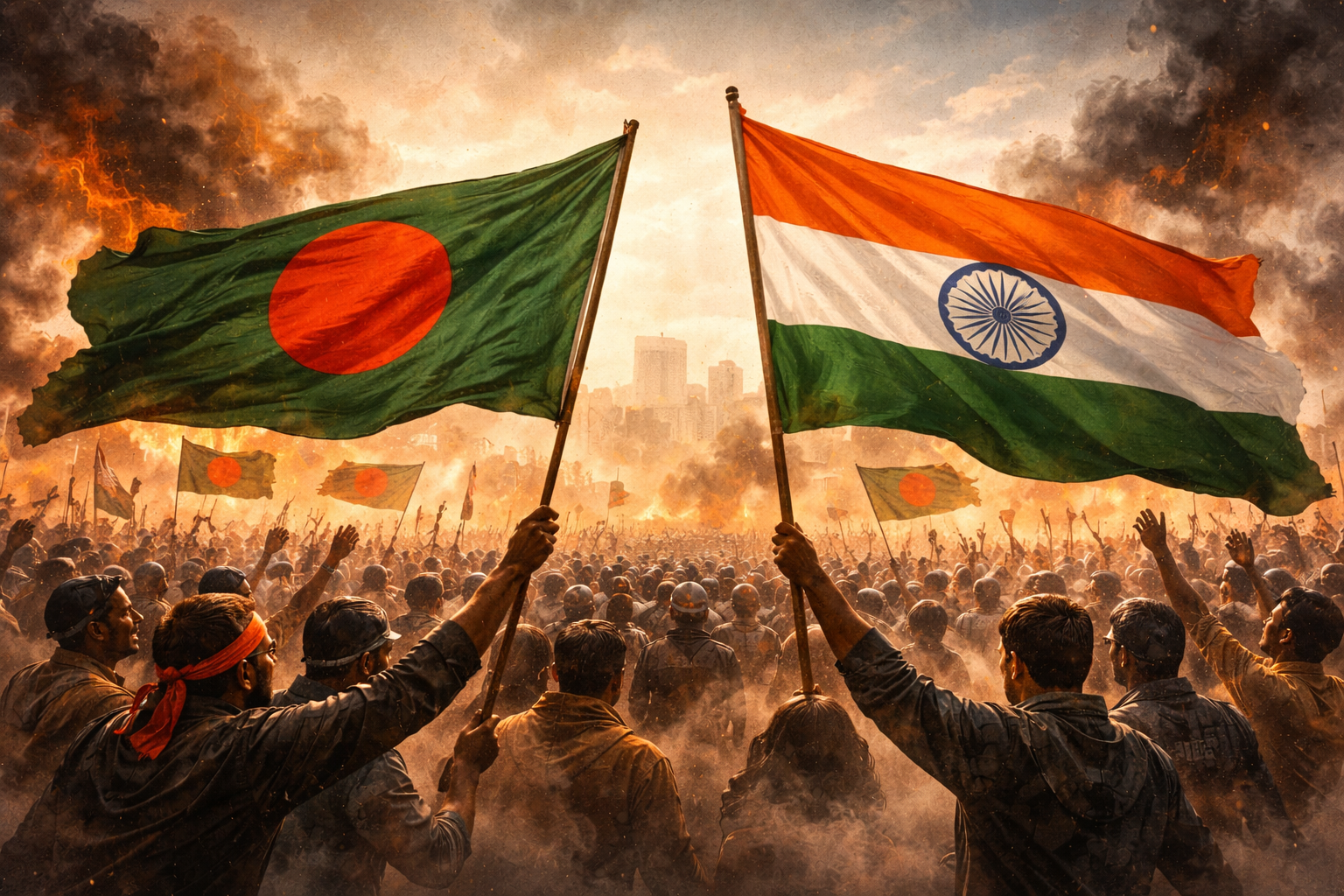
The political landscape of Bangladesh has undergone a dramatic transformation following mass protests that led to the fall of former Prime Minister Sheikh Hasina. The events surrounding her government’s removal have left a deep imprint on the national psyche. Allegations of harsh crackdowns, human rights abuses, and even large-scale violence continue to circulate widely in public discourse. Whether all such claims withstand legal scrutiny remains to be seen, but the intensity of public anger and disillusionment is unmistakable.
In this volatile context, attention has increasingly shifted toward India, Bangladesh’s closest and most historically significant neighbor. For decades, the relationship between the two countries has been framed as one of deep friendship, rooted in shared history and cooperation during Bangladesh’s 1971 Liberation War. Yet recent developments have prompted a more critical reassessment. Is this relationship still grounded in mutual respect and trust, or is it increasingly shaped by strategic calculations?
Since the political transition in Dhaka, the former ruling party appears to have virtually disappeared from Bangladesh’s public sphere. Reports indicate that many of its top leaders have sought refuge abroad, with India frequently mentioned as a key destination. At the grassroots level, party activists are said to be in hiding or politically inactive. The near-total absence of the party’s visible presence raises a sensitive question: what are the implications when leaders associated with a controversial political legacy find shelter in a neighboring country?
From India’s standpoint, such actions may be viewed through a pragmatic lens. International relations often require governments to prepare for multiple possible outcomes. Providing temporary shelter to political figures especially in times of upheaval can be interpreted as a humanitarian gesture or a strategic hedge. In a region as politically dynamic as South Asia, maintaining contact with different actors is not uncommon.
However, what appears pragmatic at the state level can carry significant costs in public perception. Many Bangladeshis view India’s alleged role in sheltering former leaders and politically exposed individuals with suspicion and frustration. For them, it raises uncomfortable questions about whether India is indirectly supporting figures accused of repression. This perception, whether accurate or not, risks deepening distrust and reinforcing long-standing concerns about external influence in Bangladesh’s internal affairs.
India has consistently emphasized its desire for stable and cooperative relations with Bangladesh. The two countries collaborate extensively in trade, energy, connectivity, and security. New Delhi has often expressed its expectation that Dhaka will maintain a friendly approach, particularly on regional security matters. Yet friendship between nations is not a one-sided expectation it must be built on reciprocity, sensitivity, and respect for public sentiment.
This is precisely where the current situation becomes delicate. While governments may continue to engage diplomatically, public opinion in Bangladesh cannot be ignored. If a significant portion of the population begins to perceive India’s actions as inconsistent with its stated support for democracy and the rule of law, the long-term implications could be serious.
At the same time, it is important to recognize that India–Bangladesh relations extend far beyond current political tensions. The two countries share strong economic ties, growing trade, and expanding regional connectivity. Cultural exchanges and people-to-people links remain vibrant. These positive dimensions are critical and should not be overshadowed by political disagreements. However, acknowledging concerns is equally important for sustaining a healthy partnership.
For Bangladesh, the path forward must focus on strengthening democratic institutions and ensuring accountability. Allegations of past abuses should be investigated through transparent and credible processes. Impunity, if allowed to persist, can weaken the very foundation of governance. Establishing the rule of law is essential not only for justice but also for restoring public trust.
Bangladesh must also engage India with clarity and confidence. Dhaka has the right to raise concerns regarding extradition, legal cooperation, and the status of individuals accused of crimes. Bilateral agreements and international legal frameworks exist to address such issues, but they require political will and mutual trust to be effective.
For India, this moment represents an opportunity to reinforce its image as a responsible regional power. By ensuring that its actions align with its stated commitment to democratic values, it can address concerns and strengthen goodwill. Greater transparency and cooperation on sensitive legal matters would go a long way in rebuilding trust.
Ultimately, the future of India–Bangladesh relations will depend not only on diplomatic engagement but also on how these relations are perceived by ordinary citizens. State-to-state relations can survive disagreements, but prolonged public dissatisfaction is far more difficult to repair. In South Asia, where history, identity, and politics are deeply interconnected, trust is both fragile and essential.
The real question, therefore, is not whether India and Bangladesh will remain partners they almost certainly will. The more important issue is what kind of partnership they will build moving forward. Will it be based on equality, accountability, and mutual respect? Or will it continue to be shaped by strategic ambiguity and imbalance?
As Bangladesh navigates a period of political restructuring and India recalibrates its regional priorities, both nations stand at a critical juncture. The decisions made now will shape not only their bilateral relationship but also the broader trajectory of regional cooperation in South Asia.
In the end, true friendship between nations is not defined solely by shared history or geographic proximity. It is tested in times of crisis when principles are weighed against interests, and when the expectations of millions demand sincerity beyond diplomatic rhetoric.
Disclaimer: The opinions and views expressed in this article/column are those of the author(s) and do not necessarily reflect the views or positions of South Asian Herald.
Related posts:
 Whispers Before the Reset: Intelligence Diplomacy and the Fragile Recalibration of Bangladesh–India Relations
 Beyond a Courtesy Call: Paul Kapur’s Dhaka Visit and Bangladesh’s Rising Strategic Weight in South Asia
 India’s Expanding Defense Ties with Europe and Bangladesh’s Strategic Balancing in South Asia
 Between Opportunity and Entrapment: Bangladesh Must Tread Carefully on the EU Partnership Deal