Join WhatsApp Channel

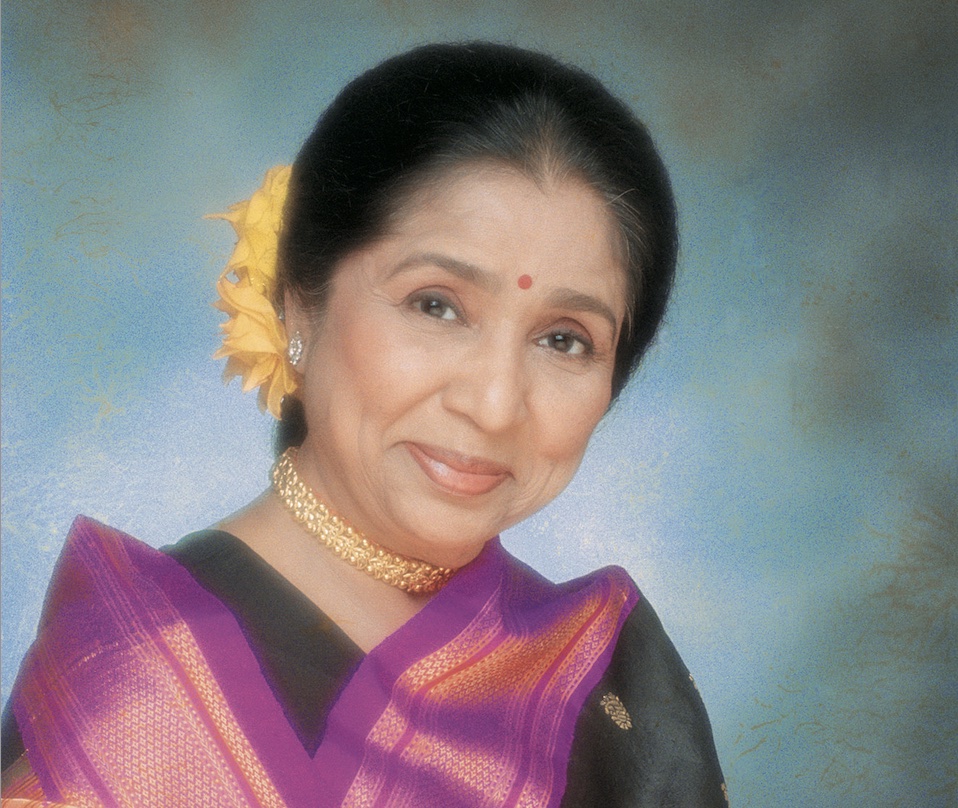
An era has truly ended. The last of the ruling pantheon of singers—Asha Bhosle—is no more. If Hindi Film Music can be compared to a hand, then her elder sister Lata Mangeshkar (who coincidentally also passed away at the age of 92!), Mohammed Rafi, Mukesh and Kishore Kumar were the five fingers that were the collective strength of composers, lyricists and actors who ruled for decades.
Other titans were there—Manna Dey, Hemant Kumar, Mahendra Kapoor and Talat Mahmood among the males, and Geeta Dutt, Shamshad Begum and Suman Kalyanpur among the female voices. Usha Mangeshkar, the third sister, was also around, but ruled (along with Asha and Suman) ruled in Marathi (their mother-tongue) cinema.
So how was Asha different from them all? First and foremost, she was a fighter nonpareil.
Asha the Fighter
Asha moved on—bravely and determinedly—after potentially demoralizing pitfalls as severe as a husband who ill-treated her, making her work and then do domestic chores and cooking when she would be exhausted, and then deserted her. Initially, she was not serious about her work and was never taken seriously and was considered a distant fiddle to elder sister Lata Mangeshkar, Geeta Dutt and Shamshad Begum until O.P. Nayyar gave her the first chance to sing all the songs for a top heroine—Vyjayanthimala—in Naya Daur (1957).
But Asha also had a positive spin on her husband: she credited him with making her sing more and more and even arranged a music tutor for her!
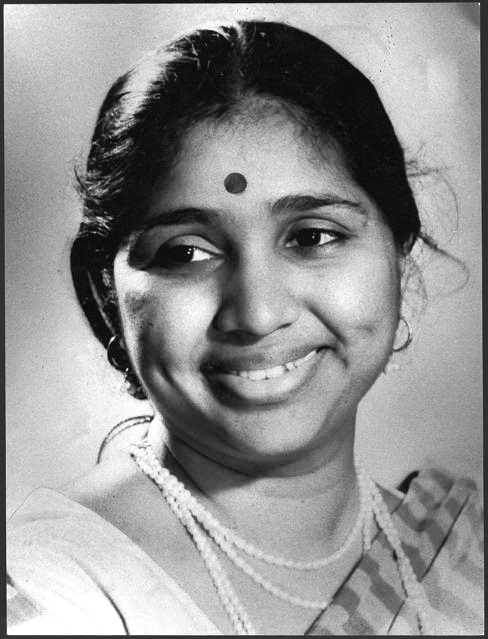
For many years away from her family (because of the bad marriage to this man much older to her), Asha later had to also go through trauma when her eldest son, Hemant Bhosle, a composer, passed away, and her daughter Varsha went through a divorce and also died later. And then there was the low phase in Hindi cinema (the prime area wherein she rendered the majority of her Guinness Book of World Records-setting 13000 songs)!
This came around 1990 and ended with A.R. Rahman’s Rangeela (1995), after which even younger composers began to employ her voice, albeit limitedly, as the ruling voices and music makers had changed towards more youthful names. Asha had a frank view of this phenomenon: that her group had gone through flops (she mentioned filmmaker Ramesh Behl, Gulzar and R.D. Burman in particular) and that she was never in a race a record a certain quantum of songs every week.
In fact, whenever others were in trouble or faced bad times, her singular advice was to get on with life. She once helped Sudesh Bhosle overcome severe stress, and also shared a secret that whatever happened in her life, including a sick child, she would remember only the music once she entered a studio. And she was a mother who taught her kids the same.
Post-Rangeela, names like Shankar-Ehsaan-Loy (Sur mile hain from Dus, an album that was to be a film that could never be completed), Jeet-Pritam (Sharaara from Mere Yaar Ki Shaadi Hai), Shamir Tandon (Huzoor-e-aala / Page 3), Sandeep Chowta (Khalaas / Company), Anand-Milind (Sard mausam / Vansh), Nadeem-Shravan (Chehra kya dekhte ho / Salaami) and others like Viju Shah, Vishal Bhardwaj, Dilip Sen-Sameer Sen and more also employed her vocals.
Through this phase, Anu Malik (who recorded his career-first song, Zulm-o-situm par itraane wale in Hunterwali 77with her), Rajesh Roshan and Jatin-Lalit continued to use her voice infrequently but with great effect. And for a singer who was associated with a generation of actresses that included Madhubala, Meena Kumari, Vyjayanthimala and Geeta Bali, she sat perfectly on the lips of actresses young enough to be her granddaughters, among them Mallika Sherawat, Amisha Patel, Shamita Shetty, Mahima Chaudhary, Aishwarya Rai Bachchan, Sushmita Sen, Rani Mukerji, Kareena Kapoor Khan and Vidya Balan!
Asha the Open Book
With Asha, lyricist Sameer declared that what one saw was what one got. There was no diplomacy, no charade or pretense and no politics. Whether one agreed with her views or whether you were present around her, she was frank, and talked straight. And incredibly she was candid about even this trait of hers, stating that it was one of the key reasons for her longevity!
Asha was also open about doing every kind of song, testing herself in every genre (film, non-film, ‘bhavgeet,’ ghazal, bhajan, qawwali and every available Western genre!) and was flexible about her price too. This was one reason why she tended to dominate in Marathi cinema and music (where the budgets were low and her sister Lata Mangeshkar was not affordable) and also in smaller Hindi films with composers who were not toppers.
Asha had once stated that had she not become a singer she would have turned a professional household cook! She was exceptional at making food and proof of this remains in her global chain of restaurants, Asha’s, where she herself crafted most of the recipes. Asha’s now has over 10 branches spread across Britain and the Middle-East. The first was launched when Asha was 69!
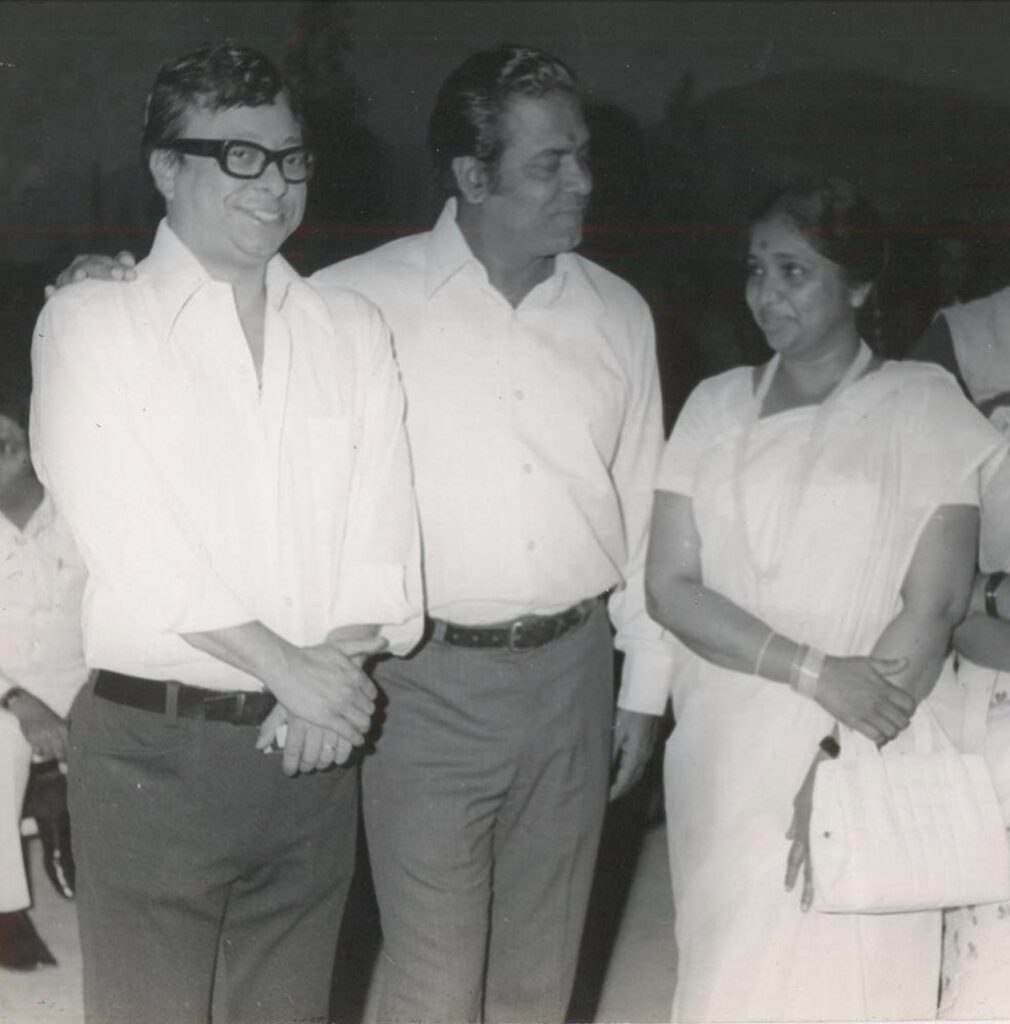
Asha is no more. The music scene will never be the same again. But here are some top-of-the-mind Asha favorites among the leading composers she sang for, even if they can be considered in most cases pearls in an ocean. And I restrict myself to Hindi songs.
- Anu Malik Prem mein tohre / Begum Jaan
- Bappi Lahiri Awaaz di hai / Aitbaar
- C. Ramachandra Aadha hai chandrama / Navrang
- Hemant Kumar Dabe labon se kabhi jo koi / Biwi Aur Makan (with Lata Mangeshkar) & Bhanwra bada nadaan / Sahib Bibi Aur Ghulam
- Jatin-Lalit / Shehar mein shor hai / Return of Jewel Thief
- Kalyanji-Anandji / O saathi re / Muqaddar Ka Sikander
- Khayyam / In aankhon ki masti / Umrao Jaan
- Laxmikant-Pyarelal / Hungama ho gaya / Anhonee
- Madan Mohan / Husn jab jab / Neend Hamari Khwab Tumhare (with Mohammed Rafi)
- Naushad / Mere Mehboob mein kya nahin / Mere Mehboob (with Lata Mangeshkar)
- O.P. Nayyar / Yehi woh jagah hai / Yeh Raat Phir Na Aayegi
- R.D. Burman / Jaaoon to kahaan jaaoon / Anamika
- Rajesh Roshan / Morni ne seekha / Jaag Utha Insan
- Ravi / Aage bhi jaane na tu / Waqt & Tora man darpan / Kaajal
- Ravindra Jain / Paon mein dori / Chor Machaye Shor (with Mohammed Rafi)
- Roshan / Nigahen milane ko jee chahata hai / Dil Hi To Hai
- S.D. Burman / Ab ke baras / Bandini
- Shankar-Jaikishan / Parde mein rehne do / Shikar
- Sonik-Omi Raaz ki baat / Dharma (with Mohammed Rafi)
- Usha Khanna Teri dulhan hoon / Ab Kya Hoga & Jeevan hai ek sapna / Honeymoon (with Kishore Kumar)
This immortal Dadasaheb Phalke awardee was also conferred the Padma Vibhushan and two National awards besides countless state and popular other wins. The world also knows that she has won two Grammy nominations.
Yes, that’s another story—her global triumphs.