 Join WhatsApp Channel

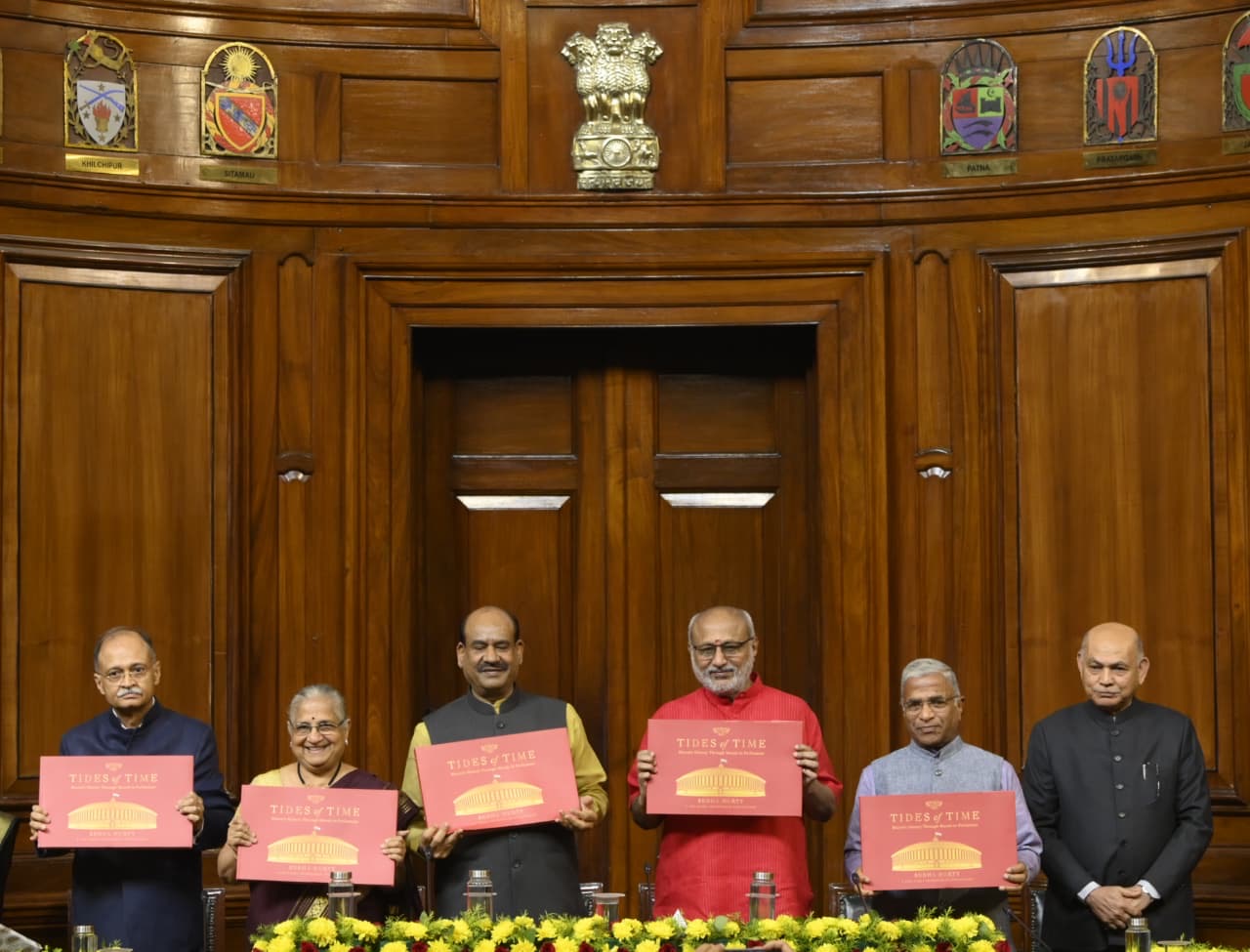
A new book chronicling India’s civilizational journey through the murals of Parliament was released on Tuesday, placing the spotlight on art as a medium of historical storytelling and national memory.
“Tides of Time: Bharat’s History through Murals in Parliament,” authored by Rajya Sabha MP Sudha Murty, captures the essence of 124 mural panels housed within Samvidhan Sadan. Published by the Lok Sabha Secretariat, the volume traverses India’s past—from the Indus Valley Civilization to the freedom movement—through vivid visual narratives embedded in the walls of the nation’s highest legislative institution.
The book brings together depictions of ancient sages like Valmiki and Chanakya, spiritual leaders such as Mahavira and Gautama Buddha, and iconic rulers including Ashoka and Chhatrapati Shivaji Maharaj. It also reflects India’s cultural and spiritual movements, such as the Bhakti tradition, alongside milestones of the independence struggle, including the Dandi March led by Mahatma Gandhi and the contributions of Subhas Chandra Bose.
By weaving these elements together, the book positions the murals not merely as decorative art but as a cohesive visual archive of India’s evolving identity—spanning philosophy, governance, spirituality and resistance.
Releasing the book, Vice President C. P. Radhakrishnan described the work as a “remarkable tribute” that makes history accessible across generations. He noted that the murals in Samvidhan Sadan are “visual narratives” reflecting the country’s enduring civilisational ethos.
Radhakrishnan emphasised that India’s democratic traditions have deep roots, citing examples from ancient republics to local governance systems, and reiterated that Bharat can be regarded as the “mother of democracy”. He also highlighted the integration of traditional symbols in the new Parliament complex under Prime Minister Narendra Modi, including the Sengol, as markers of continuity between heritage and modern governance.
Quoting poet Subramania Bharati, he underlined India’s cultural depth and inclusiveness, while stressing that Parliament must remain a space for debate and dissent that ultimately serves national interest.
The Vice President also praised Murty’s contribution to public life, noting her transition from the corporate world to social service and Parliament, and described her work as grounded in humility and a commitment to the larger good.
The event was attended by Lok Sabha Speaker Om Birla, Union ministers J. P. Nadda and Manohar Lal Khattar, Deputy Chairman of the Rajya Sabha Harivansh Narayan Singh, along with Members of Parliament and senior officials.
Related posts:
 Indian PM Modi’s BJP Hopes to Tighten Control of the Upper House of Parliament
 Indian Parliamentary Delegation Arrives in Washington DC to Brief U.S. Lawmakers on Operation Sindoor
 “Queenissima” Shines at Art Basel 2025 With Bold Eco-Fashion and Wearable Art Movement
 Indian All-Party Delegation Led by Dr. Shashi Tharoor Visits New York to Reinforce Global Anti-Terrorism Efforts
