 Join WhatsApp Channel


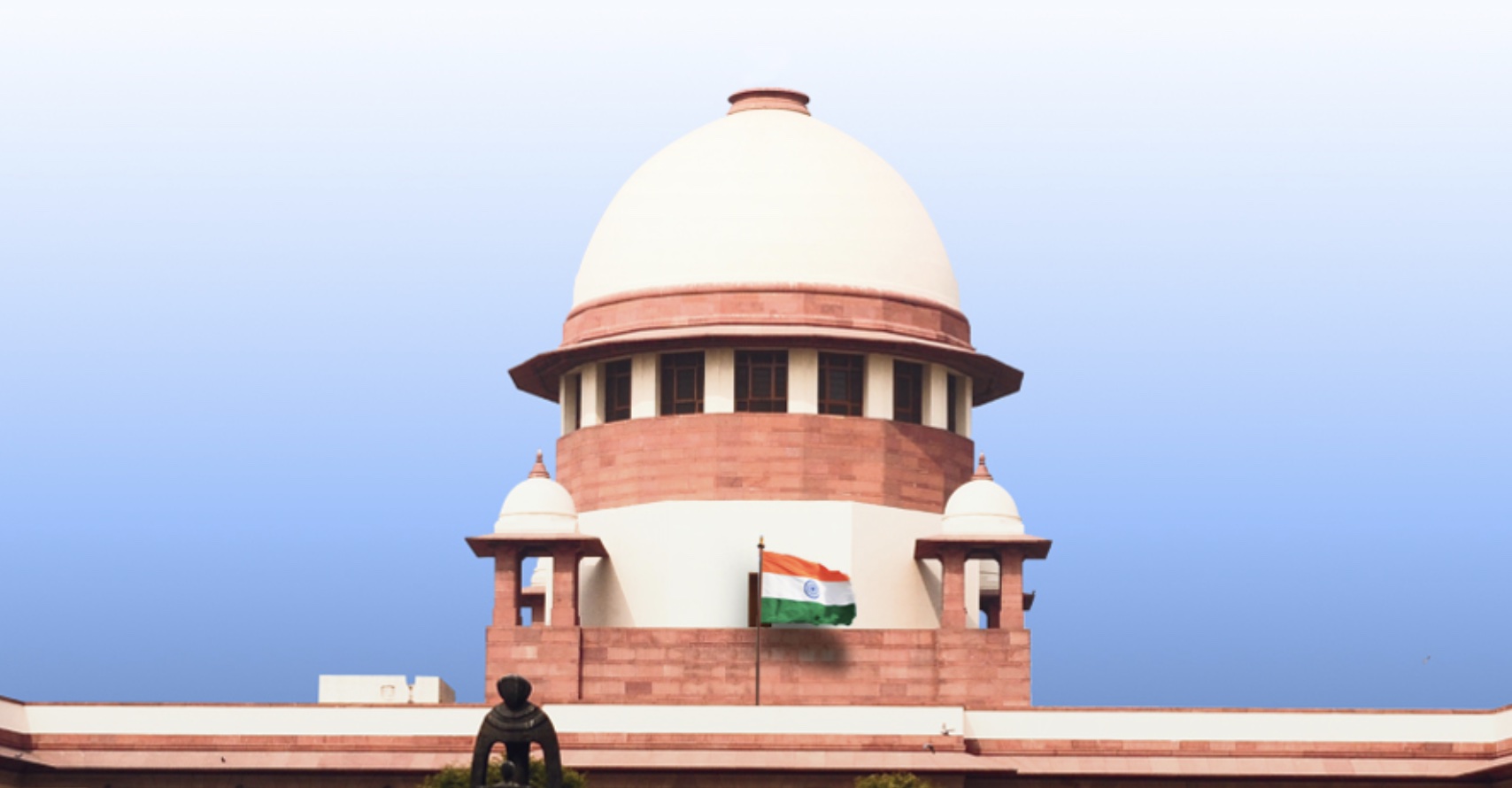
The recent order of the Supreme Court rejecting the bail of Umar Khalid and Sharjeel Imam while granting bail to five other accused in the same set of 2020 Delhi riot cases has initiated wide-ranging public debate. Much of this debate has focused on how severe the result seems. But the constitutional impact of the order lies not so much in the denial of bail as in the reasoning that supports such denial.
The finding at the heart of the Court’s reasoning is, quite simple, that continued incarceration has not yet reached the threshold of constitutional impermissibility required to override the statutory bar on bail under the UAPA. This is a deliberate formulation. It indicates deeper shifts in how personal liberty under Article 21 is being conceptualized in cases subject to strict bail regimes.
Thus, the question presented by the order goes beyond the specifics of any single prosecution. It asks: at what point does prolonged pre-trial detention become something that engages constitutional protection at all?
Prolonged Incarceration and the Emergence of a Threshold-Based Article 21
The UAPA has one of the stringent bail provisions in Indian criminal law. Section 43D (5) mandates that courts reject bail requests if the preliminary assessment shows that there is a prima facie case. Parliament drafted this provision to give preventive security concerns primacy over and above the general presumption in favor of bail.
Yet, constitutional courts have consistently taken the view that statutory limits cannot stand alone without reference to fundamental rights. In K.A. Najeeb v. Union of India, the Supreme Court held that prolonged detention and the unlikelihood of the trial getting concluded within a reasonable time can override statutory bail restrictions. The Court reasoned from a basic principle: when the criminal process itself becomes the instrument of punishment, continued detention violates Article 21 regardless of how serious the offense is said to be.
The present order does not discard this principle. It merely delays its application. In holding that the length of detention has not yet crossed the threshold beyond which it becomes constitutionally impermissible, the Court embraces a threshold-based understanding of Article 21: one that accepts long detention but delays constitutional intervention until detention becomes long enough.
This represents a subtle, but significant, doctrinal shift. Traditionally, Article 21 has operated as a directly applicable barrier against unlawful detention. It has not been regarded as a right which springs into operation only once a length of time has expired.
By embracing a ‘not yet’ standard, the Court effectively creates a constitutionally permissible zone of extended pre-trial detention. Within this zone, liberty is constricted in a manner that is acknowledged but not redressed. The analysis moves from whether detention is constitutionally justified to whether it has become constitutionally intolerable. This shift risks normalizing delay. Prolonged incarceration would no longer be treated as a constitutional anomaly demanding justification; instead, it would be a condition to be endured until an undefined threshold is crossed. Such an approach weakens the force of Article 21 by transforming it from a continuous safeguard into a delayed remedy.
Judicial Deference, Delay, and the One-Year Bar on Bail Applications
The threshold-based reasoning here is further reinforced by the decision of the Court to deny the accused bail for a full year. In Indian criminal procedure, prospective limits on bail applications are rare and usually imposed only when repeated filings amount to an abuse of the judicial process; the order, however, does not point to any such finding.
This aspect of the judgment thus raises stark constitutional issues. Access to courts is a fundamental component of the Article 21 procedural protection. While judges can control repetitive litigation, a blanket ban on access to the court for a specified period is essentially a suspension of judicial review of continued detention.
More fundamentally, the one-year rule renders the Court’s reasoning internally inconsistent. Because constitutional illegality depends upon the passage of time, prohibiting bail prevents the accused from forcing such a review. A defendant must be kept in jail in order to allow the threshold to be reached yet is denied the opportunity to demonstrate that continued detention has already become unconstitutional.
This approach is in variance with the long-standing rule that each day of unjust detention gives rise to a fresh right to bail. When freedom is on a judicial calendar and not always constitutionally astir, the distinction between under-trial detention and punishment begins to blur.
Risk, Influence, and Equality in Bail Adjudication
The order also places emphasis on the perceived influence or public standing of the accused as a factor militating against bail. Courts are entitled to consider risk in bail adjudication, including the possibility of witness intimidation, interference with evidence, or threats to public order. Such assessments, however, must be grounded in reasoned analysis and accompanied by an explanation of why less restrictive alternatives would be inadequate.
In the present case, five co-accused were granted bail subject to stringent conditions. The order does not clearly explain why similar conditions would be insufficient to address comparable risks in relation to Umar Khalid and Sharjeel Imam, particularly given that all accused have spent extended periods in custody.
When public visibility or symbolic significance is treated as an independent ground for continued incarceration, equality before law is strained. Liberty risk becoming inversely proportional to prominence. Such an approach sits uneasily with Article 14 and with the presumption of innocence, especially in the absence of a finding that conditional release would be ineffective.
Parity in bail adjudication does not require identical outcomes in all cases. It does, however, require transparent reasoning when similarly situated accused are treated differently.
Constitutional Implications
The Supreme Court’s order carries constitutional significance not only in its denial of bail but also in how it redefines the time of constitutional protection. By treating Article 21 as a right that comes alive only when a long period of incarceration crosses an undefined threshold of extremity, the Court risks rendering extended pre-trial detention a legally tolerable condition rather than a constitutional exception.
In this scheme of things, bail transforms from a rights-based jurisprudence into one based on patience. Where incarceration for years awaits any finding of guilt, liberty ceases to be a constitutional right but becomes contingent upon endurance. The Constitution does not expect individuals to wait until deprivation becomes extreme before protection kicks in. A legal regime which postpones liberty risks depleting Article 21 of itself.
Disclaimer: The opinions and views expressed in this article/column are those of the author(s) and do not necessarily reflect the views or positions of South Asian Herald.
Related posts:
 Global Traders See Flicker of Hope as Trump’s Tariffs Head to Supreme Court
 Supreme Court Showdown to Decide Fate of President Trump’s Global Tariffs
 Alina Habba Disqualified as New Jersey Attorney After Appeals Court Finds Appointment Violated Federal Law
 Jimmy Lai: From Refugee Entrepreneur to Beijing’s Most Defiant Critic — And the Trial That Sealed Hong Kong’s Fate
